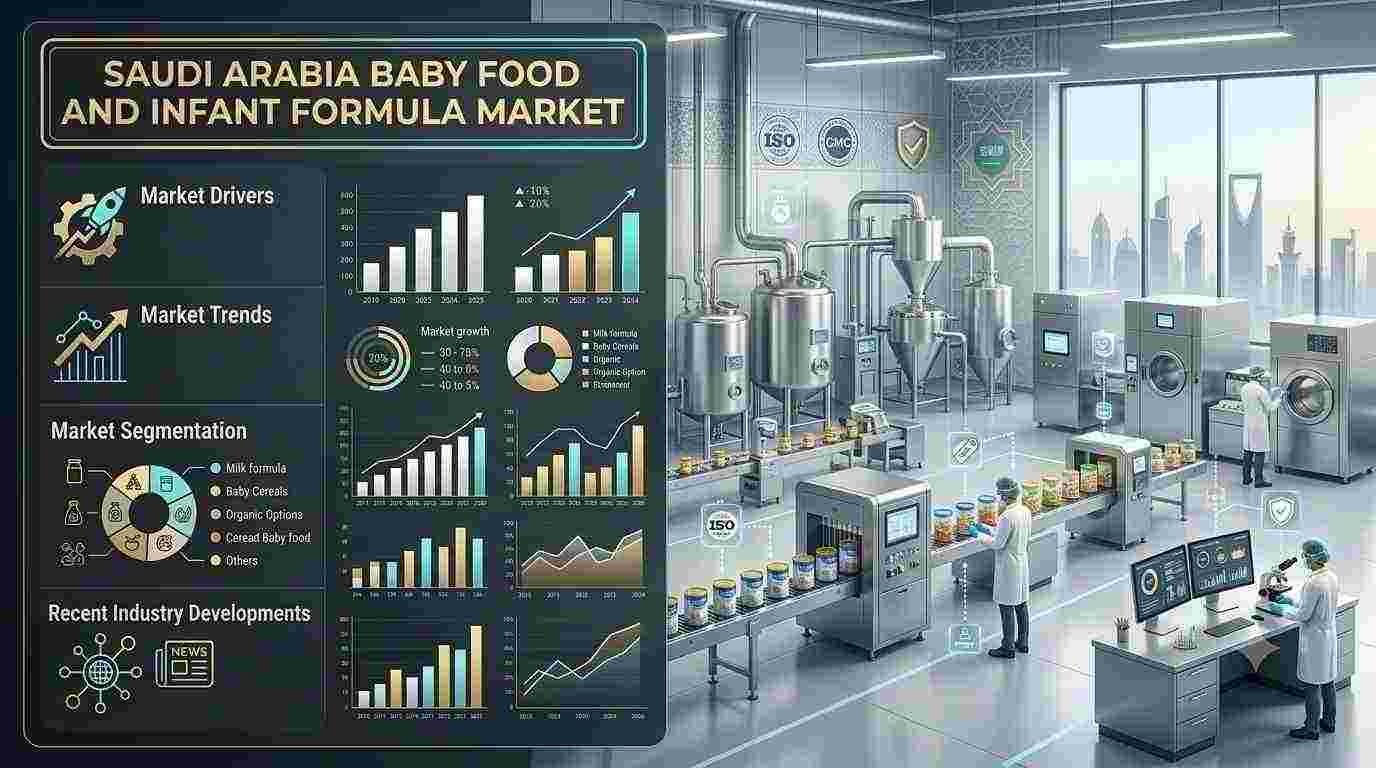
IMARC Group, a leading global market research and management consulting firm, has published its latest market intelligence report on the Saudi Arabia Baby Food and Infant Formula Market. The Saudi Arabia baby food and infant formula market size was valued at USD 521.6 Million in 2025 and is projected to reach USD 765.8 Million by 2034, exhibiting a CAGR of 4.36% during 2026-2034. Growth is being driven by rising parental health concerns, demand for organic and specialty products, a growing number of working mothers, government product safety regulations and the expansion of e-commerce.
Infant nutrition is one of the most trust-sensitive categories in Saudi Arabia’s food and health landscape, where parents weigh safety, nutrition science, convenience and cultural expectations in every purchase. The Kingdom’s population reached about 35.3 million in mid-2024, up roughly 4.7 percent in a year according to GASTAT, creating a large and growing base of young families. At the same time, demand is moving toward organic, clean-label and specialized formulas for lactose intolerance, allergies and sensitive digestion, alongside portable and ready-to-feed formats for busy parents. Strong breastfeeding promotion, strict marketing rules and active product safety oversight by the Saudi Food and Drug Authority are shaping how brands communicate and compete, while local manufacturing investment, led by Nestlé’s first factory in the Kingdom, is deepening domestic capacity. Combined with e-commerce, pharmacies and modern retail widening access across Northern and Central, Western, Eastern and Southern regions, these forces are reshaping the competitive landscape and setting the stage for steady, long-term growth.
Saudi Arabia Baby Food and Infant Formula Market at a Glance:
- Market Size (2025): USD 521.6 Million
- Market Forecast (2034): USD 765.8 Million
- Growth Rate (2026-2034): CAGR of 4.36%
- Base Year: 2025 | Historical Period: 2020-2025 | Forecast Period: 2026-2034
How AI is Reshaping the Future of the Saudi Arabia Baby Food and Infant Formula Market
- AI Health Coach in the National Health App: In October 2025, Saudi Arabia’s Ministry of Health, in partnership with Lean Business Services and Google Cloud, announced an AI-powered health coach in the national Sehaty app, built on Google Cloud’s Gemini models, offering live voice and video conversations and recommendations based on each user’s verified medical history. The launch signals how AI is entering everyday health decision-making in the Kingdom, shaping the digital environment in which parents seek health and nutrition guidance.
- AI-Based Recommendations and Subscription Commerce: Online channels are shifting how parents buy infant nutrition, with the report citing a projection that e-commerce will reach 46% of retail by 2030 and that Saudi Arabia accounts for 44% of GCC retail spending. Subscription services and AI-based product recommendations are making repeat purchases of formula and baby food more convenient and personalized.
- Local R&D and Manufacturing Capacity: Nestlé has announced SAR 7 billion of investment in Saudi Arabia over ten years, including its first manufacturing plant in the Kingdom and a first regional centre with an R&D programme, with an expected 3,500 direct and indirect jobs. Local innovation capacity of this kind supports faster product development for regional needs, including specialized and probiotic-enhanced formulations.
Grab a sample PDF of this report: https://www.imarcgroup.com/saudi-arabia-baby-food-infant-formula-market/requestsample
Saudi Arabia Baby Food and Infant Formula Market Trends and Drivers:
Demand for infant nutrition in Saudi Arabia is being underpinned by rising parental health concerns and demand for organic and specialized products. Parents are increasingly seeking clean-label, non-GMO and preservative-free options, along with hypoallergenic, soy-based and probiotic-enhanced formulas for lactose intolerance, allergies and sensitive digestion, while a growing number of working mothers is lifting demand for portable and ready-to-feed formats.
The market’s structural differentiator is its regulatory and cultural framework. Saudi Arabia combines stricter quality and safety standards with strong breastfeeding promotion, and the Breast Milk Substitutes Law prohibits advertising and promotion of breast milk substitutes and infant food, which means brands must rely on culturally sensitive marketing, pharmacy and healthcare-professional trust and product quality rather than conventional advertising.
A third driver is e-commerce expansion and localization. Online channels are improving access and convenience for parents across the Kingdom, while Nestlé’s first factory in Saudi Arabia, a USD 72 Million plant on a 117,000 sqm site in Jeddah Third Industrial City with an annual baby food capacity of 15,000 tonnes, is deepening local production, a dynamic that is set to intensify as Vision 2030 food security and localization priorities advance.
Government Schemes and Vision 2030 Initiatives Driving Demand:
- Breast Milk Substitutes Law: Issued by royal decree in 2004, with executive regulations updated by a Ministry of Health decision in 2019, the law aligns with the International Code of Marketing of Breastmilk Substitutes, which the Kingdom signed in 1981, and Article 5 prohibits advertising and promotion of breast milk substitutes and infant food in any way. In August 2023, the Ministry of Health announced penalties totaling SAR 250,000 against a supplier for distributing promotional brochures in hospitals in the Eastern Province.
- SFDA Product Safety Oversight: The Saudi Food and Drug Authority actively monitors infant formula, and in January and February 2026 issued public warnings on specific infant formula batches from two multinational suppliers following voluntary precautionary recalls over possible cereulide contamination, directly monitoring the removal of products from the market, with no related illness cases reported in the Kingdom.
- Health Sector Transformation Program under Vision 2030: The program’s 2025 annual report shows life expectancy rising to 79.7 years, approaching the Vision 2030 target of 80 years, with primary healthcare coverage reaching 97.5% of population clusters across all regions, strengthening the preventive care and health infrastructure that supports infant nutrition guidance.
- Food Security and Local Manufacturing Investment: Nestlé’s SAR 7 billion, ten-year investment in Saudi Arabia, supported by a contract with MODON for a 117,000 sqm site in Jeddah Third Industrial City, includes a first baby food factory with annual capacity of 15,000 tonnes, and the Kingdom’s minister has said such investments support food security, develop local businesses and fuel local innovation.
Saudi Arabia Baby Food and Infant Formula Market Industry Segmentation:
The report has segmented the market into the following categories:
Breakup By Type:
- Milk Formula
- Dried Baby Food
- Prepared Baby Food
- Others
The report provides a detailed breakup of milk formula, dried baby food, prepared baby food and other categories. Innovation is concentrated in organic and specialized formulas, including hypoallergenic, soy-based and probiotic-enhanced products, as well as portable and ready-to-feed formats for busy parents.
Breakup By Distribution Channel:
- Supermarkets and Hypermarkets
- Pharmacies
- Convenience Stores
- Others
Offline channels remain central to a trust-driven category, while e-commerce is shifting purchasing habits, supported by subscription services and AI-based recommendations that improve access and convenience for parents.
Breakup By Region:
- Northern and Central
- Western
- Eastern
- Southern
The report analyzes demand across Northern and Central, Western, Eastern and Southern Saudi Arabia. The Western region is also home to Nestlé’s first Saudi factory in Jeddah Third Industrial City, bringing local production closer to the Kingdom’s consumers.
Competitive Landscape:
The Saudi Arabia baby food and infant formula market is shaped by global infant nutrition brands and growing local production. Key players include:
- Nestlé (NAN, ALFAMINO, S-26)
- Nutricia-Danone (Aptamil, Bebelac)
Competition centers on product safety, nutrition science, specialized formulations, pharmacy and healthcare-professional trust and, increasingly, local manufacturing. Nestlé’s first factory in the Kingdom and regional R&D centre mark a shift toward localized supply, while strict marketing rules limit direct promotion and place a premium on brand credibility.
What Does The Full Report Cover?
- Historical, current, and forecast market size for the Saudi Arabia baby food and infant formula market from 2020 to 2034, in Million USD
- Market breakup by type, distribution channel, and region
- Regional analysis covering Northern and Central, Western, Eastern, and Southern Saudi Arabia
- Key growth drivers and trends shaping the market, including organic and specialized formulas, convenience formats, and e-commerce
- Government policy on product safety standards and breastfeeding promotion
- Competitive landscape, market structure, key player positioning, top winning strategies, competitive dashboard, and company evaluation quadrant
- Detailed profiles of major baby food and infant formula companies
Recent News and Developments in the Saudi Arabia Baby Food and Infant Formula Market
- February 2025: GASTAT figures reported that Saudi Arabia’s population reached about 35.3 million in mid-2024, up about 1.6 million, or 4.7 percent, from mid-2023, with Saudis accounting for about 19.6 million, or 55.6 percent, of the total.
- October 2025: Saudi Arabia’s Ministry of Health, with Lean Business Services and Google Cloud, announced an AI-powered health coach in the national Sehaty app at the Global Health Exhibition in Riyadh, using Gemini models for voice and video conversations and keeping data stored in the Kingdom under Ministry control.
- January 2026: The Saudi Food and Drug Authority issued a public warning on specific infant formula products following a supplier’s voluntary precautionary recall over possible cereulide contamination, advising consumers not to use the affected products and reporting no related illness cases, with a similar warning on batches from another supplier following in February 2026.
- June 2026: The Health Sector Transformation Program’s 2025 annual report showed life expectancy rising to 79.7 years and primary healthcare coverage reaching 97.5 percent of population clusters across all regions.
Note: If you require specific details, data, or insights that are not currently included in the scope of this report, we are happy to accommodate your request. As part of our customization service, we will gather and provide the additional information you need, tailored to your specific requirements. Please let us know your exact needs, and we will ensure the report is updated accordingly to meet your expectations.
Key Questions This Report Answers
- How big is the Saudi Arabia baby food and infant formula market and what is its growth outlook through 2034?
- What are the key growth drivers and trends in the Saudi Arabia baby food and infant formula market?
- Which type and distribution channel segments are driving the market?
- How are regions across Saudi Arabia contributing to demand?
- How are product safety regulations and breastfeeding promotion shaping the market?
- Who are the key players in the Saudi Arabia baby food and infant formula market, and how is the competitive landscape evolving?
- What role are e-commerce, subscription services, and AI-based recommendations playing in the future of infant nutrition?
About Us
IMARC Group is a global management consulting firm that helps the world’s most ambitious changemakers to create a lasting impact. The company provides a comprehensive suite of market entry and expansion services. IMARC offerings include thorough market assessment, feasibility studies, company incorporation assistance, factory setup support, regulatory approvals and licensing navigation, branding, marketing and sales strategies, competitive landscape and benchmarking analyses, pricing and cost research, and procurement research.
Media and Sales Contact
IMARC Group
Email: sales@imarcgroup.com
United States: +1-201-971-6302
India: +91-120-433-0800
United Kingdom: +44-753-714-6104