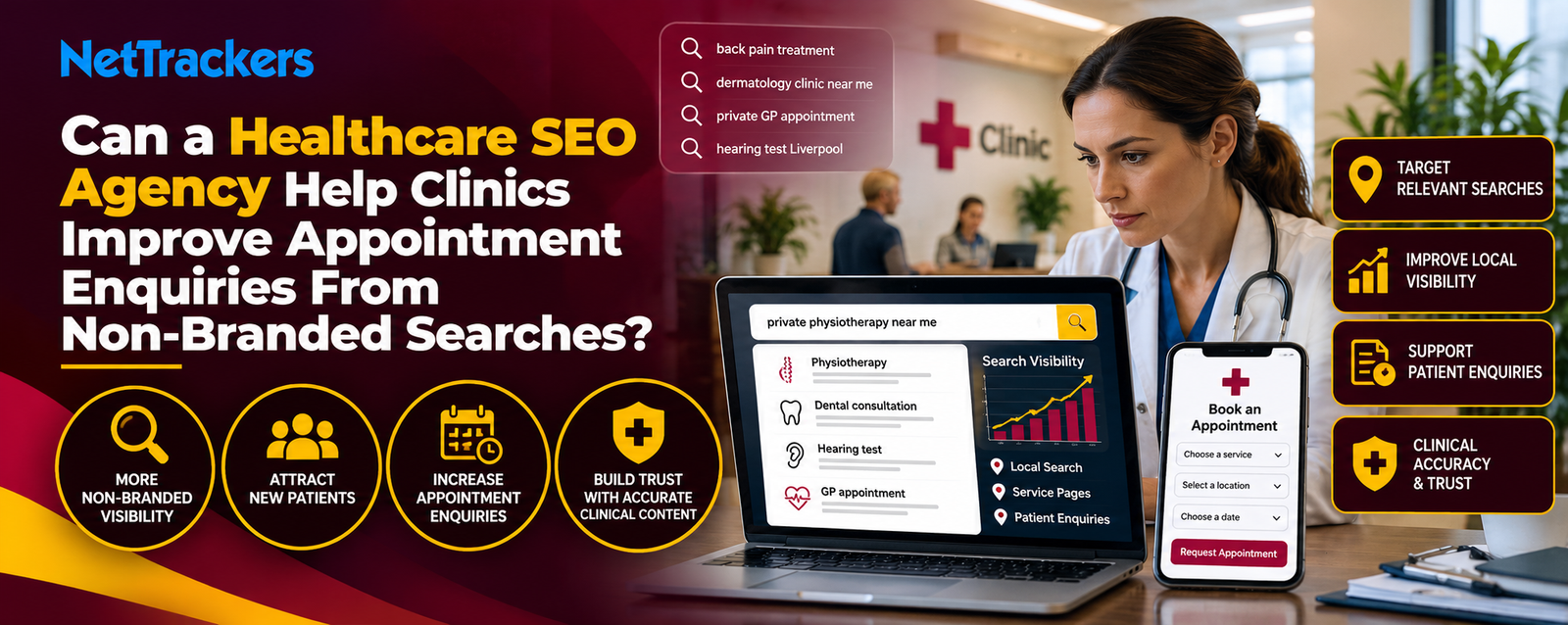
Patients do not always know which clinic or healthcare provider they need when they begin searching online. Many start with a symptom, treatment question or specialist service rather than a particular clinic name. A healthcare SEO agency can help clinics make accurate, relevant information easier to discover during these early stages of patient research. However, increased search visibility does not automatically translate into suitable appointment enquiries or better patient outcomes. Clinics need a strategy that combines trustworthy medical content, local search relevance and clear appointment pathways.
For private clinics, specialist practices and multidisciplinary healthcare providers across the UK, non-branded searches can create opportunities to reach patients who are unfamiliar with their services. Someone researching a hearing assessment, physiotherapy appointment or dermatology consultation may compare several providers before contacting one. The clinic’s website needs to explain the available services, professional qualifications and booking process without exaggerating treatment benefits. Search optimisation should make this information accessible while respecting the importance of clinical accuracy. The objective is to help patients make informed choices and contact an appropriate provider when they are ready.
Why Do Clinics Struggle to Attract Non-Branded Search Traffic?
Non-branded searches do not include the name of a particular clinic or healthcare organisation. Instead, patients may search for a service, clinical specialty, symptom or treatment option. These searches can be competitive because several providers may offer similar services within the same geographic area. A clinic with strong recognition among existing patients may still have limited visibility among people who have never heard of it. Understanding the difference between branded and non-branded discovery is therefore essential.
Limited Visibility Beyond Existing Patients
Some clinics receive a significant proportion of their website traffic from people searching directly for their business name. This may indicate established awareness, but it does not necessarily show that the clinic reaches new patients researching relevant services. Non-branded searches provide a different opportunity because the user has not selected a provider. Clinics should review which services appear for relevant queries and whether the associated landing pages satisfy patient needs. This can reveal opportunities that branded search reports alone do not show.
Service Pages That Lack Useful Detail
A clinic may have a page describing a treatment without explaining who provides it or what the appointment involves. Patients often need more information before deciding whether a service is appropriate to investigate. Clear descriptions of the assessment process, clinician qualifications and practical booking requirements can help. Medical claims should be reviewed by appropriately qualified professionals and supported by reliable evidence. Adding keywords without improving the information available to patients is unlikely to address the underlying problem.
Competition From Established Healthcare Providers
Local healthcare searches may include private clinics, hospitals, national providers and specialist practices. These organisations can differ substantially in their services, geographic coverage and online presence. Smaller clinics should not assume they need to compete for every broad medical keyword. More specific service and location queries may align better with their actual patient audience. Search priorities should reflect genuine services and patient needs rather than search volume alone.
How Do Patients Search for Healthcare Services?
Healthcare searches can begin at different stages of the patient’s decision-making process. Some people want general information about a symptom, while others are looking for a particular examination or specialist appointment. The same topic may therefore involve informational, navigational and commercial search intent. Clinics should distinguish these intentions before deciding which pages to create or optimise. This helps provide useful information without treating every medical search as an immediate booking opportunity.
Symptom-Based Searches
Patients may begin with questions about discomfort, hearing changes, mobility limitations or other symptoms. These searches can indicate a need for reliable health information rather than a decision to book a particular treatment. Clinics should avoid implying that a symptom automatically indicates a specific diagnosis. Educational content can explain when professional assessment may be appropriate and which warning signs require urgent medical attention. Clinical review is especially important when content discusses diagnosis, risk or treatment suitability.
Service-Based Searches
Other patients already know the type of healthcare service they want to investigate. They may search for a hearing test, physiotherapy assessment or specialist consultation in their area. These queries can indicate stronger appointment intent, although suitability still depends on individual circumstances. Service pages should clearly explain what the clinic offers and how patients can enquire. Accurate information helps visitors decide whether the provider matches their requirements.
Location-Based Searches
Patients often consider travel distance, appointment availability and accessibility when choosing a healthcare provider. Location-based queries may therefore include a town, neighbourhood or nearby service requirement. Clinics should provide accurate addresses, opening information and relevant accessibility details. Separate location pages are useful when they represent genuine facilities or meaningful service differences. Creating misleading pages for areas without a legitimate clinical presence can damage trust.
What Should a Healthcare SEO Agency Review First?
An effective assessment should begin with the clinic’s existing search visibility and patient enquiry journey. Working with a healthcare SEO agency can help identify whether important services are clearly represented, technically accessible and aligned with relevant searches. The review should also examine how patients move from finding a page to understanding a service and requesting an appointment. Recommendations must respect clinical accuracy and the clinic’s actual scope of practice. The most useful improvements address both discoverability and patient experience.
Technical SEO and Indexing
Search engines need to access relevant pages before those pages can compete in organic search results. Incorrect canonical tags, broken internal links or unintended indexing restrictions may affect important service pages. An audit should identify whether these issues exist and prioritise those with meaningful commercial or patient-facing consequences. Website changes should be tested before and after implementation. Technical corrections support discoverability but do not guarantee higher rankings.
Non-Branded Keyword Opportunities
Keyword research should identify relevant searches associated with the clinic’s services and locations. Broad medical terms may attract substantial attention without indicating that the searcher wants an appointment. More specific service queries can sometimes align more closely with the clinic’s offering. Search Console data can help identify existing impressions and clicks, while enquiry records provide additional context. Decisions should be based on relevance and patient needs rather than estimated search volume alone.
Appointment Conversion Pathways
A visitor may find the right service page but leave because the next step is unclear. Clinics should provide understandable appointment options, contact information and practical guidance about referrals where applicable. Forms should request only necessary information and handle patient data appropriately. Booking interfaces should also work reliably on mobile devices. Improving these pathways can make the website more useful without requiring additional traffic.
Why Are Clinical Accuracy and Trust Important for Healthcare SEO?
Healthcare content can influence decisions about symptoms, diagnoses and treatment. Inaccurate or exaggerated information may create risks beyond ordinary marketing underperformance. Clinics therefore need stronger editorial safeguards than businesses publishing general commercial content. Clinical information should be reviewed by qualified professionals and updated when relevant evidence or guidance changes. Search optimisation must never take priority over patient safety.
Clinician-Reviewed Content
Articles discussing clinical conditions or treatment options should receive appropriate professional review. The reviewer should have expertise relevant to the subject being discussed. Clinics should avoid publishing unsupported medical claims or implying that every patient will experience the same outcome. Where appropriate, content can explain uncertainty, limitations and reasons to seek individual assessment. A documented review process helps maintain accuracy over time.
Transparent Professional Information
Patients may want to understand who provides their care and whether the clinician has relevant qualifications. Accurate professional biographies can explain clinical roles, training and areas of practice. Registrations and credentials should be current and verifiable where applicable. Clinics should avoid presenting marketing staff or unverified contributors as clinical authorities. Transparent information supports informed provider selection.
Evidence-Based Treatment Descriptions
Treatment pages should explain potential benefits and limitations without making guarantees. The information should distinguish established evidence from emerging or uncertain applications. Clinics should also avoid suggesting that a particular intervention is suitable for everyone with a given symptom. Relevant clinical guidance and professional standards should inform the content. This helps patients understand why individual assessment matters.
How Can Clinics Improve Service-Page Relevance?
A useful service page should answer the questions patients are likely to ask before contacting a clinic. These may include what the service involves, who provides it and whether a referral is required. The page should also explain practical matters such as appointment arrangements and the clinic’s location. Medical information must remain accurate and consistent with the services actually offered. Clear communication can improve the patient experience while supporting relevant organic search visibility.
Explain the Assessment Process
Patients may feel uncertain when they do not know what to expect during an appointment. A service page can describe the general assessment process without promising a particular diagnosis or treatment outcome. It should clarify any preparation requirements that genuinely apply. Where the process varies according to individual needs, the content should explain that variation. This helps patients make more informed decisions.
Provide Relevant Location Information
Healthcare services often require patients to attend a particular clinic or facility. Accurate location information can help them determine whether an appointment is practical. Pages should include the relevant address and contact arrangements when appropriate. Accessibility information should be verified rather than assumed. Clear location details can reduce unsuitable enquiries and avoid confusion.
Avoid Repetitive Medical Landing Pages
Publishing numerous near-identical pages for closely related symptoms or locations can make a website difficult to navigate. Each page should have a distinct purpose and provide meaningful information. Clinics should avoid creating pages that imply a service is available when it is not. Existing content may be improved or consolidated when several pages address the same search intent. A smaller collection of accurate, useful pages can provide a better experience than unnecessary duplication.
How Can Organic SEO Support Healthcare Patient Acquisition?
Healthcare search visibility depends on more than the inclusion of medical keywords. Clinics need accessible websites, relevant service pages and clear connections between educational information and appointment options. Professional organic SEO services can support technical improvements and content organisation while respecting healthcare-specific requirements. However, traffic growth should not be treated as proof that patients are receiving better information or care. Performance should be evaluated through relevant enquiries and the quality of the website experience.
Build Useful Internal Links
Internal links can help patients move between related educational resources and service information. For example, an article about hearing assessments may link to the clinic’s relevant appointment page. The connection should be useful rather than designed solely to repeat a target keyword. Clinics should avoid directing unrelated symptoms towards a single treatment page. Clear navigation supports informed decisions and easier website use.
Maintain Accurate Educational Resources
Medical information can change as research and professional guidance develop. Clinics should review important educational pages periodically and update outdated statements. Review dates can support editorial transparency when they accurately reflect the process followed. Content should also make clear when general information cannot replace individual medical advice. Maintaining existing resources is often more valuable than continually publishing similar articles.
Match Content to Patient Intent
Someone researching a symptom may need a different type of information from someone comparing appointment providers. Educational articles should focus on understanding the issue and recognising when professional advice may be needed. Service pages should explain the clinic’s actual offering and the practical steps involved in making contact. Mixing these purposes can create confusing or overly promotional medical content. Matching page content to intent improves usefulness.
How Does Healthcare SEO Differ From Other Industry Strategies?
The fundamentals of technical SEO and content relevance apply across many industries. However, healthcare websites carry particular responsibilities because their information may affect personal health decisions. Businesses in other sectors may prioritise bookings, transactions or commercial enquiries without the same clinical editorial requirements. Industry-specific optimisation should therefore reflect the risks and expectations associated with the service. A strategy that works for one market should not simply be copied into another.
Hospitality Search and Booking Intent
A hotel SEO agency may focus on accommodation searches, room information and direct booking journeys. These activities involve different customer questions from healthcare service selection. Hotel websites may emphasise amenities, location and availability, while clinics must also explain clinical suitability and professional credentials. Both industries benefit from accurate information and accessible conversion pathways. However, their content and trust requirements should be assessed separately.
Property Search and Commercial Enquiries
A real estate SEO agency may prioritise property listings, location searches and buyer or tenant enquiries. These pages often depend on accurate property information and changing availability. Healthcare service pages instead need appropriate clinical explanations and patient-focused guidance. Both sectors can benefit from clear website structure and commercially relevant landing pages. The underlying search strategy must still reflect the audience and industry.
Specialist Aviation Search
An aviation SEO agency may work with technical services, specialist suppliers and industry-specific purchasing journeys. Its content requirements can involve precise terminology and complex business-to-business decision-making. Healthcare marketing also requires specialist knowledge, but patient safety and clinical accuracy create different obligations. Neither industry should rely on generic content that misrepresents technical expertise. Relevant subject-matter review is important in both contexts.
How Can Clinics Measure Search-Driven Appointment Enquiries?
Search rankings and website sessions provide useful visibility information, but they do not establish whether a clinic attracts appropriate appointment requests. Measurement should distinguish general website activity from meaningful patient enquiries. Clinics also need to consider data protection when collecting and analysing information related to healthcare interactions. Reporting should use only the information necessary for legitimate marketing analysis. A practical framework can help identify improvements without exposing sensitive patient details.
Track Non-Branded Search Visibility
Google Search Console can help clinics identify queries that generate impressions and clicks. Non-branded searches should be reviewed separately from searches containing the clinic’s name. This distinction helps reveal whether the website reaches people who may not already know the provider. However, Search Console does not directly establish the number of appointments generated by each query. Additional measurement is required to assess commercial outcomes.
Monitor Appointment Enquiry Actions
Clinics may track relevant actions such as appointment form submissions, booking requests or telephone contact events. Tracking should be configured carefully and reviewed for accuracy. Sensitive health information should not be sent into marketing analytics systems through URLs, form fields or event parameters. The clinic should also consider applicable UK data protection and consent requirements. Reliable measurement should support business decisions without compromising patient privacy.
Review Enquiry Suitability
Not every appointment request will match the clinic’s services or clinical scope. Some enquiries may concern conditions that require referral to another provider or a different level of care. Clinics can review broad operational patterns without exposing identifiable patient information in marketing reports. This helps distinguish useful enquiries from requests the service cannot appropriately fulfil. The aim is to improve access to suitable care rather than maximise bookings regardless of clinical need.
Measure Booking Journey Performance
A website may attract relevant visitors but lose them because its booking process is confusing. Clinics should examine whether appointment pages load correctly and provide clear next steps. Form completion rates and technical errors may reveal practical usability problems. These findings should be assessed without collecting unnecessary medical details. Improving the booking experience can benefit patients even when search traffic remains stable.
What Should Clinics Look for in a Healthcare SEO Audit?
A healthcare SEO audit should evaluate technical visibility, content quality, local relevance and appointment pathways together. It should also identify which medical pages require professional review before publication or revision. Findings should distinguish technical SEO issues from clinical editorial concerns. Recommendations must reflect the clinic’s actual services, locations and operational capabilities. A useful audit provides clear priorities rather than an indiscriminate list of keywords.
Technical and Search Visibility Checks
The audit should examine whether important pages can be discovered and indexed appropriately. It may include checks for redirects, canonical tags, internal links and website performance. Search queries and landing-page visibility should also be reviewed. Technical problems affecting essential service pages may deserve particular attention. Recommendations should explain the practical consequences of each issue.
Content Accuracy and Patient Experience
Healthcare content should be assessed for clarity, accuracy and suitability for its intended audience. Pages containing clinical claims may need review by an appropriately qualified professional. The audit should identify missing service information, confusing navigation and unclear appointment instructions. It should not substitute marketing judgement for medical expertise. Patient understanding should remain a central consideration.
Local Search Relevance
Clinics should accurately represent their physical locations and available services. Google Business Profile information should be consistent with genuine operations and applicable platform guidelines. Location pages should explain the services provided at each facility where relevant. Businesses should avoid creating misleading pages for places where they do not operate. Accurate local information helps patients make practical decisions.
Why Do Some Healthcare Websites Receive Traffic but Few Enquiries?
A clinic may attract visitors through broad informational searches without receiving many appointment requests. This does not necessarily mean the educational content has failed, because some readers may only need general information. However, it is important to understand whether commercially relevant visitors can find suitable service pages. Weak conversion pathways or unclear service information may also contribute to low enquiry rates. A structured review can help distinguish these possibilities.
Identify Informational and Appointment Intent
Searches about symptoms often have a different purpose from searches for a local specialist appointment. Clinics should not assume that every educational visitor is ready to book. Instead, content should provide appropriate guidance and clear pathways to relevant services when useful. The website should also avoid encouraging unnecessary treatment or consultations. Search intent analysis can help align content with patient needs.
Review Service-Page Conversion Barriers
A patient may hesitate to enquire if the website does not explain the appointment process. Missing contact details, unclear referral requirements or difficult forms can create friction. Clinics should test important booking journeys on different devices. They should also ensure that any advertised services are genuinely available. Addressing these issues may improve enquiry quality and patient experience.
Use a Structured Traffic-to-Leads Review
The Organic SEO Traffic-to-Leads Diagnostic Checklist for UK Businesses – NetTrackers provides a framework for examining why organic visibility may not translate into enquiries. Healthcare organisations can adapt the general search-intent and conversion questions to their own websites. Clinical suitability, privacy and patient safety must remain additional considerations. The checklist should not be treated as a clinical assessment tool. Its purpose is to support more informed marketing decisions.
Frequently Asked Questions
Can a Healthcare SEO Agency Help Clinics Attract New Patients?
Yes, search optimisation can help clinics improve the visibility of relevant services to people who do not already know the provider. The strategy may involve technical improvements, accurate service pages and local search optimisation. However, better rankings do not guarantee appointment enquiries. Clinics also need clear booking pathways and clinically appropriate information. Performance should be measured using relevant, privacy-conscious enquiry data.
What Are Non-Branded Healthcare Searches?
Non-branded searches describe a symptom, service or healthcare need without mentioning a specific clinic name. They may include informational questions or searches for local appointment providers. These different intentions should not be treated as interchangeable. Clinics can use search data to understand which relevant queries generate visibility. The findings can guide service-page improvements.
Why Is Medical Content Review Important for SEO?
Healthcare content can influence decisions about diagnosis and treatment. Inaccurate information may mislead patients or create unrealistic expectations. Qualified clinical review helps ensure that important statements reflect appropriate evidence and professional standards. It can also identify where limitations or safety guidance need to be explained. SEO optimisation should never override clinical accuracy.
Should Every Healthcare Service Have a Separate Landing Page?
Not every related treatment or symptom requires a separate page. A dedicated page is useful when it provides distinct, accurate information about a genuine service. Repetitive pages may confuse patients and make website maintenance more difficult. Clinics should consider search intent and patient needs when planning their content structure. Clinical accuracy and clarity should guide the final decision.
How Can Clinics Improve Appointment Conversion Rates?
Clinics can begin by making service information, contact details and booking instructions easier to understand. Forms should function reliably and avoid unnecessary requests for sensitive information. Appointment options should reflect the services and availability actually offered. Relevant service pages should also provide appropriate clinical context. Improvements should be evaluated using reliable, privacy-conscious measurement.
Conclusion: Healthcare SEO Should Prioritise Relevant Patients and Trusted Information
Non-branded search visibility can help clinics reach people who are researching healthcare services without already knowing a particular provider. However, attracting more visitors is only useful when the website provides accurate information and appropriate appointment pathways. A well-planned healthcare SEO agency strategy should combine technical accessibility, clinician-reviewed content, local relevance and meaningful enquiry measurement. Clinics should avoid exaggerated treatment claims, misleading location pages and marketing practices that compromise patient privacy. NetTrackers helps UK healthcare businesses investigate search visibility and identify opportunities to improve their digital patient journey.
Request a Healthcare SEO and Appointment Enquiry Audit
If your clinic receives limited enquiries from non-branded searches, a structured SEO assessment can help identify potential visibility and conversion gaps. NetTrackers can review important service pages, relevant search queries, technical issues and appointment pathways. Businesses exploring SEO audit services UK can begin by sharing their website, clinic locations and priority services. The assessment can help establish practical marketing improvements while keeping clinical accuracy and patient privacy in view. Request a review before investing in additional healthcare content or making substantial website changes.
Request a Healthcare SEO Audit: https://nettrackers.co.uk/free-seo-audit
Website: https://nettrackers.co.uk/
Contact NetTrackers: +44 20 4572 4940
Email: info@nettrackers.co.uk
Editorial Note: Healthcare information should be reviewed by an appropriately qualified clinician before publication. Marketing content must not replace individual medical advice or make unsupported clinical claims.