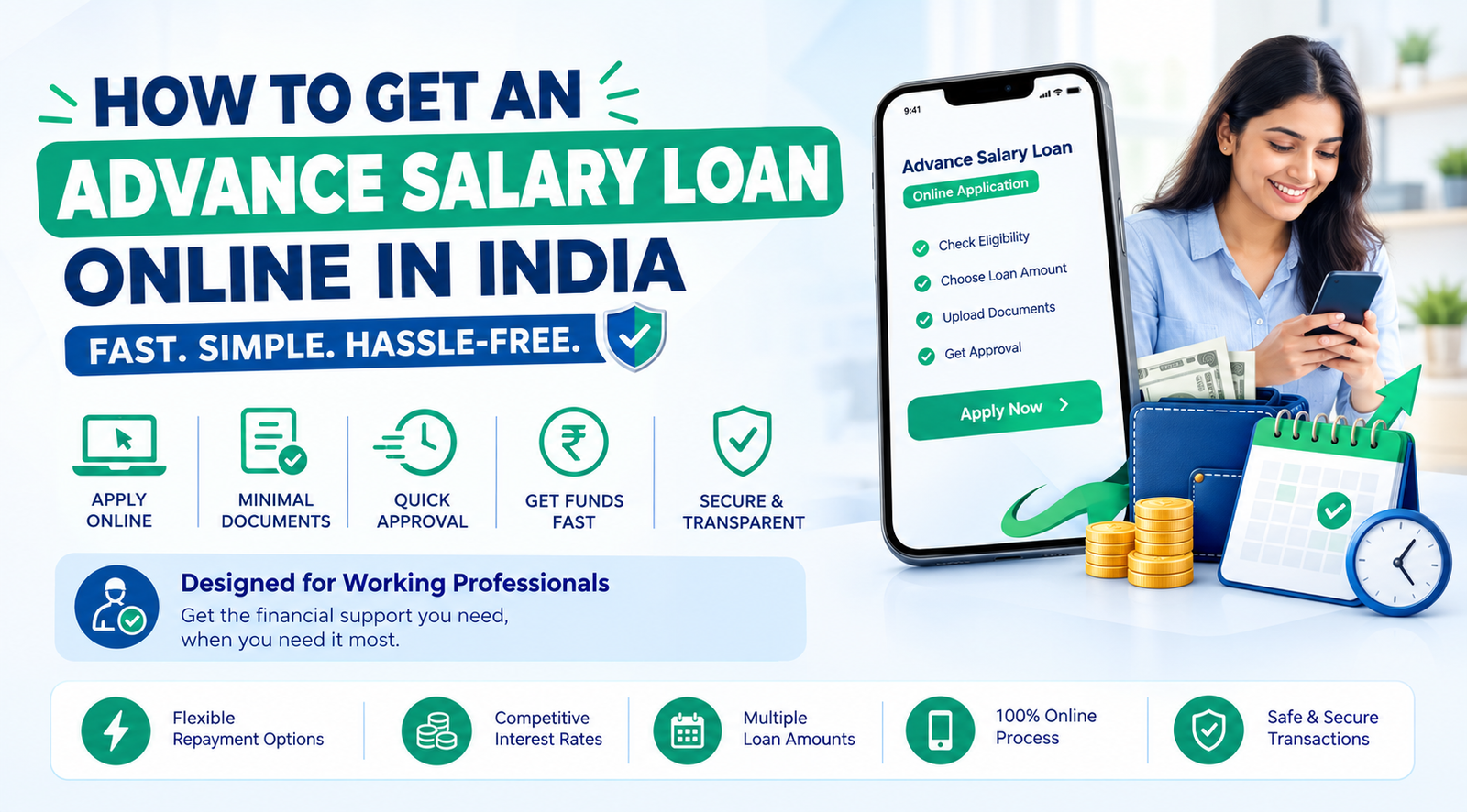
A salary advance and a salary loan are two financial options that help salaried employees manage unexpected expenses and short-term cash requirements. Although both provide access to money before or beyond the regular salary cycle, they differ in terms of eligibility, repayment methods, loan amounts, interest rates, and approval processes. Understanding these differences can help employees choose the right financial solution. An advance salary loan is generally useful when an employee needs funds to manage an urgent expense before payday, while a salary loan can provide a larger amount with a longer repayment period.
What Is a Salary Advance?
A salary advance is an amount an employee receives from their employer before the scheduled salary date. It is usually adjusted against the employee’s upcoming salary. For example, if an employee needs ₹10,000 before payday, they can request a salary advance from their employer. The amount is then deducted from their next salary payment.
Salary advances are generally offered as an employee benefit and may not involve interest or additional processing charges. However, the availability and amount depend on the company’s salary advance policy. Employees should check the repayment conditions before requesting an advance. This option is suitable for managing small, urgent expenses without taking a traditional loan.
What Is a Salary Loan?
A salary loan is a financial product offered by banks, NBFCs, or digital lending platforms to salaried individuals. Unlike a salary advance, it is not necessarily provided by the employer. Borrowers can apply for a specific amount based on their monthly income, credit history, employment details, and repayment capacity.
A loan against salary advance may be considered by individuals looking for short-term financial assistance using their regular salary as an important eligibility factor. Depending on the lender, borrowers may receive flexible repayment tenures and different interest rate options. However, interest and applicable charges generally make salary loans more expensive than interest-free employer advances.
Key Differences Between Salary Advance and Salary Loan
Although both options provide financial assistance, there are several differences between them.
| Basis | Salary Advance | Salary Loan |
|---|---|---|
| Provider | Employer | Bank or NBFC |
| Loan amount | Usually a portion of salary | Depends on eligibility |
| Interest rate | Often interest-free | Interest generally applies |
| Repayment | Deducted from upcoming salary | Paid through EMIs |
| Approval | Employer approval | Lender approval |
| Credit score | Usually not required | May be considered |
| Tenure | Generally short-term | Can be longer |
| Documentation | Usually minimal | KYC and income documents may be required |
Benefits of Applying for an Advance Salary Loan Online
With digital lending services, salaried employees can explore an advance salary loan online without visiting multiple lender branches. Online applications make it easier to compare loan options, understand eligibility requirements, and submit documents digitally.
Some potential benefits include:
-
Convenient application: Apply online from home or work.
-
Quick processing: Eligible applications may receive faster decisions.
-
Flexible loan options: Compare available amounts and repayment tenures.
-
Minimal paperwork: Digital KYC and document submission may simplify the process.
-
Emergency financial support: Access funds for medical expenses, household bills, or other urgent requirements.
However, applicants should always check the lender’s interest rate, processing fees, repayment schedule, and other applicable charges before accepting a loan.
Which Option Should You Choose?
Choosing between a salary advance and a salary loan depends on your financial requirements. If you need a small amount for a few days and your employer offers an interest-free advance, it may be a more affordable option.
On the other hand, if you need a larger amount or a longer repayment period, a salary loan may be worth considering. Compare different lenders and calculate your monthly EMI before applying. Avoid borrowing more than you can comfortably repay.
Conclusion
Both salary advances and salary loans can help salaried employees manage financial emergencies. A salary advance is generally suitable for immediate, short-term needs, while a salary loan can offer access to larger funds with structured EMI repayments. Before choosing an advance salary loan, compare the available options, understand the charges, and assess your repayment capacity to make an informed financial decision.