Dental extractions require precision, control, and the right surgical instruments. Among the commonly used dental extraction instruments, 150 and 151 forceps play an important role in helping dental professionals remove teeth safely and efficiently. Although both instruments serve a similar purpose, they have different designs that make them suitable for specific teeth and extraction procedures. Therefore, understanding their differences helps dentists select the appropriate instrument for each clinical situation.
Dental forceps are specially designed to grip teeth securely and support controlled extraction movements. Moreover, their ergonomic handles and carefully shaped beaks allow dental professionals to apply the necessary pressure while maintaining control. Choosing the correct forceps can improve procedural efficiency and help reduce unnecessary trauma to surrounding tissues.

What Are 150 and 151 Forceps?
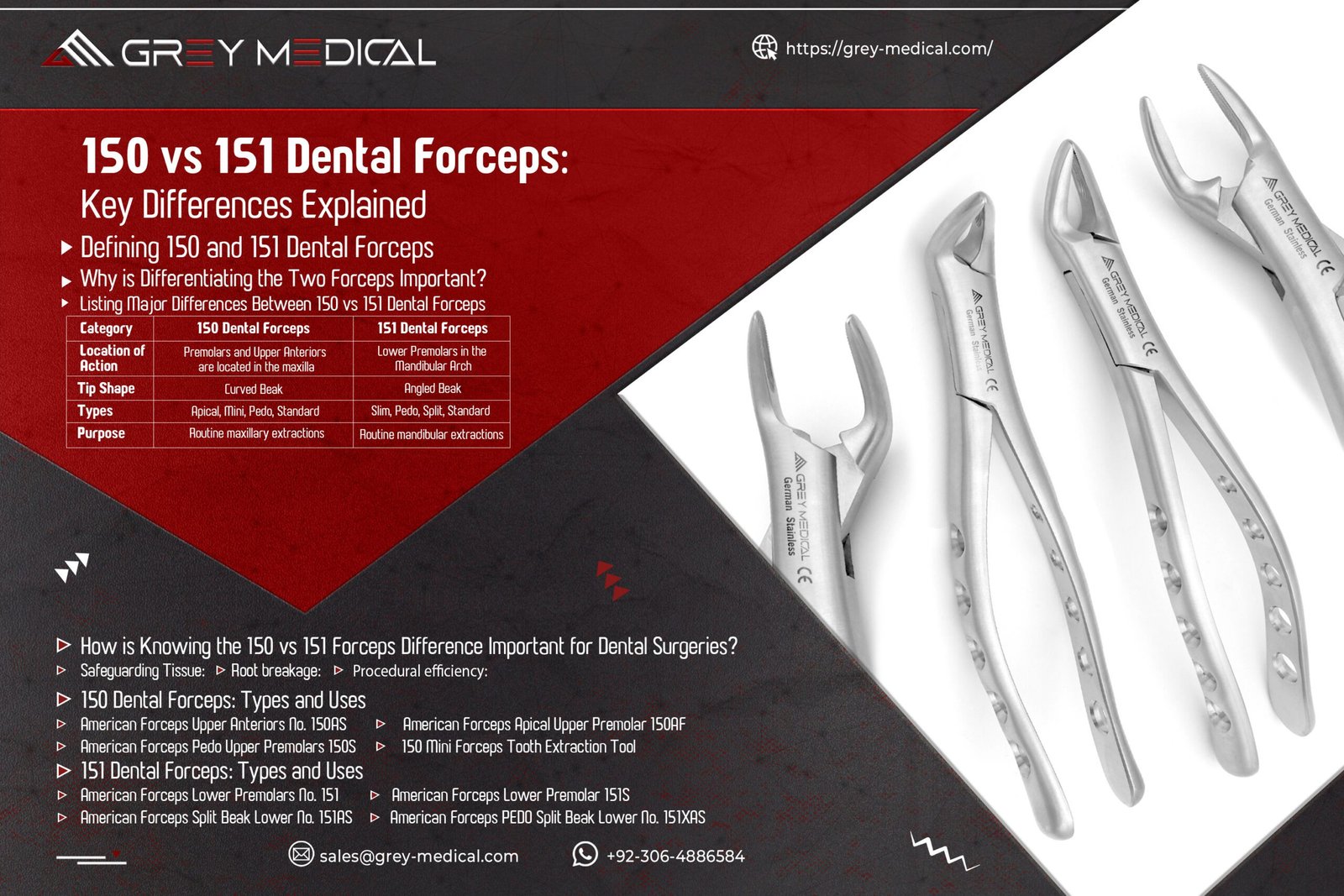
150 and 151 forceps are commonly recognized dental extraction instruments used for removing teeth from their sockets. The 150 forceps are generally known as universal upper forceps, while the 151 forceps are commonly called universal lower forceps.
The 150 forceps feature a design suited to extracting maxillary teeth, particularly incisors, canines, and premolars. Their beaks allow dentists to establish a firm grip around the tooth and perform controlled extraction movements.
In contrast, the 151 forceps are designed primarily for mandibular teeth. Their beak configuration and handle alignment support access to lower teeth and help dental professionals apply appropriate extraction forces.
Both instruments are valuable components of a general dental extraction set. However, dentists must consider tooth position, root anatomy, and clinical conditions before selecting either instrument.
Main Differences Between 150 and 151 Forceps
Although these instruments look similar at first glance, several design features distinguish them. Understanding these differences helps dental professionals use each instrument correctly.
150 forceps:
- Primarily designed for extracting upper teeth.
- Commonly used for maxillary incisors, canines, and premolars.
- Feature beaks shaped for gripping suitable upper teeth.
- Support controlled movements during extraction.
- Provide a comfortable grip for dental professionals.
151 forceps:
- Primarily designed for extracting lower teeth.
- Commonly used for mandibular incisors, canines, and premolars.
- Feature a design adapted to the position of lower teeth.
- Allow controlled access to the mandibular arch.
- Support effective handling during extraction procedures.
Furthermore, the correct instrument selection depends on the patient’s individual dental anatomy. Dentists should always evaluate the tooth and surrounding structures before beginning an extraction.
Common Uses in Dental Extraction Procedures
Dental professionals use 150 and 151 forceps during routine extraction procedures when a tooth requires removal. These instruments help establish a secure grip and support controlled movements that gradually expand the periodontal ligament space.
For example, dentists may select 150 forceps when removing an appropriate upper anterior tooth or premolar. Similarly, they may choose 151 forceps for suitable lower anterior teeth and premolars.
However, not every tooth extraction follows the same approach. Some teeth have curved roots, extensive decay, or complicated anatomical structures. Consequently, dentists may require specialized forceps, elevators, or surgical instruments to complete the procedure safely.
In addition, proper instrument handling plays an essential role in successful extractions. Dental professionals should apply controlled force, maintain a suitable position, and avoid unnecessary pressure on adjacent teeth and soft tissues.
Features to Consider When Choosing Dental Forceps
Selecting high-quality weitlaner retractor requires attention to several important features. First, material quality affects durability and resistance to corrosion. Stainless steel is widely used in dental instruments because it offers strength, durability, and compatibility with appropriate sterilization processes.
Second, the beak design should match the intended tooth and extraction procedure. A suitable shape helps establish a secure grip and improves instrument control.
Third, handle ergonomics matter because dentists frequently perform procedures that require precise movements. Comfortable handles can support better control and reduce unnecessary hand fatigue.
Finally, instrument maintenance is essential. Dental professionals should clean, inspect, and sterilize reusable forceps according to the manufacturer’s instructions and applicable infection-control guidelines.
Why Quality Matters in Dental Extraction Instruments
Reliable dental instruments support consistent performance in clinical environments. Poor-quality instruments may create handling difficulties, reduce control, or show signs of wear after repeated use. Therefore, dental professionals should prioritize dependable manufacturing standards when purchasing extraction instruments.
At Grey Medical®, we understand the importance of precision, durability, and functionality in dental and surgical equipment. Grey Medical® is a privately owned medical technology company dedicated to innovation and excellence in the craft of surgical instrument.
Our commitment to quality focuses on providing medical professionals with carefully manufactured instruments that support their everyday clinical requirements. Moreover, selecting dependable dental instruments helps clinics maintain organized treatment environments and consistent instrument performance.
Proper Care and Maintenance of Extraction Forceps
Maintaining dental forceps properly helps extend their service life and supports patient safety. After every procedure, dental professionals should follow established cleaning and sterilization protocols.
Here are some important maintenance practices:
- Remove visible debris promptly after use.
- Clean instruments using approved cleaning procedures.
- Inspect beaks, joints, and handles for damage or excessive wear.
- Dry instruments thoroughly when required by the manufacturer’s instructions.
- Sterilize instruments using validated methods suitable for their materials.
- Store sterilized instruments in appropriate packaging and conditions.
Additionally, regular inspection helps identify damaged instruments before they affect clinical performance. Dental professionals should replace instruments that no longer function correctly.
Conclusion
Understanding the differences between 150 and 151 forceps helps dental professionals select suitable instruments for upper and lower tooth extractions. While 150 forceps are primarily designed for maxillary teeth, 151 forceps are intended mainly for mandibular teeth. Both instruments provide important support during routine extraction procedures when used correctly.
Furthermore, choosing quality instruments, maintaining proper handling techniques, and following effective sterilization practices contribute to reliable dental care. Grey Medical® remains dedicated to innovation and excellence in surgical instrument manufacturing, supporting healthcare professionals with precision-crafted medical and dental instruments. Ultimately, the right extraction instrument can make a meaningful difference in procedural control, efficiency, and clinical confidence.