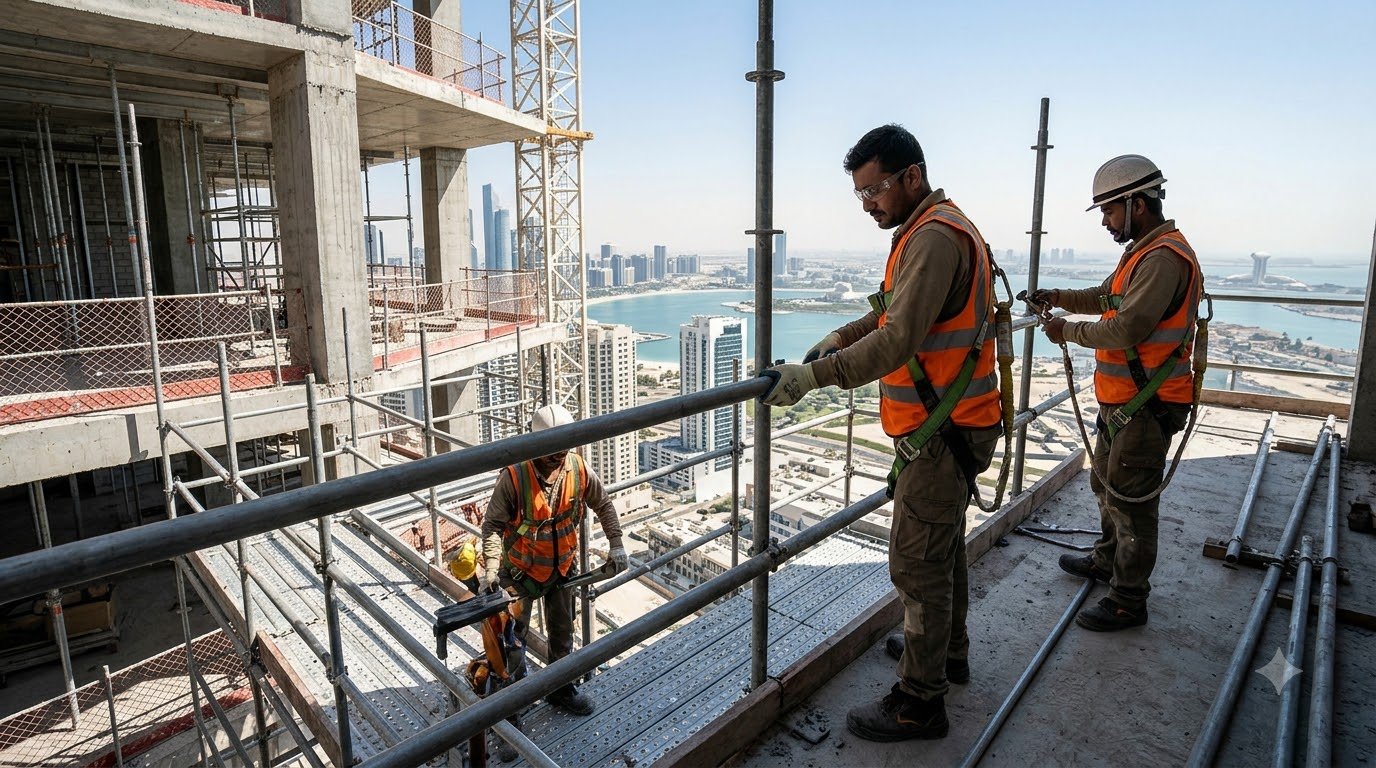
Abu Dhabi’s skyline is shaped by constant construction. Towers, infrastructure projects, oil and gas facilities, industrial plants and refurbishment works all depend on one thing before the main work can begin: safe access at height. Scaffolding provides that access, but a scaffold is only as safe as the people who design, erect, inspect and dismantle it.
This guide explains what certified scaffolders do, why certification matters, what training and standards apply, and what project managers should consider when arranging a qualified workforce.
What Does a Scaffolder Do?
A scaffolder builds temporary structures that allow workers to reach elevated areas safely. The job is far more technical than assembling poles and boards. It involves reading drawings, understanding load limits, working at height and following strict safety procedures.
Typical responsibilities include:
- Erecting scaffolds according to approved designs and drawings
- Checking ground conditions and base stability
- Installing guardrails, toe boards, ties, bracing and access ladders
- Inspecting structures before use and at regular intervals
- Modifying scaffolds as work progresses
- Dismantling structures safely and in the correct sequence
- Maintaining and inspecting equipment and components
Because scaffolds often support workers, tools and materials at significant heights, errors can have serious consequences.
Why Certification Matters
Certification confirms that a scaffolder has been trained and assessed against recognised standards. It shows that the person understands the hazards of the work and knows how to control them.
The main benefits are:
- Safety: Properly trained scaffolders reduce the risk of collapse, falls and falling objects.
- Compliance: Many clients, main contractors and authorities require evidence of competence before workers may enter a site.
- Quality: Certified workers tend to build more stable, consistent structures.
- Productivity: Fewer errors mean fewer delays, rework and stoppages.
- Insurance and liability: Using competent personnel supports risk management and may be required by insurers.
- Reputation: Clients trust contractors who can demonstrate a competent, documented workforce.
An uncertified or poorly trained crew may look cheaper on paper, but incidents, shutdowns and delays can quickly erase any saving.
Common Hazards in Scaffolding Work
Understanding the risks explains why training is so important.
- Falls from height: The leading cause of serious injury in access work.
- Structural collapse: Often linked to overloading, poor foundations, missing ties or incorrect assembly.
- Falling objects: Tools and materials can injure people below.
- Electrical contact: Scaffolds near overhead lines or live equipment create serious danger.
- Heat stress: Abu Dhabi’s summer conditions put workers at risk of exhaustion and heatstroke.
- Wind loading: Strong winds can affect stability, especially on tall or sheeted structures.
- Manual handling: Heavy components cause strains and injuries.
Certified scaffolders are trained to recognise these hazards and apply controls such as edge protection, safe systems of work and appropriate personal protective equipment.
Training and Certification Levels
Scaffolding qualifications usually follow a tiered structure. Names and levels vary by training provider and scheme, but the general pattern is similar.
Scaffolder trainee or labourer. Works under direct supervision and learns basic erection and safety skills.
Basic or Level 1 scaffolder. Can erect and dismantle simple scaffolds under supervision.
Advanced or Level 2 scaffolder. Works more independently on complex structures such as cantilevers, bridges and system scaffolds.
Scaffold supervisor or foreman. Plans work, directs crews, checks compliance and signs off completed structures.
Scaffold inspector. Specially trained to inspect structures and confirm they are safe to use.
Recognised international schemes such as CISRS (Construction Industry Scaffolders Record Scheme) and equivalent programmes are widely referenced in the Gulf. Clients may also ask for training linked to working at height, rescue procedures, first aid and site-specific safety inductions.
Standards and Regulations
Scaffolding work in Abu Dhabi must meet safety expectations set by local authorities, project owners and recognised international codes. Relevant frameworks often include:
- Abu Dhabi occupational health and safety requirements, including OSHAD (Abu Dhabi Occupational Safety and Health System) requirements
- Client and main contractor safety specifications
- Recognised design and product standards, such as the EN 12811 and EN 12810 series for scaffolding
- Manufacturer instructions for system scaffolds
- Site-specific method statements and risk assessments
Exact requirements differ between projects and sectors, particularly in oil and gas, nuclear, airports and government developments. Always confirm what applies to your site with your safety consultant and the relevant authority.
Types of Scaffolding Commonly Used
Different projects call for different systems.
- Tube and fitting scaffolds: Highly flexible and adaptable to complex shapes.
- System scaffolds (modular): Quick to assemble and consistent in design. Ringlock and cuplock are common examples.
- Frame scaffolds: Simple, repetitive structures often used in building facades.
- Mobile tower scaffolds: Movable platforms for maintenance and short-term tasks.
- Suspended scaffolds: Platforms hung from above for high-rise facade work.
- Cantilever and hanging scaffolds: Used when ground-level support is not possible.
- Birdcage scaffolds: Wide platforms for ceilings and large internal areas.
Each type demands specific knowledge, which is why a qualified team matters.
Sectors That Depend on Qualified Scaffolders
- Construction and real estate: High-rise, residential and commercial buildings.
- Oil, gas and petrochemical: Plants, refineries, tanks and shutdown projects.
- Power and utilities: Substations, turbines and boilers.
- Infrastructure: Bridges, roads, rail, tunnels and ports.
- Marine and shipyards: Vessels, platforms and quay structures.
- Facility maintenance: Painting, cleaning, repairs and inspection work.
- Events and temporary structures: Stages, stands and exhibition builds.
Industrial and energy sites often impose some of the strictest competence requirements, including medicals, permits and site-specific training.
Planning Your Workforce Needs
Good planning begins before the first scaffold goes up. Project teams should consider:
- Scope and duration: How large is the job, and how long will access be needed?
- Height and complexity: Are there special structures such as cantilevers or suspended platforms?
- Required competence levels: How many supervisors, advanced scaffolders and trainees are needed?
- Site requirements: Permits, inductions, medicals and security passes.
- Phasing: Will the workforce need to scale up or down over time?
- Equipment: Is the scaffolding material supplied separately or with the labour?
When arranging the supply of certified scaffolders in Abu Dhabi, it helps to provide the provider with drawings, a scope summary and any client safety specifications so they can propose a suitable team structure.
What to Check Before Hiring
Verifying credentials protects both workers and the project. Useful checks include:
- Valid, current certificates and their issuing bodies
- Evidence of working-at-height training and rescue skills
- Medical fitness records
- Site safety induction history
- Experience on comparable projects
- Supervisor and inspector qualifications
- Trade licences and insurance of the provider
- Safety performance records and incident history
Certificates should be checked for authenticity and expiry dates, and workers should be able to show that their skills match the tasks they will be doing.
Qualities of a Reliable Provider
A dependable provider is open about its processes and puts safety ahead of speed. Look for:
- Clear documentation, including method statements and risk assessments
- Proper supervision ratios
- Ongoing training and refresher courses
- Provision of correct personal protective equipment
- Heat stress management in summer
- Responsive communication and flexible deployment
- A culture that allows workers to stop unsafe work
A reputable company providing the supply of certified scaffolders in Abu Dhabi should be willing to share credentials, explain its safety management system and describe how it handles inspections and incident reporting.
Safe Practices on Site
Even with certified staff, ongoing discipline is essential.
- Hold daily toolbox talks covering the day’s tasks and hazards.
- Inspect scaffolds before first use, after bad weather, after modification and at regular intervals.
- Use scaffold tags to show whether a structure is safe to use.
- Never overload platforms or remove ties and braces without approval.
- Wear harnesses where required and use approved anchor points.
- Keep platforms clear of debris and loose materials.
- Provide rest breaks, shade and water during hot weather.
- Stop work in high winds or electrical storms.
Conclusion
Scaffolding is a skilled trade, and in a busy, demanding market like Abu Dhabi, competence cannot be left to chance. Certified scaffolders bring training, discipline and technical knowledge that protect workers, keep projects compliant and reduce costly interruptions. By understanding certification levels, checking credentials and planning workforce needs early, project teams can build safer sites and deliver work with greater confidence.