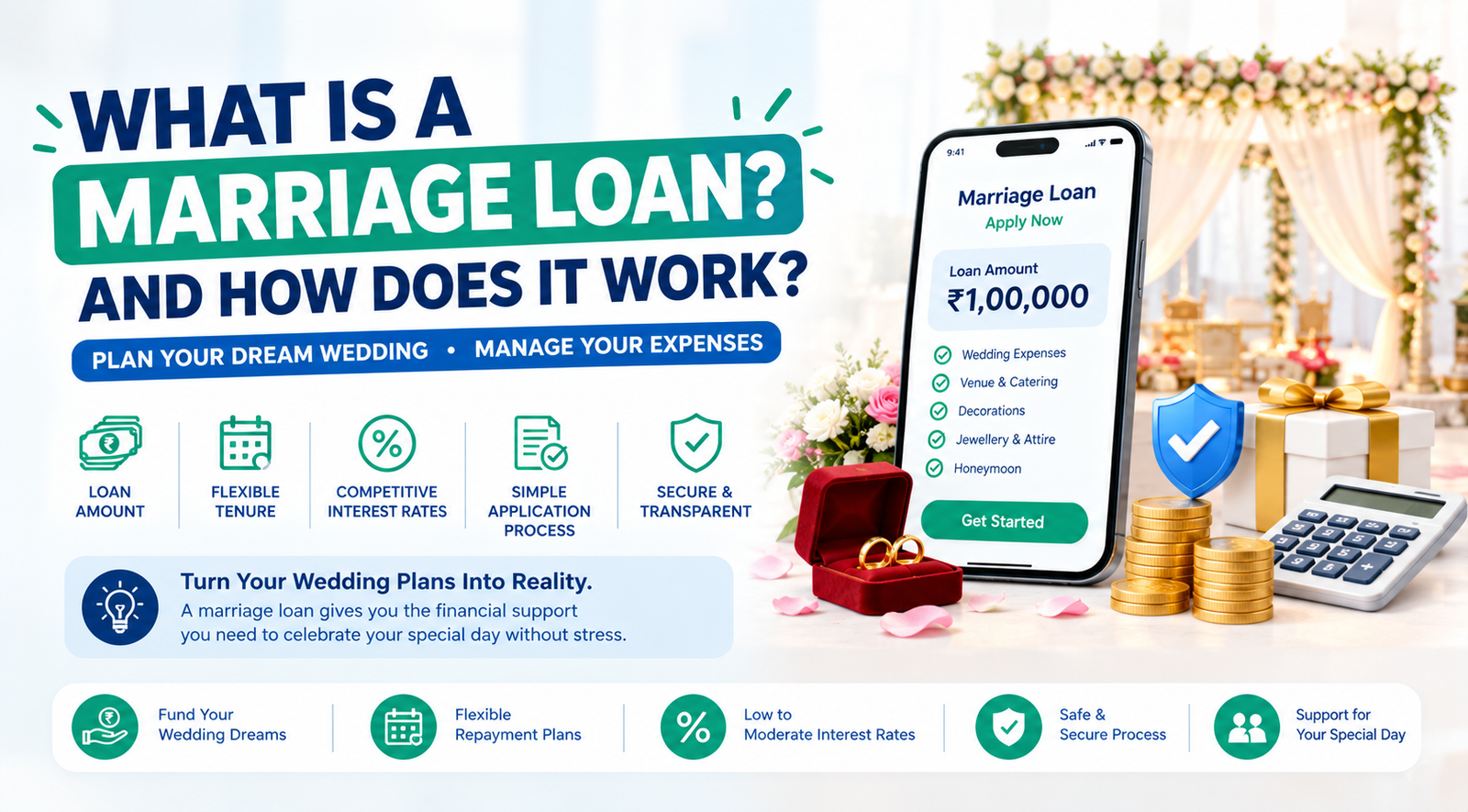
A wedding is one of the most memorable occasions in life, but arranging finances for ceremonies, venue bookings, catering, jewellery, clothing, and other expenses can be challenging. A marriage loan can help individuals manage these costs without exhausting their savings. It is generally offered as an unsecured personal loan that does not require collateral. However, lenders assess several factors before approving an application. Understanding the eligibility criteria can help you choose the right lender and plan your finances effectively. With a marriage loan, borrowers can arrange funds for wedding-related expenses and repay the amount through manageable monthly instalments.
1. Age Requirements
Age is one of the primary eligibility conditions considered by lenders. Generally, applicants must be at least 21 years old to apply for a marriage loan. The maximum age limit at the time of loan maturity may vary depending on the lender’s policies. Some financial institutions may offer loans to applicants up to 60 or 65 years of age. Meeting the prescribed age criteria is essential for getting your application considered.
2. Minimum Income Requirements
Lenders evaluate an applicant’s monthly income to determine their repayment capacity. Salaried individuals generally need a stable monthly salary, while self-employed applicants must demonstrate a consistent income through their business activities. The minimum income requirement varies across banks and financial institutions. A higher and stable income can improve your chances of securing a suitable loan amount. Before you apply for a marriage loan, check the lender’s minimum income criteria to avoid unnecessary application rejections.
3. Employment and Work Experience
Employment stability is another important factor in determining loan eligibility. Salaried applicants may need to work for a minimum period with their current employer and have sufficient overall work experience. Self-employed individuals may be required to demonstrate business continuity for a specified period. Regular employment or a stable business income helps lenders assess whether borrowers can repay their EMIs on time.
4. Credit Score Requirements
Your credit score reflects your previous borrowing and repayment behaviour. Most lenders prefer applicants with a CIBIL score of 700 or above, although the actual requirement varies between financial institutions. A good credit score indicates responsible credit management and can improve approval chances. Applicants with lower credit scores may still qualify, depending on their income, existing financial obligations, and lender policies. Maintaining timely repayments and avoiding excessive debt can strengthen your eligibility for a marriage loan.
5. Existing Financial Obligations
Before approving a loan, lenders examine your existing EMIs, credit card dues, and other financial commitments. If a significant portion of your monthly income goes towards debt repayments, your eligibility may be affected. A lower debt-to-income ratio generally improves your chances of approval. Consider clearing outstanding dues before submitting your application.
6. Documents Required for a Marriage Loan
Applicants generally need to submit basic KYC, income, and employment documents. The requirements may vary depending on the lender.
Commonly required documents include:
-
PAN card and Aadhaar card for identity verification.
-
Address proof, such as a utility bill or passport.
-
Recent salary slips for salaried applicants.
-
Bank statements for the previous 3–6 months.
-
ITR and business-related documents for self-employed applicants.
-
Recent passport-sized photographs, if required.
7. How to Apply for a Marriage Loan Online?
Applying digitally is a convenient way to access wedding financing. Many lenders provide online application facilities that allow borrowers to complete the process from home.
Follow these steps to apply for a marriage loan:
-
Research different lenders and compare their interest rates, processing fees, and repayment terms.
-
Check your eligibility using the lender’s online eligibility calculator.
-
Visit the lender’s website and complete the application form.
-
Enter your personal, employment, and income details.
-
Upload the required KYC and financial documents.
-
Complete the verification process and wait for loan approval.
-
After approval, review the loan agreement before accepting the offer.
Conclusion
Understanding the eligibility requirements is important before applying for wedding financing. Factors such as age, income, employment stability, credit score, and existing financial obligations influence loan approval. Comparing different lenders can help you find affordable borrowing options with suitable repayment terms. Choosing a marriage loan online can simplify the application process and help you arrange funds conveniently. Borrow responsibly by selecting a loan amount that comfortably fits your monthly budget and repayment capacity.