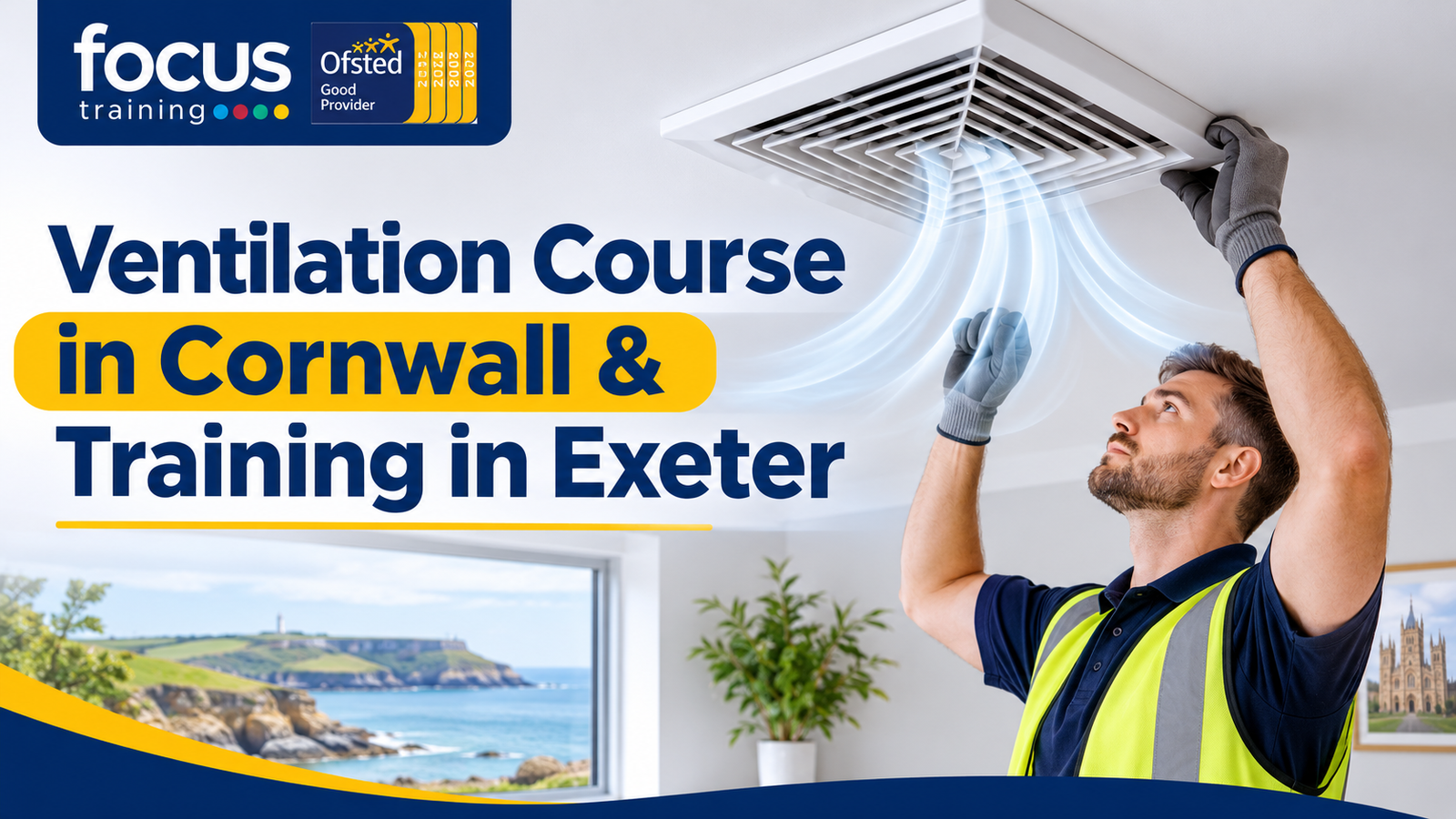
If you work in the building, electrical or heating trades, you have probably noticed that ventilation is no longer an optional extra. Modern homes are built and refurbished to be more airtight than ever, which makes proper airflow essential. That is why a ventilation course in Cornwall is becoming a popular choice for electricians, builders and maintenance professionals who want to add a valuable skill. In this guide, we explain what domestic ventilation training involves, who it suits, what you will learn and how to choose the right course, whether you are based in Cornwall, Exeter or elsewhere in the South West.
Why Ventilation Matters in Modern Homes
Ventilation is the process of supplying fresh air to a building and removing stale, moist or polluted air. In older properties, draughty windows, gaps and chimneys provided this airflow by accident. Today, insulation and air-tightness standards mean homes hold heat far better, but they also trap moisture, cooking fumes and indoor pollutants.
Without adequate ventilation, a property can suffer from:
- Condensation on windows and walls
- Damp and mould growth
- Poor indoor air quality
- Lingering odours and excess humidity
- Damage to plasterwork, timber and decoration
Good ventilation protects both the building and the people who live in it. This is why Building Regulations in England set out requirements for ventilation in new homes and in many refurbishment projects, and why trained installers are in demand.
What Is a Domestic Ventilation Course?
A domestic ventilation course is a training programme that teaches you how ventilation systems work in homes, how they should be designed and installed, and how they must be tested and commissioned. It is aimed at tradespeople who want to install, replace or maintain ventilation equipment correctly and in line with current regulations.
Courses vary between providers, but most domestic ventilation training programmes combine classroom theory with practical, hands-on work. You learn the principles first, such as how air moves through a dwelling and why some rooms need more extraction than others. You then apply them by working with real equipment, measuring airflow and completing the paperwork that proves a system works as intended.
Who Should Take Domestic Ventilation Training?
Ventilation skills are useful across several trades. Typical learners include:
- Electricians who already fit extractor fans and want to extend their services
- Builders and developers who need to meet ventilation requirements on new builds and extensions
- Heating and plumbing engineers who often work alongside ventilation systems
- Property maintenance teams dealing with damp and condensation complaints
- Landlords’ contractors responding to mould and air quality issues
- Career changers looking for a practical, in-demand qualification
You do not always need years of experience, but a background in a building-related trade is helpful. If you are unsure whether you meet the entry requirements, it is best to ask the training provider before booking.
What You Will Learn on a Ventilation Course
The exact syllabus depends on the course, but a quality ventilation programme will usually cover the following areas.
1. Building Regulations and guidance. You will study the requirements for ventilation in dwellings, including the guidance in Approved Document F, and understand how these apply to new builds, extensions and refurbishments.
2. Types of ventilation systems. Learners are introduced to common domestic systems, including:
- Intermittent and continuous extract fans
- Positive input ventilation (PIV)
- Mechanical extract ventilation (MEV)
- Mechanical ventilation with heat recovery (MVHR)
- Passive and natural ventilation methods
3. Design and sizing. You will learn how to work out the airflow rates a property needs, how to choose suitable equipment and how ducting layout affects performance and noise.
4. Installation practice. This covers safe fitting of fans, ducts, vents and controls, including positioning, insulation of ducting, condensation risks and electrical safety.
5. Commissioning and testing. A system is only as good as its performance on the day it is handed over. You will practise measuring airflow, balancing systems and recording results.
6. Certification and paperwork. Finally, you will learn how to complete commissioning records and notify work correctly so the homeowner or client has the documentation they need.
Understanding NIC EIC Ventilation Training
Many people search for NIC EIC ventilation training when they actually mean training linked to NICEIC, the well-known body that assesses and certifies electrical contractors in the UK. For electricians, ventilation is a natural add-on service because fans and mechanical systems are powered, controlled and wired just like other electrical equipment.
If you are already registered with a competent person or certification scheme, ventilation training can help you widen the range of work you are able to offer. If you are thinking about registering, it is worth speaking to the scheme provider about their current requirements, because assessment criteria and qualifications can change over time. A reputable training provider should also be able to explain how their course fits alongside the schemes you are interested in.
Ventilation Course in Cornwall: Why Demand Is Growing
Cornwall has a distinctive housing mix. Coastal properties face salty, moist air. Older cottages and stone-built homes can be prone to damp. At the same time, new housing developments and renovation projects continue across the county. All of this creates steady demand for professionals who understand how to ventilate a property properly.
If you work in Cornwall, completing a ventilation course in Cornwall or within easy reach of it can help you:
- Respond to damp and condensation callouts with confidence
- Offer ventilation upgrades alongside electrical or building work
- Meet compliance requirements on renovation and new build projects
- Stand out from competitors who do not hold ventilation training
Travelling a long distance for a course can be time consuming, so many Cornish learners look for providers across the wider South West and choose a location that fits their working week.
Ventilation Training in Exeter: A Convenient Option for the South West
Exeter is a well-connected city and a practical training location for learners from Devon, Cornwall and Somerset. If you are researching ventilation training in Exeter, you will find that the city is easy to reach by road and rail, which makes it a convenient base for short, practical courses.
Training close to where you work has real advantages. You can fit it around jobs, spend less time travelling and apply what you learn on local projects soon afterwards. Learners often combine a ventilation course with other qualifications, such as electrical, plumbing or heating training, to build a broader skill set.
Because course dates and locations change, always check the latest availability directly with the provider before making plans.
How to Choose the Right Ventilation Training Provider
Not every course is the same, so it pays to ask the right questions before you book. Consider the following:
- Is the content up to date? Ventilation guidance and regulations are revised from time to time, so the course should reflect the latest standards.
- How much is practical? Hands-on time with real equipment is far more valuable than theory alone.
- Who are the trainers? Look for instructors with genuine industry experience.
- What certificate do you receive? Check what the qualification covers and how it is recognised.
- What are the entry requirements? Make sure the course matches your current experience.
- Is support available? Good providers answer questions before and after you train.
- Are the dates and location convenient? This matters most if you are balancing training with a busy work schedule.
Career Benefits of Ventilation Training
Adding a ventilation qualification can open several doors. You can widen the services you offer, win work from housing associations, landlords and developers, and respond to the growing public awareness of damp, mould and indoor air quality. For employed tradespeople, it can strengthen a CV and demonstrate commitment to professional development. For self-employed installers, it can be a straightforward way to increase the value of each job.
Final Thoughts
Ventilation has moved from a background detail to a central part of how homes are designed, built and maintained. Whether you choose a ventilation course in Cornwall, explore ventilation training in Exeter, or compare options across the South West, the goal is the same: gain the knowledge to design, install and test systems that keep homes healthy and compliant.
Ready to take the next step? Focus Training Group can answer your questions about ventilation training, entry requirements and upcoming availability.
- Chat with us on WhatsApp: 07516276671
- Email: hello@tftg.org
Frequently Asked Questions (FAQs)
1. What is a domestic ventilation course?
A domestic ventilation course teaches you how to select, install, commission and test ventilation systems in homes. It typically covers regulations, system types, airflow calculations and the paperwork required to show that a system performs correctly.
2. Who can take a ventilation course in Cornwall?
Electricians, builders, heating engineers, maintenance staff and career changers can all benefit. Some courses expect a background in a building-related trade, so check the entry requirements with your chosen provider.
3. Is ventilation training in Exeter suitable for learners from Cornwall?
Yes. Exeter is well connected by road and rail, so many learners from Cornwall and the wider South West travel there for training. It can be a practical option if a suitable course is not available close to home.
4. What does NIC EIC ventilation training mean?
People often use this phrase when looking for ventilation training that supports electricians working within NICEIC-type certification schemes. Requirements differ between schemes and can change, so confirm the details with both the scheme provider and your training provider.
5. How long does domestic ventilation training take?
Duration depends on the course and the provider. Many ventilation programmes are short and practical rather than lasting many weeks, but you should confirm current course length and dates directly with the provider.
6. Do I need a ventilation qualification to install extractor fans or ventilation systems?
Ventilation work in dwellings is covered by Building Regulations, and the work must meet the required standards and be properly commissioned. A recognised qualification helps demonstrate competence, but requirements vary by project and certification route, so seek advice before starting work.
7. What will I be able to do after completing the course?
You should be better equipped to assess a property’s ventilation needs, recommend suitable systems, install them safely, carry out commissioning checks and provide the documentation clients expect.
8. How do I book a ventilation course?
Contact Focus Training Group on WhatsApp at 07516276671 or email hello@tftg.org to ask about availability, entry requirements and enrolment.