
Industries use a large amount of water for manufacturing, cleaning, processing, and other daily activities. After use, this water becomes industrial wastewater or effluent, which may contain chemicals, oils, suspended solids, and other pollutants. Releasing untreated wastewater into the environment can cause serious pollution. An Effluent Treatment Plant (ETP) provides an effective solution by treating industrial wastewater before it is discharged or reused.
What Is an Effluent Treatment Plant?
An Effluent Treatment Plant (ETP) is a wastewater treatment system designed mainly for industries. It removes harmful pollutants and unwanted substances from industrial wastewater through different physical, chemical, and biological treatment processes.
The type of treatment required depends on the industry and the quality of wastewater generated. Industries such as textiles, pharmaceuticals, chemicals, food processing, dairy, manufacturing, and refineries may require ETP systems to manage their wastewater effectively.
A properly designed ETP can help industries control pollution, conserve water, and support more sustainable operations.
Why Is an ETP Important for Industries?
Industrial wastewater cannot always be treated in the same way as domestic sewage because it may contain specific chemicals, oils, metals, or other pollutants. An ETP is designed according to the characteristics of the industrial effluent.
Some important reasons for installing an ETP include:
- Pollution Control: It removes harmful contaminants before wastewater is discharged.
- Water Recycling: Treated water can be reused for suitable non-drinking applications.
- Regulatory Compliance: Proper treatment helps industries follow applicable environmental requirements.
- Cost Savings: Reusing treated wastewater can reduce freshwater consumption and wastewater disposal costs.
- Health and Safety: Effective wastewater treatment helps create a cleaner and safer industrial environment.
- Sustainable Operations: ETPs support responsible water management and reduce environmental impact.
How Does an Effluent Treatment Plant Work?
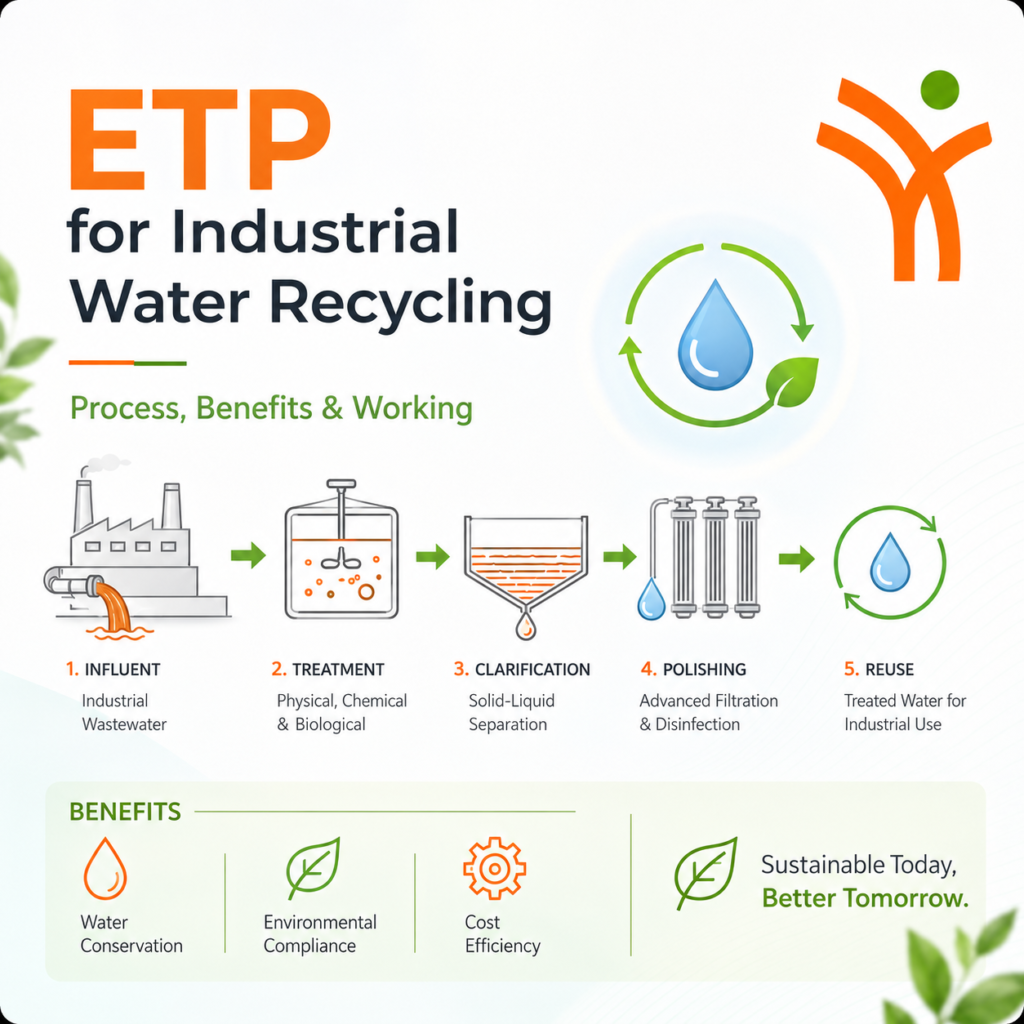
The ETP process generally includes several treatment stages. The exact process can vary depending on the type and quality of industrial wastewater.
1. Screening and Oil & Grease Removal
First, wastewater passes through bar screens to remove large solids and debris. An oil and grease trap can then separate floating oil and grease from the wastewater.
2. Equalization
The collected effluent enters an Equalization Tank, where wastewater is mixed using air blowers or an agitator. This helps maintain a more uniform wastewater quality and prevents solids from settling.
3. Coagulation and Flocculation
Suitable chemicals are added to wastewater to bring small suspended particles together into larger particles called flocs. These particles can then be removed more easily during the settling process.
4. Settling and Clarification
The wastewater enters a tube settler or similar clarification unit. Suspended solids settle down, helping produce clearer water for the next stage.
5. Filtration
The treated water is sent to a filter feed tank and then passes through suitable filtration systems. Filtration helps remove remaining suspended particles and can also reduce unwanted colour and odour.
6. Treated Water Storage and Reuse
After treatment, the water is collected in a storage tank. Depending on the treatment quality and application, it may be reused for activities such as gardening, flushing, cleaning, cooling, or other suitable industrial purposes.
Key Benefits of an ETP
The major benefits of an Effluent Treatment Plant include:
- Reduces industrial water pollution.
- Helps remove harmful chemicals, oils, and suspended solids.
- Supports wastewater recycling and reuse.
- Reduces dependence on fresh water.
- Helps industries manage wastewater responsibly.
- Supports compliance with environmental requirements.
- Improves workplace hygiene and safety.
- Encourages sustainable industrial practices.
For example, Koshish India has implemented ETP solutions for industrial facilities, including a 5 KLD ETP at JP Industries in Baddi and a 2 KLD ETP at Ranika Export in Noida. These systems were designed to improve wastewater management and support safer industrial operations.
ETP vs STP: What Is the Difference?
An STP (Sewage Treatment Plant) mainly treats domestic sewage generated from homes, offices, residential buildings, and similar sources. An ETP, on the other hand, is designed for industrial wastewater, which may contain chemicals, oils, and other industry-specific pollutants.
Therefore, choosing between an STP and ETP depends mainly on the source and characteristics of the wastewater.
Conclusion
An Effluent Treatment Plant (ETP) is an important part of modern industrial wastewater management. It helps industries treat wastewater, reduce pollution, conserve water, and improve environmental performance. With proper design, operation, and maintenance, an ETP can turn wastewater management from a challenge into an opportunity for water recycling and sustainable industrial growth.
For industries looking for a reliable wastewater treatment solution, selecting an ETP based on wastewater characteristics, treatment requirements, available space, and reuse goals is essential.
Domestic Biogas , Commercial Biogas , BioGas , Sewage Water Treatment Plant , Effluent Water Treatment Plant , Zero Liquid Discharge Water Treatment Plant