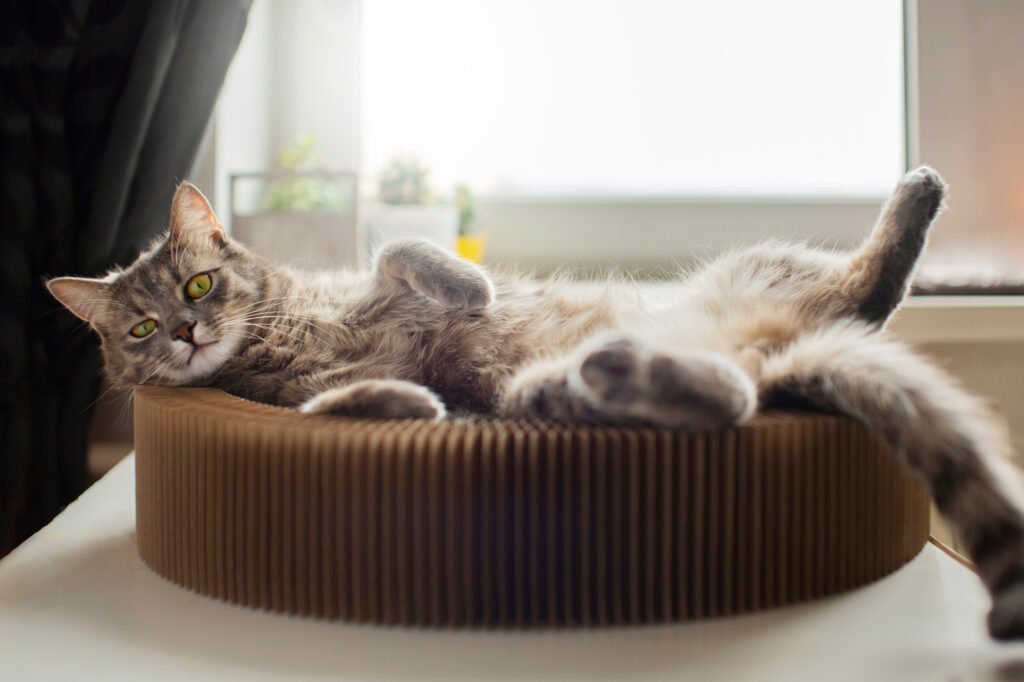

Keeping an indoor cat healthy involves more than providing food, a clean litter box, and a comfortable place to sleep. Indoor cats may avoid many outdoor dangers, but they can still develop weight problems, dental disease, parasites, stress, and other health concerns. A simple routine that includes good nutrition, daily activity, enrichment, and regular cat wellness care can help your cat stay healthy and comfortable for years.
Feed a Balanced Diet and Watch Portions
Cats need a complete, balanced diet that matches their age, health, and activity level. Indoor cats often get less exercise than cats with outdoor access, so feeding too much can lead to unwanted weight gain. Measure meals instead of leaving food available all day unless your veterinarian recommends free feeding.
Treats are fine in moderation, but they should not replace a balanced diet. Fresh water should always be available. If your cat suddenly eats much more or less than usual, mention the change to your veterinarian because appetite changes can sometimes signal an underlying health problem.
Make Exercise Part of the Daily Routine
Indoor cats still need opportunities to move, chase, climb, and play. Short interactive play sessions with wand toys, toy mice, or other safe toys can encourage natural hunting behaviors and provide exercise.
Try rotating toys instead of leaving everything out at once. Puzzle feeders can also make mealtimes more engaging. Cat trees, shelves, and window perches give cats opportunities to climb, observe their surroundings, and stay active. Environmental enrichment is especially important for indoor cats because limited stimulation can contribute to obesity and behavior problems.
Keep Up With Veterinary Care
An indoor lifestyle does not mean a cat can skip veterinary visits. Cats are good at hiding signs of illness, so regular wellness examinations can help detect problems before they become more serious. AAHA recommends regular veterinary checkups for cats, with frequency based on the individual cat’s age and health needs.
Vaccinations should also be based on your cat’s age, lifestyle, health, and exposure risks. Even cats that live exclusively indoors may encounter infectious diseases through other cats, travel, boarding, veterinary visits, or contaminated items.
Protect Dental and Parasite Health
Dental care is an important part of keeping an indoor cat healthy. Bad breath, red or swollen gums, difficulty chewing, drooling, or changes in eating habits should not be ignored. Ask your veterinarian about brushing your cat’s teeth and whether professional dental care is appropriate.
Indoor cats can also be exposed to parasites. Fleas and other parasites can enter the home or be brought in through people, other pets, or contaminated environments. Your veterinarian can recommend parasite prevention based on your cat’s lifestyle and local risks.
Create a Safe and Comfortable Home
A healthy indoor cat needs more than physical care. Provide clean litter boxes, scratching posts, hiding spaces, comfortable resting areas, and places to climb. Keep medications, toxic plants, chemicals, strings, and other dangerous objects out of reach.
Cats also benefit from predictable routines and positive interaction. Give your cat time to rest when needed, and avoid forcing interaction when they want space. A calm environment can support both physical and emotional wellbeing.
Know When Something Changes
Pay attention to changes in your cat’s behavior, appetite, water intake, litter box habits, weight, grooming, or activity level. Small changes can be easy to dismiss, but they may be the first signs that something is wrong. If a change persists or seems unusual, contact your veterinarian.
Keeping an indoor cat healthy is mostly about consistency. Good food, regular movement, enrichment, preventive care, dental attention, and a safe home can all work together to support a longer, healthier life.
Short Summary
Learn how to keep your indoor cat healthy with proper nutrition, daily exercise, enrichment, preventive veterinary care, dental care, and a safe home environment.
FAQs
1. Do indoor cats need regular vet visits?
Yes. Indoor cats still need routine veterinary examinations because they can develop health problems even without outdoor exposure.
2. How can I keep my indoor cat active?
Use interactive toys, short daily play sessions, scratching posts, climbing areas, and puzzle feeders to encourage movement and mental stimulation.
3. Do indoor cats need vaccinations?
Many indoor cats still need vaccinations. Your veterinarian can recommend a schedule based on age, health, lifestyle, and potential exposure risks.
4. Can indoor cats get parasites?
Yes. Parasites such as fleas can enter the home or be carried inside by people or other animals. Ask your veterinarian about appropriate prevention.
5. How do I know if my indoor cat is unhealthy?
Watch for changes in appetite, weight, drinking, litter box habits, grooming, energy, breathing, or behavior. Persistent or unusual changes should be discussed with a veterinarian.