


Modern data centers, telecom facilities, and enterprise networks require fiber connectivity that can support high bandwidth while using available rack space efficiently. FSG Network provides fiber optic connectivity solutions designed around the practical needs of high-density infrastructure. Among the technologies used for structured fiber systems, the MPO 12 Connector offers a compact approach to connecting multiple optical fibers through a single connector interface.
The MPO 12 Connector is designed around a 12-fiber arrangement within one connector body, allowing several optical channels to be handled as a single connection point. The MPO connector family is standardized through IEC connector interface specifications, including requirements for its physical interface and alignment structure.
Understanding MPO 12 Connector Technology
A multi-fiber push-on connector, commonly known as MPO, uses a precision ferrule to position multiple fibers in an organized array. In a 12-fiber configuration, twelve optical fibers are arranged in a single row. This design helps reduce the amount of physical space required compared with using numerous individual duplex or simplex connectors.
The compact structure makes the MPO 12 Connector particularly useful where fiber density is an important consideration. Instead of managing multiple individual fiber connections separately, technicians can work with a consolidated multi-fiber interface. This approach can simplify cable organization and support cleaner layouts in high-density environments.
The connector interface incorporates alignment features that help position the optical fibers correctly when two compatible connector halves are joined. IEC documentation describes the MPO family as a multiway connector with a rectangular ferrule and alignment pins, with one-row configurations supporting arrangements of up to 12 fibers.
Why High-Density Fiber Connectivity Matters
As network speeds increase, the amount of fiber infrastructure required inside data centers and communication facilities can also grow. A traditional approach using individual connectors can consume significant panel and rack space. High-density solutions provide another way to organize these connections while maintaining structured cabling practices.
The MPO 12 Connector can support this objective by grouping multiple optical channels into one interface. This can help network designers make better use of patch panels, fiber enclosures, and distribution areas. A well-planned MPO-based system can also make large fiber deployments easier to organize and maintain.
FSG Network focuses on fiber connectivity solutions that can be incorporated into structured network architectures. Selecting the right connector configuration requires attention to fiber type, equipment compatibility, polarity, connector gender, and optical performance rather than simply choosing a connector based on fiber count.
Applications in Data Center Infrastructure
Data centers are one of the most common environments where multi-fiber connectivity provides practical benefits. Server rooms may contain large numbers of switches, optical transceivers, patch panels, and backbone connections. Keeping these connections organized is essential for efficient installation and future maintenance.
An MPO 12 Connector can be incorporated into backbone links, patching systems, trunk assemblies, and other high-density fiber arrangements. Twelve fibers in one connector can provide a structured connection between different areas of a network while reducing connector congestion.
These systems can also support modular cabling approaches. Instead of creating every connection independently, preconfigured multi-fiber assemblies can help installers establish multiple optical paths through a more organized cabling architecture. The exact configuration should always match the requirements of the active equipment and the planned fiber link.
Polarity and Connector Gender Require Attention
Fiber polarity is an important part of any MPO deployment. Polarity ensures that the transmit path at one end of a link connects correctly with the corresponding receive path at the other end. Incorrect polarity can prevent a properly installed physical link from carrying traffic correctly. Fluke Networks highlights polarity as a particularly important consideration for 12-fiber MPO systems.
Connector gender is another specification that should be checked before installation. MPO connectors are commonly available in male versions with alignment pins and female versions without pins. The two sides must be compatible for proper mating. Active equipment interfaces may require a particular gender, so checking equipment documentation before ordering cables or connectors is an important step.
FSG Network customers can therefore benefit from treating connector selection as part of the complete network design rather than as an isolated component decision.
Fiber Type and Optical Performance
Not every fiber network has identical requirements. Single-mode and multimode systems serve different transmission environments, and MPO configurations should be selected according to the intended application.
Connector performance is also influenced by factors such as insertion loss, return loss, polishing method, alignment quality, and cleanliness. Optical connectors must maintain accurate fiber alignment so that light can travel efficiently between the connected fibers. Connector specifications should therefore be evaluated alongside the requirements of the transceivers, cables, and other passive components in the network.
For example, some MPO applications use PC or UPC polishing, while other single-mode applications may use APC configurations. The appropriate option depends on the optical system and equipment being connected. Current industry product specifications demonstrate that MPO connectors are available across different fiber modes, polishing types, and performance classes.
Installation and Maintenance Considerations
Proper handling is essential for reliable fiber connectivity. Even a precisely manufactured connector can experience performance problems if its end face becomes contaminated, scratched, or improperly aligned. Cleaning procedures should be followed before mating connectors, particularly in environments where connectors are repeatedly handled.
Technicians should also avoid forcing incompatible connector components together. Alignment pins, connector keys, polarity, and fiber position should be verified before installation. Cable routing should provide sufficient space and avoid excessive bending or mechanical stress.
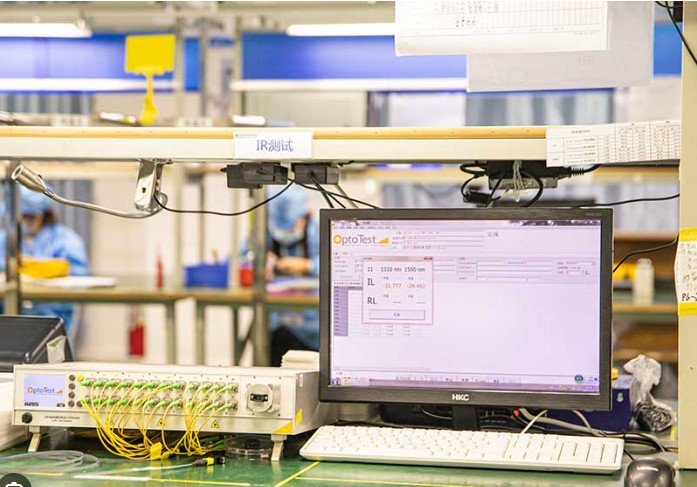
Testing after installation can provide additional confidence in network performance. Depending on the application, technicians may use optical loss testing and inspection equipment to verify that the completed link meets the expected requirements.
Choosing the Right MPO Solution
Selecting an MPO configuration involves more than determining whether twelve fibers are required. Network planners should consider the application, fiber mode, connector gender, polarity method, polish type, cable construction, optical budget, and equipment interface.
The MPO 12 Connector remains relevant in many structured cabling environments because it combines multiple optical fibers into a compact interface. At the same time, newer applications may use different fiber counts depending on the architecture and transceiver technology. For example, industry guidance distinguishes Base-8 and Base-12 designs because some parallel-optics applications use eight active fibers rather than all twelve positions.
This means that the correct choice should be based on the complete network design. A connector that fits physically is not necessarily the correct optical or polarity configuration.
FSG Network and Structured Fiber Connectivity
FSG Network provides a foundation for organizations looking to build organized, scalable fiber infrastructure. Multi-fiber connectivity can be especially useful for networks where equipment density continues to increase and available installation space must be used efficiently.
A properly selected MPO solution can contribute to simplified cabling, organized fiber distribution, and easier expansion. When combined with suitable trunk cables, adapters, patching components, and optical equipment, it can become part of a structured approach to managing large fiber networks.
The goal is not simply to install more connections, but to create a reliable infrastructure that can be understood, tested, maintained, and expanded as network requirements change.
Conclusion
The MPO 12 Connector provides a practical high-density method for connecting twelve optical fibers through a compact multi-fiber interface. Its organized fiber arrangement, alignment system, and compatibility with structured cabling make it useful in data centers, telecom environments, and other demanding fiber networks.
For organizations planning new fiber infrastructure or upgrading existing systems, careful attention to fiber type, polarity, connector gender, optical specifications, cleanliness, and equipment compatibility is essential. FSG Network can support a structured approach to fiber connectivity by focusing on solutions that align with the technical requirements of modern network environments.