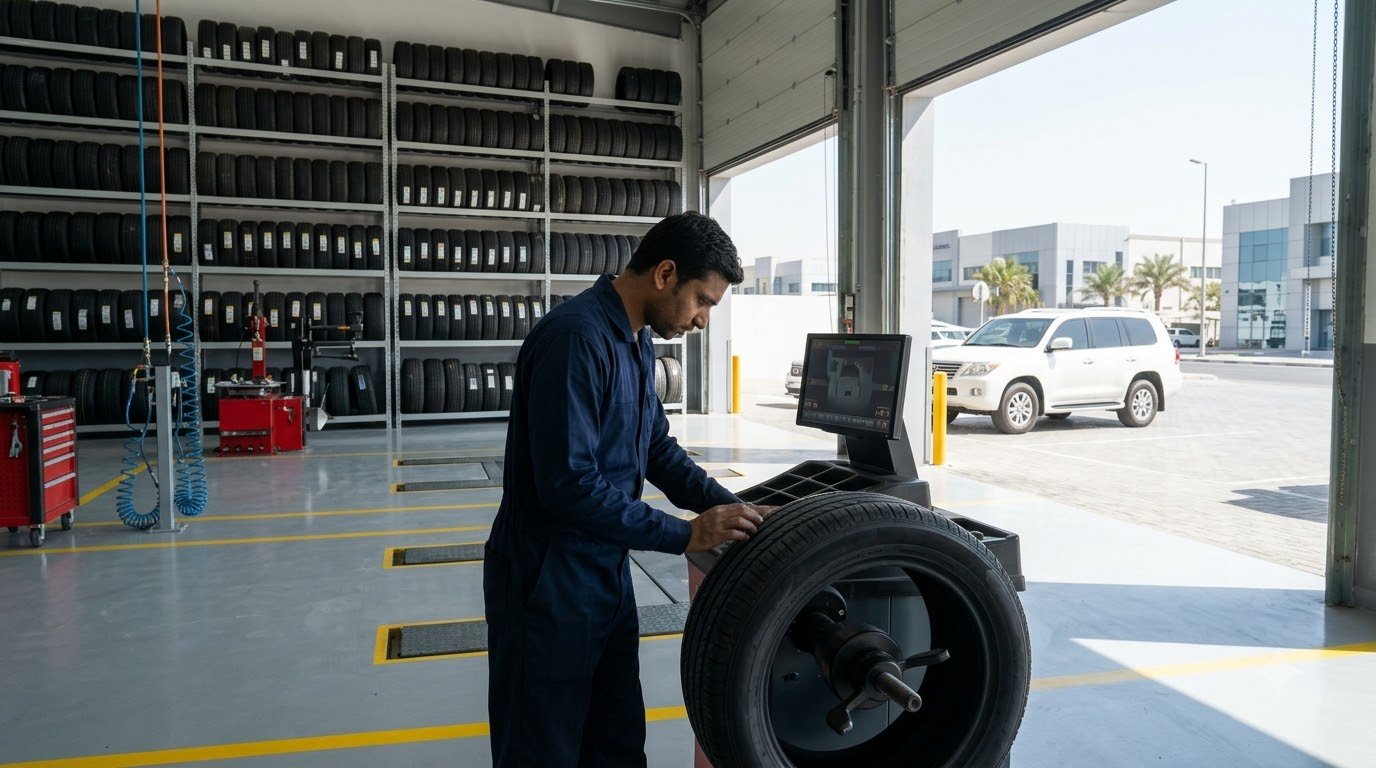
Tyres are the only part of your car that touches the road, so they affect braking, handling, comfort and fuel use. In the UAE, where summer temperatures soar, highways are fast and desert dust is common, tyre choice matters even more. Bridgestone is one of the most recognised tyre brands in the world, and many UAE drivers consider it for sedans, SUVs and pickups. This guide covers the brand’s background, popular tyre families, how to read a sidewall, how local conditions affect tyres, and how to make them last.
About Bridgestone: A Brief Background
Bridgestone was founded in Japan in 1931 by Shojiro Ishibashi. The company name is a rendering of his surname, which roughly means “stone bridge.” Today it is among the world’s largest tyre manufacturers, supplying passenger cars, SUVs, light trucks, commercial vehicles and motorsport applications.
The brand is known for investing in research on rubber compounds, tread design and safety technologies. Its range covers comfort-focused touring tyres, high-performance tyres and rugged SUV tyres, which is useful in a market as varied as the UAE.
Why UAE Conditions Are Demanding on Tyres
Before looking at specific tyres, it helps to understand the environment they work in.
Extreme heat: Road surfaces in summer can be far hotter than the air temperature. Heat increases tyre pressure, speeds up rubber ageing and can cause blowouts if tyres are underinflated, overloaded or old.
High-speed driving: Long, straight highways such as those linking Abu Dhabi, Dubai and the northern emirates put sustained stress on tyres, so speed rating and construction quality matter.
Sand and dust: Desert driving and construction-zone debris can cause abrasion and punctures, and loose sand can reduce grip.
Occasional heavy rain: Rain is infrequent, but when it falls, oil and dust on the road make surfaces slippery. Good wet-weather grip and effective water evacuation become critical.
Mixed driving: Many drivers move between stop-start city traffic, highways and weekend off-road trips, so a tyre must balance comfort, durability and traction.
Popular Bridgestone Tyre Families
Bridgestone organises its range into product lines, and availability varies by size and market, so always confirm with a local dealer. The names below are among the best known.
Turanza: A touring line for drivers who prioritise comfort, low road noise and stable handling. It suits daily commuting and family sedans.
Potenza: A performance line aimed at sporty cars and drivers who want sharper steering response and strong grip at higher speeds.
Dueler: Designed for SUVs, crossovers and light trucks. Some Dueler tyres focus on highway comfort, while others are built for rougher terrain and mixed use.
Ecopia: Focused on lower rolling resistance to help improve fuel efficiency, which can be appealing for high-mileage drivers.
Alenza: A line aimed at premium SUVs, balancing comfort, handling and stability for heavier vehicles.
Some Bridgestone tyres also use run-flat technology, which allows limited driving at reduced speed after a puncture. This only applies to specific sizes and vehicles, so check your owner’s manual before choosing.
Choosing the Right Bridgestone Tyre
Selecting a tyre involves matching it to your vehicle, driving style and budget. When researching a Bridgestone tyre UAE purchase, work through these questions:
- What does your vehicle require? Find the recommended tyre size, load index and speed rating in your owner’s manual or on the sticker inside the driver’s door jamb.
- How do you drive? Mostly city commuting favours comfort and efficiency. Frequent highway trips favour stability and heat resistance. Weekend desert driving suits a more robust SUV or light-truck tyre.
- What matters most? Decide whether comfort, longevity, performance, fuel economy or off-road capability is your priority.
- What is your budget? Consider total cost of ownership, including lifespan and fuel use, rather than only the purchase price.
- Is the tyre fresh? Check the production date, as explained below.
Never fit tyres below the speed or load rating your vehicle manufacturer specifies.
How to Read a Tyre Sidewall
The markings on a sidewall tell you almost everything you need to know. Take a sample code such as 225/55 R17 97W:
- 225 is the width in millimetres.
- 55 is the aspect ratio, meaning the sidewall height as a percentage of width.
- R indicates radial construction.
- 17 is the rim diameter in inches.
- 97 is the load index, which corresponds to a maximum load per tyre.
- W is the speed rating.
You will also find a DOT code ending in four digits that show the production week and year. For example, “2824” means the 28th week of 2024. Because rubber ages even when unused, check this code before buying, especially in a hot climate where storage conditions can matter.
Tyre Pressure: The Most Overlooked Factor
Correct inflation is the single most effective habit for safety and tyre life. In hot weather it deserves extra attention.
- Check pressure when tyres are cold, ideally in the morning or after the car has been parked for a few hours.
- Follow the vehicle manufacturer’s recommended pressure, found on the door jamb sticker or in the manual, not the maximum figure printed on the tyre.
- Check monthly, and before long trips.
- Don’t deflate hot tyres to match a number. Pressure naturally rises as tyres heat up on the road.
- Include the spare, which is often forgotten until it is needed.
Underinflation increases heat build-up and wear on the edges, while overinflation reduces the contact patch and wears the centre of the tread faster.
Maintenance Habits That Extend Tyre Life
Rotate regularly: Rotating tyres at the interval recommended in your manual helps them wear evenly.
Keep alignment and balance in check: If the car pulls to one side, the steering wheel is off-centre or you feel vibration, have alignment and balancing inspected.
Inspect the tread: Most tyres include wear indicator bars. Many countries treat 1.6 mm as the legal minimum depth, but for better wet grip it is wise to replace tyres earlier.
Look for damage: Check for cuts, bulges, cracking in the sidewall and embedded objects such as nails or stones.
Avoid overloading: Exceeding the load capacity generates excess heat and stress.
Park smartly: When possible, use shade or covered parking to reduce prolonged sun exposure, which accelerates rubber ageing.
When Should You Replace Your Tyres?
Replace tyres when any of these apply:
- The tread has reached the wear indicators or is close to the legal minimum.
- You see cracks, bulges or sidewall damage.
- A puncture is in the sidewall or is too large or poorly positioned to repair safely.
- The tyres are old. Many tyre makers advise having tyres inspected annually after about five years, and heat can shorten their usable life, so ask a professional to assess older tyres even if the tread looks fine.
When replacing, fit tyres in pairs or full sets of the same type and size where possible, because mixing different models can affect handling and braking.
Buying Tips for UAE Drivers
When you shop for a Bridgestone tyre UAE customers can rely on, keep these tips in mind:
- Buy from authorised dealers or reputable retailers to reduce the risk of counterfeit or poorly stored stock.
- Check the production date and avoid tyres that have been sitting for a long time.
- Ask what is included, such as fitting, balancing, valve replacement and disposal of old tyres.
- Ask about warranty terms and what conditions apply.
- Compare total value rather than only the lowest price.
- Keep your invoice and records for future warranty or service needs.
Common Mistakes to Avoid
- Choosing by price alone and ignoring suitability for the vehicle.
- Ignoring the production date on “new” tyres.
- Skipping regular pressure checks in summer.
- Mixing worn tyres with new ones on the same axle.
- Delaying alignment or rotation until problems become obvious.
- Overloading the vehicle on long trips.
Conclusion
Choosing tyres is a safety decision as much as a performance one. Bridgestone offers a broad range, from comfort-focused touring tyres to performance and SUV options, so there is likely a suitable choice for most vehicles on UAE roads. Match the tyre to your vehicle’s specifications and your driving habits, check the production date, keep pressure correct, rotate on schedule and replace tyres before they become unsafe. These habits help you get the most from your tyres, whichever model you choose.