A routine blood test comes back with raised liver enzymes. Or an ultrasound will just mention ‘grade 1’ fatty liver in passing and not really explain what that means. That’s how a lot of people in India first come to realise they have a liver problem; it’s completely silent, no pain, no warning at all.
The liver is a resilient organ and can take a huge amount of damage before it shows any signs of distress. Fatty liver, viral hepatitis and cirrhosis are all very different conditions. The medicines used for each differ, and a tablet that is invaluable to one person may be useless (and in some cases potentially harmful) to another.
Key Takeaways
- Liver meds are selected by condition, so the diagnosis comes first.
- Fatty liver is mainly treated with weight loss and diet; medicines play a supporting role.
- Hepatitis B can be controlled long term, and hepatitis C can usually be cured in about 12 weeks.
- Cirrhosis care focuses on preventing complications such as fluid build-up and confusion.
Why the condition matters more than the tablet
Fatty liver (now often called MASLD, metabolic dysfunction-associated steatotic liver disease) happens when fat builds up in liver cells, usually alongside weight gain, diabetes or high cholesterol. Hepatitis means inflammation, and in India the common culprits are the hepatitis B and C viruses, along with alcohol. Cirrhosis is the late stage of long-term damage, where scar tissue replaces healthy liver.
Your doctor will very likely order blood tests and an ultrasound (sometimes a FibroScan) first. Any list of the top 10 liver medicines in India only makes sense once you know which of these you are dealing with.
Medicines for fatty liver
The honest answer is that losing around 7 to 10% of your body weight does more than any tablet. That said, a few medications are used for inflammation or scarring.
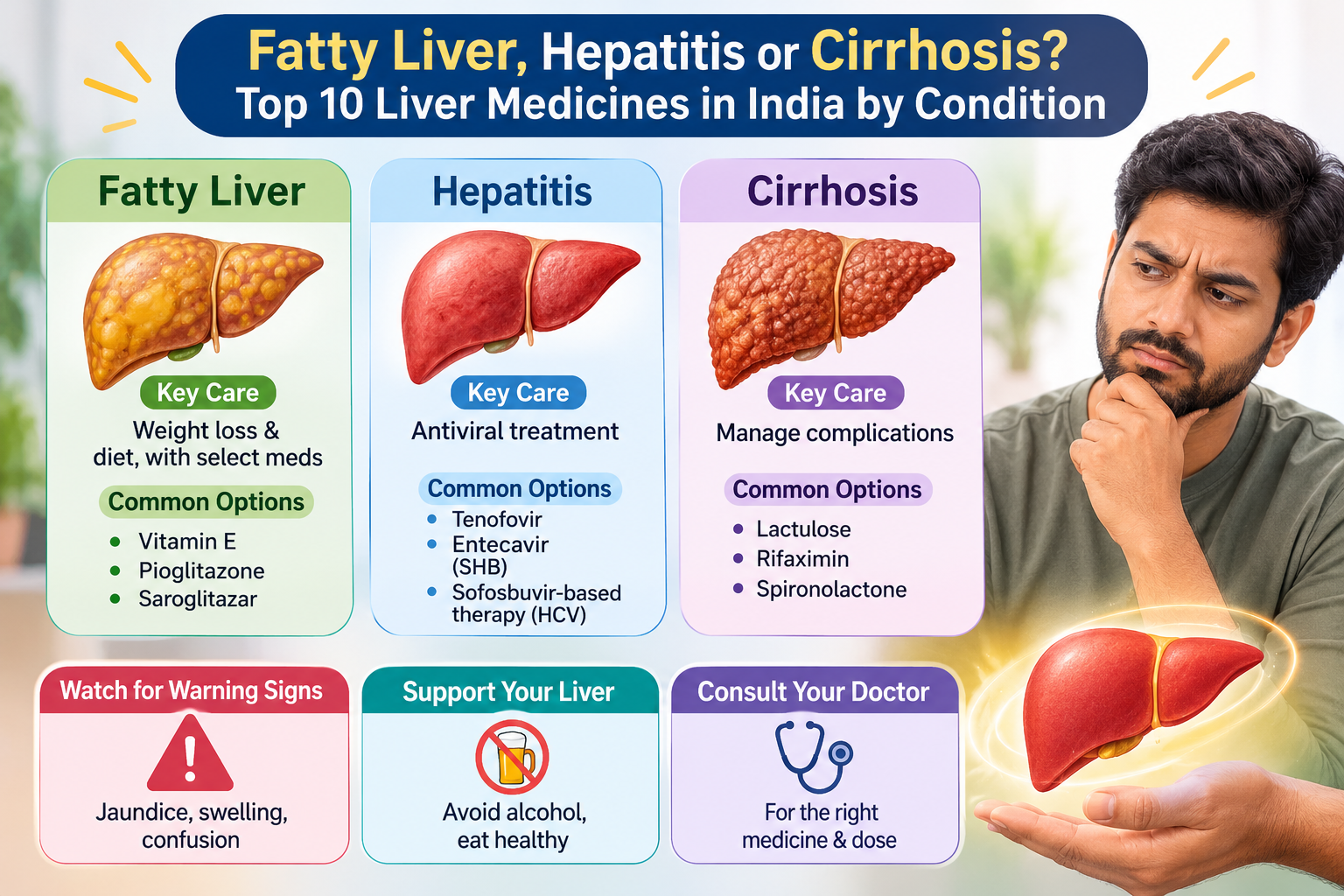
- Vitamin E. At higher doses, it may reduce liver inflammation in adults without diabetes. Not for everyone, so your doctor will have to decide.
- Pioglitazone. A diabetes medicine that can improve liver fat and inflammation in people with type 2 diabetes. Known side effects include weight gain and fluid retention.
- Saroglitazar. Developed in India and approved here for fatty liver disease. It works on blood fats and blood sugar.
Some doctors will also prescribe ursodeoxycholic acid (UDCA), though the evidence for it in fatty liver is mixed.
Medicines for hepatitis B and C
Hep B is very rarely ever cured, but it can be kept under control for years.
- Tenofovir. One of the first-line antivirals for HBV. Taken once daily (often for life) with periodic kidney and bone assessments.
- Entecavir. Another first-line option. It is often used when kidney problems make tenofovir less suitable.
Hep C is a much more positive story; really, most people are cured.
- Sofosbuvir with velpatasvir. This combination works against all hepatitis C genotypes. The usual course is 12 weeks (sometimes longer with cirrhosis), and cure rates are above 95% in most studies.
- Sofosbuvir with daclatasvir. Widely used in India, including under the National Viral Hepatitis Control Programme, where treatment is available free at government centres.
Don’t stop your Hep B medication on your own, as this can lead to a serious flare. Contact your doctor before you make any change.
Medicines for cirrhosis
Scar tissue can’t be fully reversed with tablets. Treatment depends on the specific complication you have.
- Lactulose. A syrup that draws toxins out through the bowel and helps prevent hepatic encephalopathy (confusion caused by the liver failing to clear ammonia). The aim is usually 2 to 3 soft stools a day.
- Rifaximin. An antibiotic that stays mostly in the gut. It is added to lactulose for people who keep having episodes of confusion.
- Spironolactone. A diuretic for ascites (fluid in the abdomen). It’s often used with furosemide, and you’ll need to monitor sodium, potassium, and renal function regularly.
Doctors can also use beta blockers (carvedilol or propranolol) to reduce the pressure in the liver’s blood vessels and thus reduce the risk of bleeding from the varices.
Side effects and red flags
Most of these medicines are well tolerated. Common problems include:
- Diarrhoea and bloating with lactulose
- Weight gain and swollen ankles with pioglitazone
- Muscle cramps or dizziness with diuretics
- Tiredness or headache with hepatitis antivirals
If you see jaundice (yellowing of the skin or eyes), vomiting blood, black stools, sudden confusion or a rapidly swelling abdomen, then get help immediately.
What your doctor considers
Choosing a medicine isn’t necessarily straightforward. Your doctor will look at the cause of your liver disease, the amount of scarring, your kidney function, any other medicines you’re on, whether or not you’re pregnant or planning to be. You’ll also need to mention any herbal “liver tonics” you’re taking (as these can interact with your prescribed medication) and, of course, any alcohol consumption.
Conclusion
Each condition has its own approach, and lifestyle modification remains the mainstay, particularly for fatty liver.
If your reports show a liver problem, talk to a hepatologist or gastroenterologist about the treatment that best fits you and your individual health needs.
Disclaimer: This article is intended for general educational purposes only and should not replace professional medical advice, diagnosis, or treatment.