
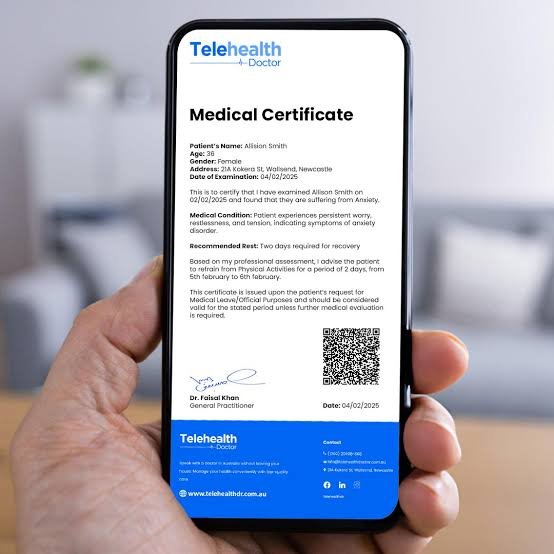
A short-term illness can sometimes be straightforward: symptoms appear, a person takes time away from work or study, and they arrange a medical assessment. In other situations, symptoms continue, return unexpectedly or begin affecting everyday activities over a longer period.
An online medical certificate may help document a particular period of illness when a doctor considers it clinically appropriate. However, a certificate and ongoing healthcare serve different purposes. Understanding that distinction can help patients make better decisions about their health and know when further medical attention may be necessary.
A Medical Certificate Records an Assessment, Not an Entire Health Journey
A medical certificate is a document issued following a healthcare practitioner’s assessment. Depending on the circumstances, it may record that a person was unfit for work or study for a specified period.
It is important to understand what the document does not necessarily provide. A certificate is not automatically a comprehensive diagnosis, a treatment plan or confirmation that an ongoing health concern has been resolved.
For example, someone experiencing a short-lived illness may need supporting documentation for a brief absence. Another person may have symptoms that persist for several weeks and require further investigation or treatment.
Although both individuals may request a certificate, their wider healthcare needs can be quite different.
When Symptoms Continue Beyond the Expected Period
Sometimes an illness does not improve as quickly as expected. Symptoms may remain present, become more disruptive or return after a person initially feels better.
In these situations, arranging another medical assessment may be more useful than focusing only on obtaining additional documentation.
A doctor may need to understand:
- Whether the original symptoms have improved or worsened.
- Whether new symptoms have developed.
- How the condition is affecting normal daily activities.
- Whether previous treatment or advice has helped.
- Whether an examination, investigation or referral is needed.
The appropriate next step depends on the individual presentation. A further certificate should not be treated as an automatic extension of an earlier one. The practitioner needs to assess the current circumstances and make an independent decision.
Why Continuity of Care Matters
Healthcare is often more effective when a practitioner can understand a patient’s medical history over time. Previous consultations, medications, test results and treatment responses can provide useful context when assessing a new concern.
A regular GP may already have access to this information and understand how a patient’s health has changed. This can be particularly valuable when symptoms are recurring or when a condition requires ongoing management.
Telehealth can complement this relationship by providing another way to access medical advice when appropriate. It does not necessarily need to replace a person’s usual general practice.
For patients using different healthcare services, keeping track of previous consultations and relevant medical information can help avoid gaps in communication. Where appropriate, patients can discuss sharing consultation summaries or relevant records with their regular doctor.
When Is an Online Consultation Appropriate?
Online consultations can provide access to a doctor without requiring every appointment to take place at a medical centre. They may be useful for certain episodic health concerns, particularly when travelling is difficult or a remote assessment is clinically suitable.
However, telehealth is not appropriate for every presentation.
A doctor may need to arrange an in-person assessment if the symptoms require a physical examination, diagnostic testing or direct observation. The limitations of a phone or video consultation should be considered before deciding how to proceed.
People with symptoms that are severe, rapidly worsening or potentially urgent should seek appropriate medical care rather than relying on a routine online appointment. For an emergency in Australia, call Triple Zero (000).
The important consideration is not simply whether an appointment can happen online. It is whether the chosen consultation method allows the doctor to provide safe and appropriate care.
What Should You Prepare for a Follow-Up Consultation?
If you have already spoken with a doctor about an illness and need further advice, preparing a short summary can make the next consultation more productive.
Consider noting the following:
Changes since the previous appointment: Explain whether symptoms have improved, remained the same or become worse.
Treatment or medication: Mention any medication, self-care measures or treatment you have tried and whether they have helped.
New concerns: Describe any additional symptoms or changes in your ability to carry out everyday activities.
Previous medical information: Keep relevant test results, referral details or consultation summaries available if you have them.
Your current needs: Explain whether you are seeking further medical advice, an assessment of your work capacity or documentation for a specific period.
This information gives the doctor a clearer picture of what has happened since the previous assessment. It also helps keep the consultation focused on the patient’s current health rather than only the original reason for booking.
Understanding the Difference Between Documentation and Treatment
Patients sometimes approach a medical consultation with an immediate administrative need, such as providing evidence for an absence. That need may be legitimate, but it should not distract from a wider health concern.
If symptoms are recurring, the consultation should also consider whether additional medical attention is necessary. Depending on the situation, the doctor may recommend monitoring, treatment, further investigation or an in-person appointment.
Similarly, a medical certificate should only describe what the practitioner can appropriately support through their assessment. It should not be used as a substitute for a fitness-for-work evaluation or a detailed medical report when those documents are required.
Understanding these differences helps patients seek the right type of care and avoid relying on a certificate to answer questions it was not designed to address.
Choosing an Online Medical Certificate Service
When arranging an online consultation, patients should understand who will conduct the assessment, how the appointment takes place and what happens after the consultation.
A responsible service should make clear that a booking does not guarantee a certificate. The doctor must review the individual circumstances and decide whether issuing the requested documentation is clinically appropriate.
OMC Health provides an online booking platform connecting patients with AHPRA-registered Australian GPs from partner medical practices. Patients can arrange real-time phone or video consultations, during which the consulting doctor independently assesses their circumstances.
People considering this option can visit OMC Health to learn more about its online medical certificate services.
It is also useful to understand how the online medical certificate process works, including the booking steps, consultation and what happens if the doctor approves the request.
Making Informed Decisions About Your Health
An online medical certificate can be useful when supporting documentation is needed following an appropriate medical assessment. However, it is only one part of a much broader healthcare process.
A one-off consultation may be sufficient for some short-term concerns, while recurring or persistent symptoms may require further assessment and continuity of care.
Patients should consider both their immediate documentation needs and their wider health circumstances. Seeking appropriate follow-up advice, keeping relevant medical information available and understanding the limitations of telehealth can help ensure that convenience does not come at the expense of good healthcare.


