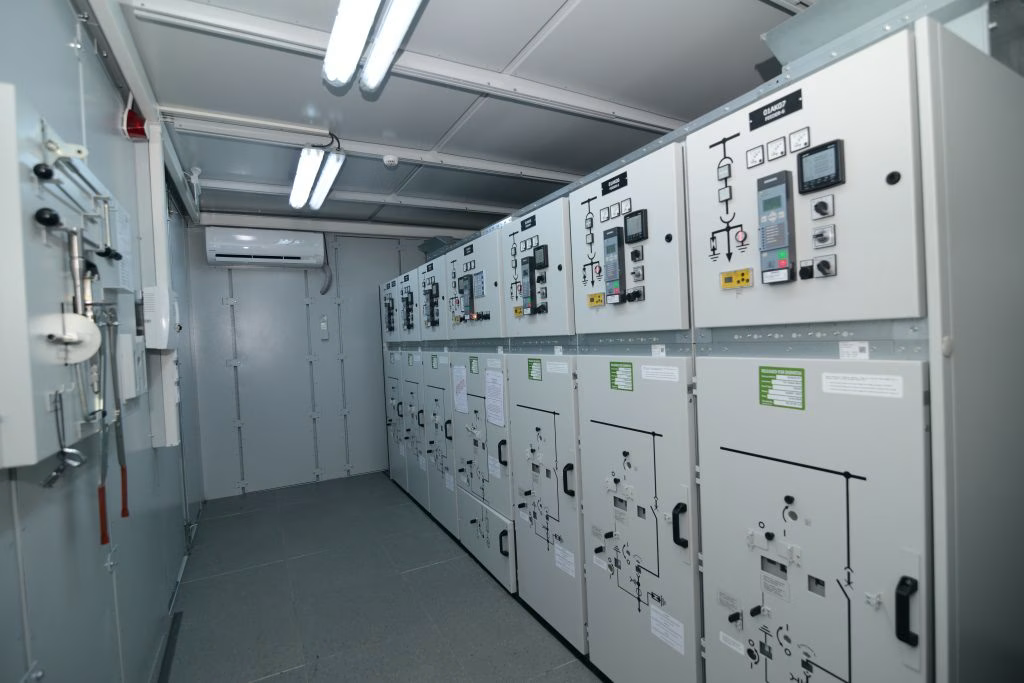
India is in the middle of a major infrastructure and industrial expansion. New manufacturing hubs, renewable energy parks, metro rail networks, data centers and smart cities are being built across the country at a remarkable pace. Behind every one of these projects lies a critical need: reliable, safe and quickly deployable power distribution. This is where prefabricated Electrical Houses, or E-Houses, are making a real difference.
A Shift Toward Modular Power
Traditionally, electrical rooms in Indian projects were built on site using conventional civil construction. While familiar, this method often faced delays from monsoon seasons, labor shortages, material supply issues and coordination between multiple contractors.
E-Houses change this model. They are engineered, fabricated, fitted with equipment, wired and tested inside a factory before being transported to site. The result is a ready-to-connect power solution that saves time and reduces uncertainty.
Sectors Driving Demand
Renewable Energy
India’s ambitious solar and wind targets require power evacuation and control systems at remote locations. E-Houses housing inverters, switchgear, auxiliary transformers and SCADA systems can be deployed quickly across large solar parks and wind farms, even in desert or coastal environments.
Oil, Gas and Petrochemicals
Refineries and process plants demand equipment that performs safely in hazardous and corrosive conditions. E-Houses can be built with pressurization systems, corrosion-resistant coatings and robust fire protection to meet strict safety requirements.
Metro and Railways
Urban transit projects often have limited space and tight deadlines. Compact E-Houses for traction substations and auxiliary power help keep construction on schedule while minimizing disruption in crowded city areas.
Steel, Cement and Mining
Heavy industries operate in dusty, high-temperature environments with large motor loads. E-Houses with motor control centers, drives and efficient cooling provide dependable power while protecting sensitive electronics.
Data Centers
As India becomes a major data center destination, operators need scalable and highly reliable power infrastructure. Modular E-Houses allow capacity to grow in phases, matching investment with demand.
Water and Wastewater Treatment
Pumping stations and treatment plants, often in remote or flood-prone areas, benefit from elevated, weatherproof E-Houses that are easy to install and maintain.
Benefits That Matter for Indian Projects
- Weather-independent progress: Factory work continues regardless of rain or extreme heat at site.
- Reduced dependence on site labor: Most assembly happens with skilled factory teams.
- Consistent quality: Standardized processes and Factory Acceptance Testing ensure every unit meets specifications.
- Faster commissioning: Pre-tested systems reduce troubleshooting on site.
- Relocation and expansion: Modules can be moved or added as projects evolve.
- Better safety: Integrated fire, arc-flash and access protection reduce risks for personnel.
Supporting Make in India
Domestic manufacturing of E-Houses also supports the Make in India vision. Locally engineered solutions reduce import dependence, shorten delivery times, and make after-sales service and spare parts more accessible. Indian manufacturers are increasingly delivering E-Houses not only for local projects but also for export markets in the Middle East, Africa and Southeast Asia.
What to Look For in a Partner
When selecting a supplier, project owners should evaluate design capability, compliance with IS and IEC standards, multi-OEM integration experience, testing facilities, track record across industries and the strength of commissioning and maintenance support. A partner who understands local site conditions and regulations adds significant value.
Conclusion
As India builds the infrastructure of tomorrow, modular power solutions are becoming essential rather than optional. Partnering with a reliable e house manufacturer helps project owners meet tight schedules, maintain high quality and ensure safe, efficient power distribution. In a fast-growing economy, that combination of speed and reliability is exactly what modern industry needs.