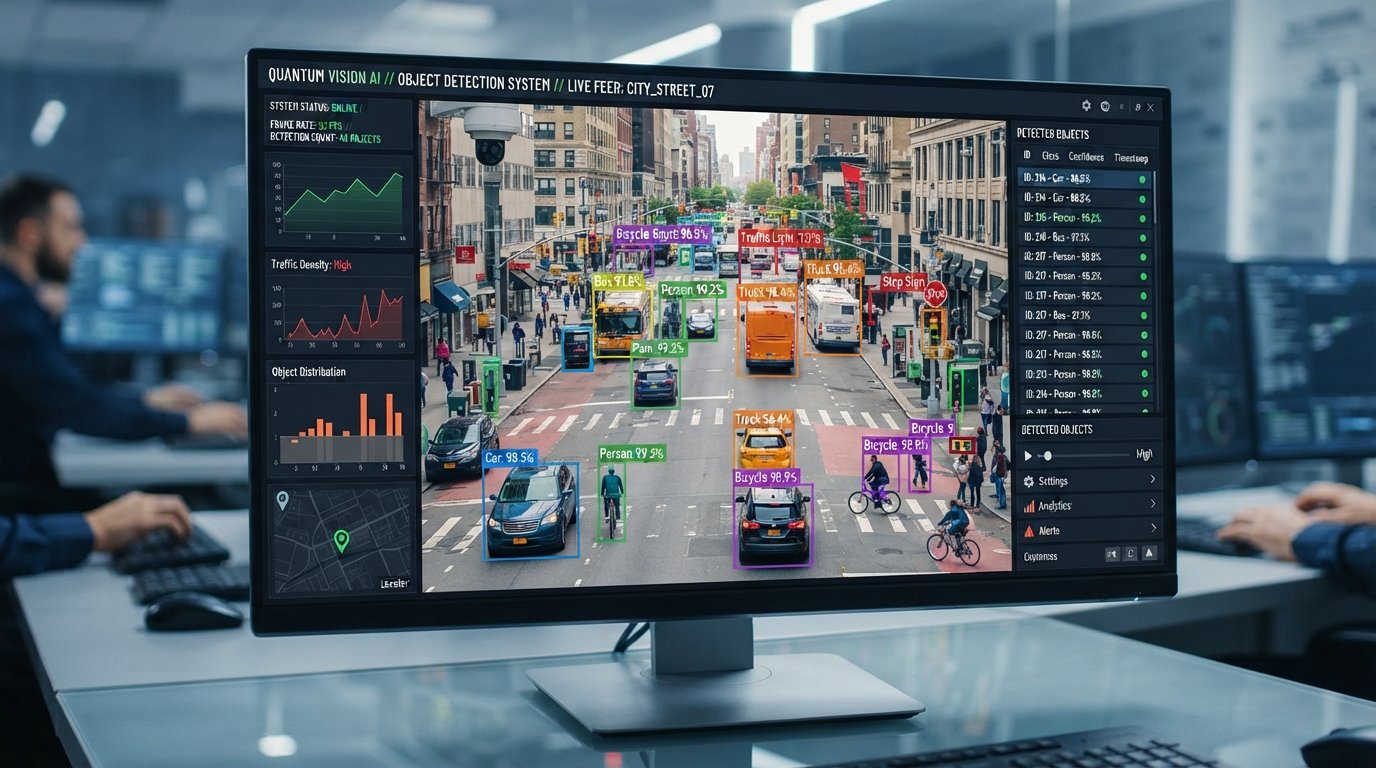
Modern computer vision systems are becoming increasingly capable of identifying vehicles, people, products, equipment, and other objects in images and video streams. These technologies are supporting applications across manufacturing, transportation, retail, healthcare, and security. However, identifying an object is only part of the challenge. A system must also recognize it correctly under different conditions, distinguish it from similar objects, and produce dependable results when the surrounding environment changes. This is where AI Object Detection Software plays an important role in modern object recognition.
Accuracy is one of the most important factors determining whether an object detection system can be trusted in real-world applications. A model that performs well during controlled testing may struggle with poor lighting, crowded scenes, unusual viewing angles, or partially hidden objects.
As businesses introduce computer vision into operational processes, they need to understand what influences detection accuracy and how these limitations can be addressed.
Why Object Recognition Accuracy Matters
Object recognition systems are often used to support decisions that depend on visual information. In a manufacturing facility, a system may identify defective products moving along a production line. In traffic monitoring, it may distinguish between cars, motorcycles, buses, and pedestrians. In retail environments, it can help recognize products and monitor shelf conditions.
Incorrect identification can affect the usefulness of these applications.
A system may fail to detect an object that is actually present, or it may identify an unrelated object as the target. Both situations can create problems depending on the application.
For example, a manufacturing system that overlooks a damaged component may allow a defective product to continue through production. A traffic monitoring application that incorrectly identifies a vehicle could generate inaccurate records.
Reliable detection therefore requires more than a model that can recognize familiar objects. It requires consistent performance across the conditions in which the technology will operate.
Understanding the Difference Between Detection and Classification
Object detection and image classification are related computer vision tasks, but they serve different purposes.
Image classification generally determines which category an image belongs to. For example, a classification model may identify an image as containing a car, a dog, or a building.
Object detection goes further by identifying individual objects within an image and locating them through bounding boxes. A single image may contain several objects from different categories, each requiring a separate detection.
This distinction becomes important in crowded or complex environments.
A warehouse camera, for example, may capture workers, boxes, forklifts, and storage equipment in the same frame. An object detection system must identify the relevant categories and estimate their locations accurately.
Modern AI Object Detection Software can support these tasks by combining object localization with category prediction and confidence scoring.
Environmental Conditions Can Affect Detection Results
One of the biggest challenges in object recognition is the difference between controlled datasets and real operating environments.
During model development, images may be collected under relatively consistent conditions. However, cameras deployed in actual locations encounter changing environments throughout the day.
Lighting is a common source of difficulty. Bright sunlight, shadows, reflections, and low-light conditions can change how objects appear in an image.
Other environmental factors include:
- Rain, fog, dust, and other visibility problems
- Camera movement or vibration
- Different camera heights and viewing angles
- Background objects that resemble the target
- Changes in distance between cameras and objects
- Reflections from glass, metal, or polished surfaces
A model trained mainly on clear daytime images may produce weaker results when used in nighttime conditions. Similarly, a detection system designed for a fixed camera position may struggle when the camera is moved.
Training data and testing procedures should therefore represent the conditions expected during actual deployment.
The Problem of Similar Looking Objects
Not every object is easy to distinguish visually. Some categories share similar shapes, colors, dimensions, and textures.
For example, an object detection system operating in a warehouse may need to distinguish between different product packages with nearly identical designs. In traffic environments, vehicles from different categories may appear similar when viewed from a distance.
These situations create classification challenges.
The model must learn which visual characteristics are important for distinguishing one category from another. If the training data does not contain enough examples of similar objects, the system may confuse them.
Developers can address this problem by improving dataset diversity and including difficult examples during training. Clear category definitions are also important. If two categories are labeled inconsistently, the model may learn confusing patterns.
In specialized applications, additional contextual information can help improve identification. However, the system should be evaluated to ensure that contextual signals do not create new sources of error.
How Training Data Influences Recognition Accuracy
The quality of training data has a direct influence on object detection performance. A model learns from the examples provided during development, so incomplete or poorly labeled datasets can limit its ability to recognize objects correctly.
A dataset should include enough examples to represent the target categories and the different conditions in which they may appear.
Important dataset considerations include:
Image diversity: Training images should represent different backgrounds, distances, lighting conditions, and object orientations.
Accurate annotations: Bounding boxes and category labels should correctly represent the objects in each image.
Balanced categories: Some categories should not dominate the dataset so heavily that less common objects receive insufficient attention.
Relevant examples: The dataset should reflect the actual environment where the detection system will operate.
Regular updates: New data can help address changes in products, environments, camera positions, and operating conditions.
Data augmentation can also help expand training diversity. Techniques such as image rotation, cropping, scaling, and brightness adjustment create additional variations from existing images.
However, artificial variations cannot replace real-world data entirely. A model still needs representative examples of the actual situations it will encounter.
Occlusion Makes Object Detection More Difficult
Occlusion occurs when one object is partially or completely hidden behind another. It is a common problem in crowded environments such as roads, warehouses, retail stores, and public spaces.
A pedestrian may be partially hidden behind a vehicle. A product on a shelf may be covered by another package. Workers moving around industrial equipment may block the camera’s view of important objects.
When only part of an object is visible, the model has less visual information available for identification.
The severity of the problem depends on how much of the object is hidden, the quality of the image, and the model’s ability to recognize partial visual patterns.
Developers can improve performance by including partially visible objects in training datasets and evaluating the model under different levels of occlusion.
Camera placement can also make a difference. Multiple viewing angles may provide additional visual information in applications where a single camera cannot capture the entire operating area.
Measuring Performance Beyond Basic Accuracy
A detection system should not be evaluated using only a general accuracy figure. Object detection involves multiple performance measures that help explain different types of errors.
Three important metrics are precision, recall, and intersection over union.
Precision
Precision measures how many predicted detections are correct.
A system with high precision produces fewer false positives. This is important when incorrectly identifying an object could trigger unnecessary actions or investigations.
Recall
Recall measures how many actual objects the system successfully detects.
A system with high recall misses fewer relevant objects. This can be particularly important in applications where overlooking an object creates operational or safety concerns.
Intersection Over Union
Intersection over Union, commonly called IoU, measures how closely a predicted bounding box matches the actual object location.
It compares the overlapping area between the predicted box and the ground-truth box with the total area covered by both.
These metrics provide a more detailed picture of performance. For example, a model may identify the correct object category but produce inaccurate bounding boxes. Another model may locate objects correctly but generate too many false detections.
Evaluating several metrics helps developers understand where improvements are needed.
Balancing Detection Speed With Reliable Results
Modern object recognition applications often need to process images and video streams quickly. A system used for live traffic monitoring or industrial inspection may need to produce results with minimal delay.
However, increasing detection speed can introduce technical trade-offs.
Larger and more complex models may offer stronger detection capabilities but require more computing resources. Smaller models can operate more efficiently on limited hardware, although their performance may differ depending on the application.
Developers must consider several factors:
- Processing speed and acceptable response time
- Image resolution and camera frame rate
- Available CPU, GPU, and memory resources
- Number of objects appearing in each frame
- Model complexity and deployment hardware
- Required precision and recall levels
The right balance depends on the operational purpose of the system. A quality inspection application may prioritize detecting small defects, while a live monitoring system may place greater emphasis on processing speed.
Performance testing should therefore reflect the actual requirements rather than focusing on one technical measurement.
The Role of Model Testing and Continuous Improvement
Object detection performance can change after deployment because real environments are not static.
A retail business may introduce new product designs. A factory may replace equipment or modify its production layout. Traffic patterns may change as roads and surrounding infrastructure develop.
These changes can create a difference between the data used during training and the images captured during actual operation. This is often described as data drift.
Continuous evaluation helps identify when a model’s performance begins to decline.
Organizations can maintain representative test datasets, review incorrect detections, monitor confidence patterns, and collect new examples from operating environments.
When significant problems appear, developers may need to adjust model parameters, improve annotations, expand training data, or retrain the system.
A structured improvement process helps keep detection performance aligned with changing operational requirements.
Choosing AI Object Detection Software for Practical Applications
Selecting a suitable detection system requires understanding the problem it is expected to solve. Different applications have different requirements, and a model that performs well in one environment may not be appropriate for another.
Businesses should begin by defining their target objects, camera conditions, required processing speed, and acceptable error levels.
They should also examine how the system will integrate with existing applications, databases, cameras, and operational workflows.
Important evaluation areas include:
- Detection performance on representative real-world images
- Support for the required object categories
- Ability to process images or video at the necessary speed
- Compatibility with available hardware
- Options for model customization and retraining
- Integration with existing business systems
- Monitoring, maintenance, and technical support
Testing with actual application data is particularly important. Demonstrations and benchmark results can provide useful information, but they do not guarantee the same performance in every operating environment.
Building More Reliable Object Recognition Systems
The development of modern computer vision depends on more than advanced algorithms. Reliable object recognition requires representative training data, accurate annotations, suitable model architecture, careful performance evaluation, and ongoing monitoring.
Environmental changes, similar-looking objects, occlusion, and processing limitations can all affect detection results. Addressing these challenges requires a combination of software development, data preparation, hardware planning, and application-specific testing.
As organizations continue adopting computer vision, AI Object Detection Software will remain an important part of systems that convert visual information into useful operational insights. The strongest solutions will be those designed around real-world conditions, measured against meaningful performance standards, and improved as application requirements evolve.