

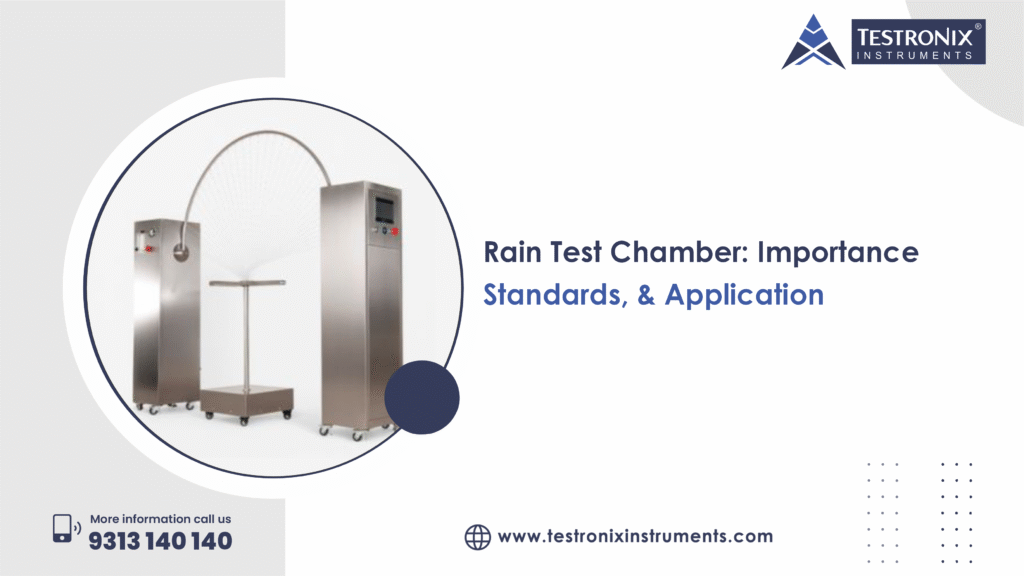

A rain test chamber has become an essential tool in modern industrial testing, helping manufacturers evaluate how products respond to different levels of rainfall, water spray, and moisture exposure. As global manufacturing standards rise, industries need equipment that accurately replicates real weather conditions. This is where a rain test chamber proves invaluable. It allows companies to test product durability and safety while controlling variables that are impossible to predict outdoors.
Key Uses that Improve Industrial Testing Performance
Industries across electronics, automotive, aerospace, energy, and consumer goods rely on accurate environmental testing to validate product reliability. The following five uses highlight how a rain test chamber strengthens quality assurance and supports the rigorous expectations of modern manufacturing. Each section explores how these chambers simulate natural weather effects and why their role has become increasingly important for international brands.
1. Carmakers Test Exterior Component Water Resistance
Automotive manufacturers operate under strict durability requirements, especially for exterior components exposed to constant environmental stress. A rain test chamber helps engineers evaluate how vehicle parts such as headlights, sensors, door seals, and electrical connectors respond to heavy rainfall and water spray. This controlled testing prevents failures caused by leaks, corrosion, or electrical malfunctions that can occur during real-world operation. When companies can assess the water resistance of their designs early, they reduce warranty claims and enhance driver safety while meeting global industry standards.
2. Electronics Makers Test Ingress Protection
Producers of consumer electronics rely heavily on ingress protection testing. Devices like smartphones, cameras, wearables, and outdoor communication systems must withstand moisture to function reliably in the field. A rain test chamber allows technicians to observe how water interacts with enclosures, ports, and seams. By exposing devices to calibrated rainfall intensity and spray patterns, manufacturers can evaluate how well their products meet IP ratings. This form of testing strengthens long-term reliability, which is especially important for brands that ship devices to diverse climates around the world.
3. Aerospace and Defense Companies Test Material Integrity
In aerospace and defense sectors, water resistance is more than a convenience. It is a critical safety requirement. Equipment used in aircraft, drones, marine vessels, and tactical systems must withstand extreme rainfall, rapid temperature shifts, and high-velocity spray. Depending on the rain test chamber price, it provides a repeatable environment where engineers can study material reactions and detect weaknesses in seals, coatings, and electrical systems. This type of testing helps ensure mission readiness and prevents failures that could compromise safety. When companies simulate harsh conditions during development, they gain greater confidence in the performance of their final products.
4. Energy and Power Industries Evaluation
Energy providers deal with outdoor equipment that endures years of exposure to varying climates. Solar inverters, electrical cabinets, wind turbine components, and communication units must perform reliably despite continuous moisture exposure. A rain test chamber helps quality control teams assess the long-term effects of rain on housings, internal circuitry, and protective coatings. These insights guide material selection and design improvements that reduce maintenance costs. Reliable testing also supports energy companies that operate facilities across multiple regions with varying weather patterns, ensuring consistent performance regardless of geographical location.
5. Consumer Product Manufacturers Improve Waterproofing
Manufacturers of outdoor products, from lighting solutions to garden tools and smart home devices, use rain test chambers to guarantee water resistance before launching new models. This testing allows companies to predict how real rainfall might affect performance, appearance, or lifespan. When a product passes controlled water exposure tests, it earns greater trust from global consumers who expect durability from outdoor goods.
As companies evaluate their equipment investments, many also consider how factors like technology level, chamber size, and test capabilities influence the rain test chamber price. Larger systems with advanced spray patterns, programmable cycles, and high-precision controls naturally fall at a higher price point. For businesses in international manufacturing sectors, understanding these cost variables helps them choose equipment that supports both present and future testing demands.
Conclusion
A rain test chamber ultimately provides manufacturers with confidence in their product performance, especially when operating in climates where rainfall varies widely. These chambers simulate real-world situations in a controlled setting, allowing teams to find weaknesses early and improve their designs before they go on sale. As companies evaluate quality equipment for long-term use, many also consider how features and capacity influence the rain test chamber price. With industries increasingly committed to reliability and global compliance, these chambers remain a vital part of environmental testing strategies worldwide.