Joinery is one of those trades where a small mistake can follow the entire job.
A measurement that is a few millimetres out can affect the fit of a door, window, stair component or custom timber piece. A poorly planned cutting sequence can waste material. An incorrect set-out can turn a straightforward installation into hours of adjustment.
That is why experienced joiners become valuable for more than their ability to use tools.
They develop precision, planning and judgement.
Measure for the Finished Result
Taking a measurement is easy.
Understanding what that measurement needs to become after machining, assembly and installation requires more experience.
Professional joiners think about:
- finished dimensions
- allowances
- clearances
- joints
- hardware
- surrounding structures
- installation conditions
The number written on a tape measure is only the beginning.
The real skill is understanding what needs to happen between measurement and finished product.
Check Before Cutting
Timber and sheet materials cost money.
So does the labour required to remake incorrectly cut components.
Experienced joiners build verification into their process.
Before machining or cutting, check:
- drawing
- dimensions
- orientation
- material
- quantity
- finished size
The additional minute spent checking is almost always cheaper than manufacturing the component twice.
Understand the Whole Assembly
A joiner should not think about individual pieces in isolation.
A door frame, window or stair component needs to work as part of a larger assembly.
Before producing one component, consider:
- what connects to it
- where hardware will sit
- how it will be installed
- whether another component depends on its dimensions
This wider understanding reduces problems during assembly and installation.
Workshop Organisation Improves Accuracy
A disorganised workshop creates unnecessary mistakes.
Tools go missing.
Materials get mixed.
Cut components are difficult to identify.
Work gets repeated.
Good workshop systems can include:
- labelled components
- clear cutting lists
- organised tooling
- separated completed work
- clean machinery areas
- documented dimensions
Organisation is not simply about making the workshop look professional.
It supports accuracy.
Drawings Should Guide the Job
Experienced joiners learn to treat drawings as working documents rather than paperwork.
Before beginning, review:
- overall dimensions
- component sizes
- sections
- materials
- finishes
- hardware
- installation details
If something does not make sense, clarify it early.
Trying to solve unclear design information after manufacturing has started usually creates more expensive problems.
Material Selection Matters
Not every timber or manufactured board behaves the same way.
Professional joiners understand that material choice can affect:
- machining
- stability
- appearance
- durability
- finishing
- installation
A material that works well in one application may perform poorly somewhere else.
Understanding the behaviour of different materials develops through real trade experience.
Machine Setup Is Part of the Skill
Using workshop machinery is not simply turning the machine on and feeding material through it.
Quality depends on setup.
That can include:
- blade or cutter selection
- fence position
- machine adjustment
- feed rate
- material support
- safety controls
Incorrect setup can damage material and create inconsistent components.
Experienced operators know when a poor result is caused by the material and when it is caused by the machine setup.
Do Not Rely on Site Adjustments
There is a temptation to think:
“We can fix it during installation.”
Sometimes minor adjustment is unavoidable.
But making site modification the normal solution usually indicates poor manufacturing control.
Workshop production should aim to minimise:
- trimming
- re-drilling
- re-cutting
- packing
- unnecessary adjustment
Better preparation makes installation faster and more predictable.
Installation Experience Improves Workshop Work
A joiner who has installed their own manufactured products often begins designing and producing them differently.
Site experience teaches you about:
- access
- fixing points
- tolerances
- uneven openings
- sequencing
- practical handling
That feedback can improve future workshop decisions.
The strongest tradespeople understand both sides of the process.
Workshop Experience Improves Installation
The reverse is also true.
An installer who understands how joinery is manufactured can diagnose problems more effectively.
Instead of simply noticing that something does not fit, they may understand why.
That makes troubleshooting faster.
It also improves communication between site and workshop teams.
Keep Your Cutting Lists Clear
A good cutting list can reduce:
- waste
- errors
- confusion
- repeated measuring
It should clearly identify:
- component
- quantity
- dimensions
- material
- orientation where relevant
The more complex the project, the more valuable proper documentation becomes.
Learn to Plan Material Yield
Experienced joiners do not simply cut components wherever they fit.
They consider how to use material efficiently.
Better planning can reduce:
- offcuts
- unnecessary waste
- additional sheet or timber requirements
This becomes especially important when using expensive materials.
Saving a small amount per job can become significant across an entire year.
Quality Control Should Happen Before Installation
Do not wait until the product reaches the site to discover problems.
Before dispatch, check:
- overall dimensions
- joints
- hardware
- operation
- finish
- component completeness
A five-minute workshop inspection can prevent a wasted trip back from site.
Experience Should Become Broader Over Time
A worker can spend ten years repeating the same task and still have limited exposure to the wider trade.
Career development comes from expanding capability.
That may include working with:
- doors
- windows
- stairs
- frames
- specialist timber components
- different machinery
- workshop production
- site installation
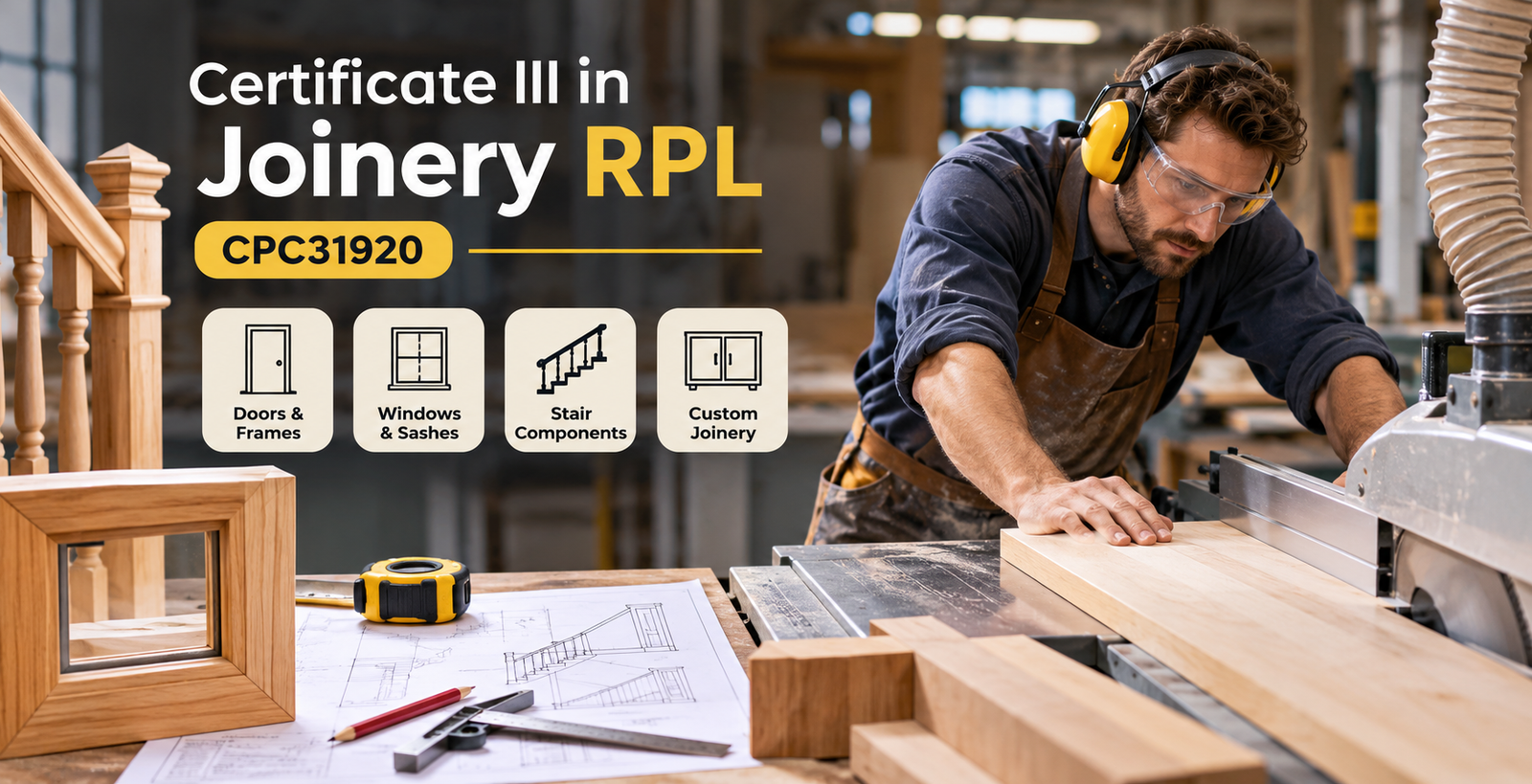
Experienced joiners who have developed broad capability may also want to explore Certificate III in Joinery RPL when considering how existing trade skills fit into their longer-term professional development.
Learn From Installation Problems
Every difficult installation provides useful information.
Ask:
- Was the original measurement wrong?
- Was the drawing unclear?
- Was manufacturing inaccurate?
- Did site conditions change?
- Could the component have been designed differently?
Do not simply fix the immediate problem.
Use it to improve the next job.
Speed Comes After Control
Apprentices and less experienced workers often try to work faster.
Experienced joiners know that speed develops naturally once the process is controlled.
The correct sequence is:
Accuracy → Consistency → Efficiency
not:
Speed → Mistakes → Rework
Fast work is valuable only when the result remains correct.
Final Thoughts
Professional joinery depends on far more than operating machinery or fitting timber components.
The strongest joiners understand the entire process:
measure → plan → manufacture → check → install
Precision at each stage reduces waste, improves quality and makes the final installation easier.
Over time, that ability to plan ahead and prevent problems becomes one of the most valuable skills in the trade.