


Financial markets have continuously evolved through technological innovation. From electronic trading platforms to digital banking, each advancement has improved accessibility, efficiency, and market participation. Today, tokenization is emerging as one of the most transformative developments in modern finance.
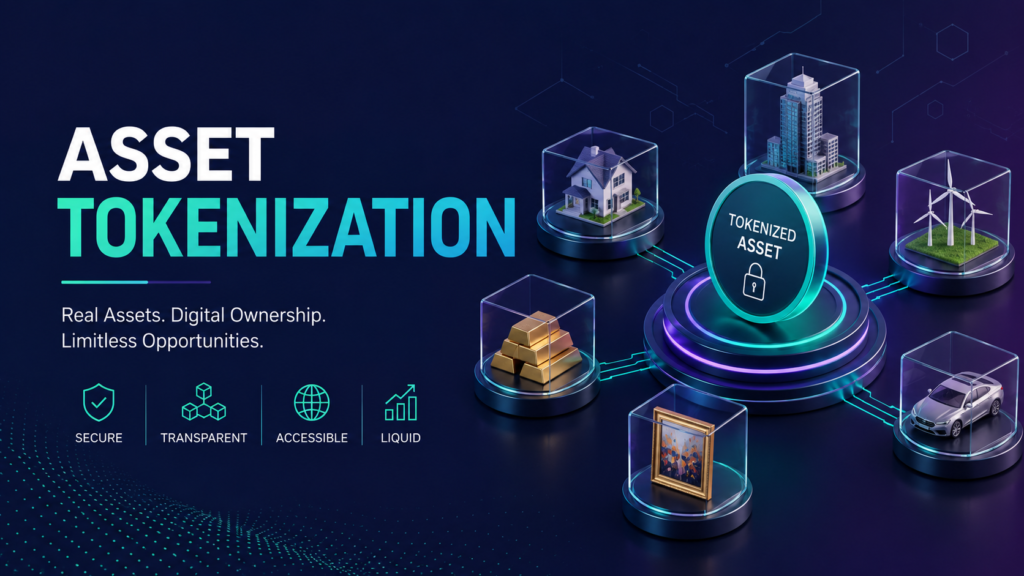
Tokenization involves converting ownership rights of real-world or digital assets into blockchain-based tokens. These tokens can represent assets such as real estate, private equity, bonds, commodities, infrastructure projects, intellectual property, and investment funds. By bringing these assets on-chain, tokenization is creating entirely new opportunities for financial products, investment strategies, and capital formation. As blockchain infrastructure matures and regulatory frameworks become clearer, tokenization is becoming a key component of next-generation financial ecosystems.
Understanding Asset Tokenization
Asset tokenization is the process of digitally representing ownership interests on a blockchain. Each token corresponds to a specific share, claim, or right associated with an underlying asset. Unlike traditional ownership records that are maintained through centralized systems, tokenized assets are managed through decentralized ledgers and smart contracts. These technologies automate transactions, maintain transparent records, and enable more efficient asset management. The result is a financial environment where assets become programmable, transferable, and accessible to a broader range of participants.
Why Tokenization Matters for Financial Innovation
Traditional financial markets often face limitations such as high entry barriers, illiquid assets, lengthy settlement periods, and fragmented investment opportunities. Tokenization addresses many of these inefficiencies by creating digital representations of value that can move seamlessly across blockchain networks. This technological shift enables the development of new financial products and expands access to investment opportunities that were previously unavailable to many market participants.
1. Fractional Ownership Creates New Investment Models
One of the most significant benefits of tokenization is the ability to divide assets into smaller units. Traditionally, investments in assets such as commercial real estate, infrastructure projects, or private equity funds required substantial capital commitments. Through tokenization, these assets can be fractionalized into digital shares that are more affordable and accessible.
Fractional ownership allows investors to:
- Participate in high-value assets with lower capital requirements
- Diversify portfolios across multiple asset classes
- Access investment opportunities that were previously restricted
This creates more inclusive financial markets and expands investor participation.
2. Unlocking Liquidity in Previously Illiquid Assets
Many valuable assets are difficult to trade because they lack active secondary markets. Real estate, private company shares, fine art, and infrastructure investments are examples of traditionally illiquid assets. Tokenization introduces digital marketplaces where ownership interests can potentially be bought and sold more efficiently. By increasing transferability and reducing transaction friction, tokenized assets become more liquid. Improved liquidity benefits both investors and asset owners by enabling faster capital allocation and more flexible investment strategies.
3. Creation of Tokenized Real-World Asset Products
The rise of real-world asset (RWA) tokenization is leading to the development of entirely new financial products.
Examples include:
- Tokenized real estate portfolios
- Digital infrastructure investment funds
- Tokenized commodity ownership structures
- Blockchain-based private equity offerings
- Revenue-sharing investment products
These products combine traditional asset value with blockchain efficiency, creating innovative investment opportunities that were previously difficult to structure or distribute.
4. Expanding Access to Private Markets
Private markets have historically been dominated by institutional investors and venture capital firms due to high minimum investment requirements and regulatory complexities. Tokenization is helping bridge the gap between private and public markets by enabling smaller ownership units and more efficient investor onboarding processes.
As a result, investors gain greater access to:
- Startup investments
- Private equity opportunities
- Venture capital-backed projects
- Growth-stage companies
This democratization of private market participation is one of the most important developments in modern investing.
5. Automated Financial Products Through Smart Contracts
Smart contracts are self-executing programs that automatically perform predefined actions when specific conditions are met.
Within tokenized ecosystems, smart contracts can automate:
- Dividend distributions
- Interest payments
- Revenue-sharing mechanisms
- Asset transfers
- Compliance verification
This automation reduces administrative costs, improves accuracy, and enables the creation of sophisticated financial products that operate with minimal manual intervention.
6. Global Investment Accessibility
Traditional financial products are often constrained by geographic boundaries, banking systems, and market infrastructure. Tokenized assets can be accessed through blockchain networks, creating opportunities for global participation. Subject to applicable regulations, investors from different regions can access tokenized products without many of the barriers associated with conventional financial systems. This global accessibility expands capital pools and increases market efficiency.
7. Enhanced Transparency and Investor Confidence
Transparency is a fundamental component of effective financial markets. Blockchain technology records transactions on immutable ledgers, allowing ownership histories and transaction records to be verified independently. Investors can gain greater visibility into asset ownership, transfer history, and financial activity. This increased transparency helps reduce information asymmetry and builds trust among market participants.
8. Faster Settlement and Reduced Operational Friction
Traditional financial transactions often involve clearinghouses, custodians, and multiple intermediaries. These processes can delay settlement and increase costs. Tokenized financial products can leverage blockchain-based settlement mechanisms that significantly reduce transaction times. Ownership transfers can occur in near real time, improving efficiency and reducing counterparty risk. Faster settlement cycles support more dynamic investment environments and better capital utilization.
9. New Opportunities for Portfolio Diversification
Tokenization is expanding the range of assets available to investors.
In addition to traditional stocks and bonds, investors can gain exposure to:
- Real estate assets
- Infrastructure projects
- Renewable energy investments
- Intellectual property rights
- Private businesses
- Commodity-backed assets
This broader investment universe allows for more diversified portfolios and potentially improved risk management strategies.
10. Integration with Emerging Digital Financial Ecosystems
Tokenized assets are increasingly interacting with decentralized finance (DeFi) platforms and blockchain-based financial services.
This integration creates opportunities for:
- Asset-backed lending
- Yield-generating investment strategies
- Digital collateral systems
- Automated portfolio management
- Cross-platform financial services
As blockchain ecosystems mature, tokenized assets may become foundational building blocks of a more interconnected financial infrastructure.
Challenges That Must Be Addressed
While tokenization presents significant opportunities, several challenges remain:
Regulatory Uncertainty
Different jurisdictions have varying rules regarding digital assets, securities, and investor protections.
Market Infrastructure Development
Secondary markets, custody solutions, and interoperability standards continue to evolve.
Cybersecurity Risks
Blockchain platforms and digital asset systems require robust security measures to protect investors and assets.
Investor Education
Understanding tokenized financial products remains a challenge for many participants entering the market. Addressing these issues will be essential for widespread adoption.
The Future of Tokenized Financial Products
As technology, regulation, and institutional participation continue to advance, tokenization is expected to become a core component of global financial markets.
Future developments may include:
- Fully tokenized investment funds
- Digital bond and debt markets
- Tokenized insurance products
- Blockchain-based retirement investment vehicles
- Cross-border digital capital markets
- AI-enhanced tokenized asset management systems
These innovations could significantly reshape how capital is raised, invested, and managed across industries.
Conclusion
Tokenization is creating new opportunities for financial products and investments by transforming how assets are owned, traded, and managed. Through fractional ownership, improved liquidity, automated operations, enhanced transparency, and global accessibility, tokenization addresses many of the limitations of traditional financial systems. As adoption continues to grow, tokenized assets are expected to play an increasingly important role in investment portfolios, capital markets, and digital financial ecosystems. For investors, businesses, and financial institutions, understanding and embracing tokenization may become essential to participating in the future of finance.