
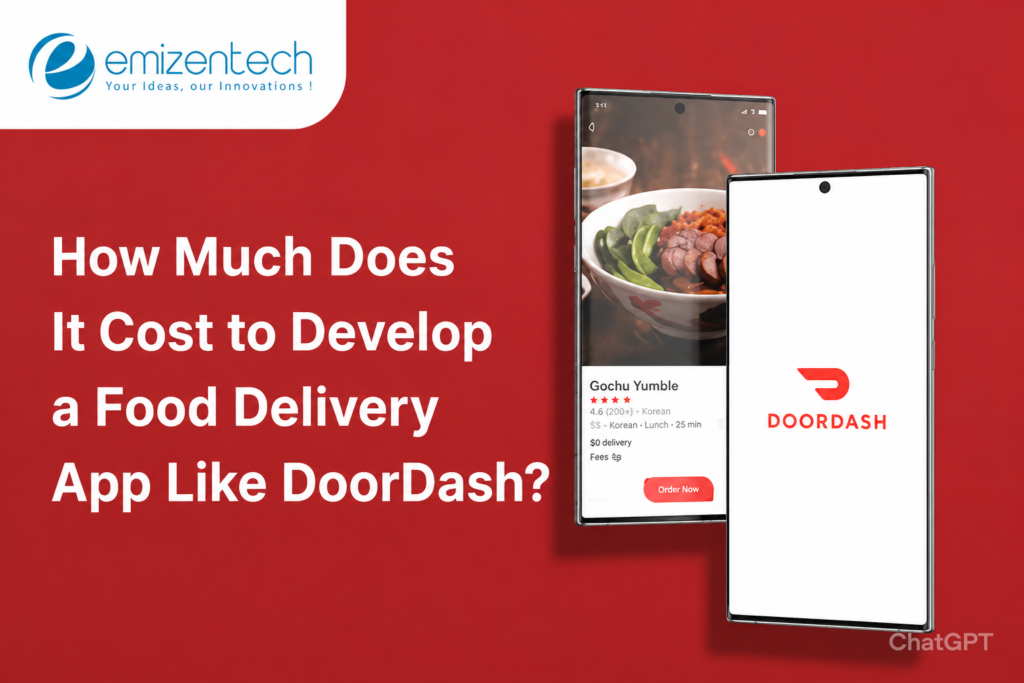

Apps like DoorDash have set new standards by offering seamless ordering, real-time tracking, multiple payment options, and efficient delivery management.
As demand for online ordering continues to grow, many startups and enterprises are exploring opportunities in food delivery app development to launch their own platforms. However, one of the most common questions business owners ask is: How much does it cost to develop a food delivery app like DoorDash?
The answer depends on various factors, including app complexity, features, technology stack, development team, and ongoing maintenance requirements. This guide breaks down the costs, timelines, revenue models, and strategies involved in building a successful food delivery application.
Food Delivery App Market Size and Growth Opportunities
The online food delivery market is experiencing strong global growth, driven by smartphone adoption, digital payments, and changing consumer preferences. According to industry reports, the global online food delivery market was valued at approximately $288.8 billion in 2024 and is expected to exceed $505 billion by 2030, growing at a CAGR of around 9.4%.
The market is also benefiting from innovations such as:
- AI-powered recommendations
- Real-time delivery tracking
- Cloud kitchen integration
- Subscription-based ordering models
- Contactless payments
- Automated dispatch systems
Major players such as DoorDash, Uber Eats, and other regional delivery platforms continue to expand their services, creating significant opportunities for entrepreneurs entering the market.
For businesses considering food delivery app development, the market outlook remains highly promising due to increasing customer demand and continuous technological advancements.
Cost to Build a Food Delivery App Like DoorDash
The total food delivery app development cost varies depending on the scope and complexity of the project.
| App Type | Estimated Cost |
| Basic MVP App | $15,000 – $35,000 |
| Mid-Level App | $35,000 – $80,000 |
| Advanced Food Delivery Platform | $80,000 – $150,000+ |
| Enterprise-Level Solution | $150,000 – $300,000+ |
A complete DoorDash-like solution generally includes:
Customer App
- User registration
- Restaurant listings
- Menu browsing
- Order placement
- Payment integration
- Order tracking
Delivery Driver App
- Order notifications
- Route optimization
- Earnings dashboard
- Delivery status updates
Restaurant Panel
- Menu management
- Order handling
- Analytics dashboard
- Inventory management
Admin Dashboard
- User management
- Commission tracking
- Reports and analytics
- Content management
The more advanced features you add, the higher the development cost becomes.
Key Factors Affecting Food Delivery App Development Cost
Several factors influence the overall budget of a food delivery platform.
App Complexity
The complexity of your application plays the biggest role in determining development costs.
Basic Features
- Login and registration
- Restaurant listings
- Search functionality
- Cart management
- Payments
Advanced Features
- AI recommendations
- Loyalty programs
- Subscription plans
- Smart route optimization
- Predictive analytics
The more sophisticated the functionality, the more development hours are required.
Platform Selection
Businesses can choose between:
Native Development
- Separate Android and iOS apps
- Better performance
- Higher development cost
Cross-Platform Development
- Shared codebase
- Faster development
- Lower initial investment
Many startups prefer cross-platform frameworks to reduce costs while maintaining quality.
UI/UX Design
A visually appealing and user-friendly interface directly impacts customer retention. Custom designs generally cost more than pre-built templates but offer a stronger brand identity.
Technology Stack
The technologies used for frontend, backend, databases, APIs, and cloud infrastructure significantly affect project pricing.
Third-Party Integrations
Common integrations include:
- Payment gateways
- GPS and mapping services
- SMS services
- Push notifications
- CRM systems
- Analytics tools
Each integration may involve additional licensing or usage costs.
Development Team Location
Developer rates vary significantly across regions.
| Region | Average Hourly Rate |
| North America | $100–$200 |
| Western Europe | $70–$150 |
| Eastern Europe | $30–$80 |
| Asia | $20–$60 |
Choosing the right development partner can dramatically impact the final budget.
Hidden Costs of Food Delivery App Development
Many businesses focus only on development expenses and overlook ongoing operational costs.
App Maintenance
Regular updates are necessary to:
- Fix bugs
- Improve performance
- Maintain compatibility
- Enhance security
Annual maintenance typically costs around 15–25% of the original development budget.
Cloud Hosting
As user traffic grows, server and infrastructure expenses increase.
Third-Party Service Fees
Recurring charges may apply for:
- Maps APIs
- SMS services
- Payment processing
- Analytics tools
Marketing and User Acquisition
Launching an app is only the beginning. Customer acquisition often requires significant investment in:
- SEO
- Paid advertising
- Influencer marketing
- Social media campaigns
Security and Compliance
Protecting user data and payment information requires continuous monitoring and security updates.
Ignoring these hidden costs can lead to budget overruns after launch.
How Long Does It Take to Develop a Food Delivery App Like DoorDash?
Development timelines depend on project complexity and feature requirements.
| App Complexity | Estimated Timeline |
| Basic MVP | 3–4 Months |
| Medium Complexity | 5–7 Months |
| Advanced Platform | 8–12 Months |
| Enterprise Solution | 12+ Months |
A typical development process includes:
Discovery & Planning
2–4 weeks
UI/UX Design
3–6 weeks
Frontend Development
6–12 weeks
Backend Development
8–16 weeks
Testing & QA
3–6 weeks
Deployment
1–2 weeks
Businesses looking to enter the market quickly often launch an MVP first and add advanced features later.
Top Revenue Models for Food Delivery Apps
A successful delivery platform requires a sustainable monetization strategy.
Commission-Based Model
Restaurants pay a percentage commission for every order processed through the platform.
Delivery Fees
Customers are charged a delivery fee based on:
- Distance
- Order value
- Delivery speed
Subscription Plans
Premium memberships offer benefits such as:
- Free delivery
- Exclusive discounts
- Priority support
Featured Restaurant Listings
Restaurants can pay for increased visibility within the app.
Surge Pricing
Delivery charges increase during peak demand periods.
Advertising Revenue
Brands and restaurants can run targeted promotional campaigns inside the platform.
Combining multiple revenue streams helps maximize profitability and reduce dependence on a single income source.
How to Reduce Food Delivery App Development Costs?
Building a delivery platform does not always require an enterprise-level budget.
Start with an MVP
Launch with essential features first and gather user feedback before investing in advanced functionality.
Choose Cross-Platform Development
A shared codebase significantly reduces development expenses.
Prioritize Core Features
Focus on functionality that directly impacts customer experience and revenue generation.
Use Cloud Infrastructure
Cloud services help reduce upfront hardware costs and improve scalability.
Integrate Third-Party Solutions
Instead of building everything from scratch, leverage existing APIs for payments, maps, and notifications.
Partner with Experienced Developers
A skilled development team can prevent costly mistakes and reduce project delays.
These strategies can help businesses optimize budgets without compromising quality.
How to Choose the Right Food Delivery App Development Company?
Choosing the right food delivery app development company starts with evaluating its experience, portfolio, and expertise in building on-demand delivery platforms. Reviewing client testimonials, case studies, and previous projects can help you assess the company’s ability to deliver high-quality solutions that meet your business goals.
It’s also important to consider communication, development processes, and post-launch support. A reliable development partner should offer transparent project management, timely updates, and ongoing maintenance services to ensure your app remains secure, scalable, and competitive in the long run.
Conclusion
Building a DoorDash-like platform requires careful planning, the right technology stack, and a clear understanding of your business goals. Depending on the complexity, costs can range from $15,000 for an MVP to over $300,000 for a fully featured enterprise solution.
Success in the food delivery industry depends not only on development but also on user experience, scalability, marketing, and ongoing innovation. Investing in professional food delivery app development services ensures your platform is built to meet modern customer expectations and future market demands.
If you’re planning to launch a scalable food delivery solution, partnering with an experienced company like EmizenTech can help streamline the development process and accelerate your time to market.
Frequently Asked Questions
How much does it cost to develop a food delivery app like DoorDash?
A basic MVP typically costs between $15,000 and $35,000, while advanced platforms can exceed $150,000 depending on features and complexity.
How long does it take to build a food delivery app?
Development usually takes between 3 and 12 months based on project requirements and functionality.
What are the must-have features in a food delivery app?
Essential features include user registration, restaurant listings, online payments, real-time tracking, order management, and push notifications.
Is food delivery app development profitable?
Yes. Revenue can be generated through commissions, delivery fees, subscriptions, advertising, and premium restaurant listings.
What factors affect food delivery app development costs?
Major factors include app complexity, platform choice, UI/UX design, third-party integrations, development team location, and ongoing maintenance requirements.