

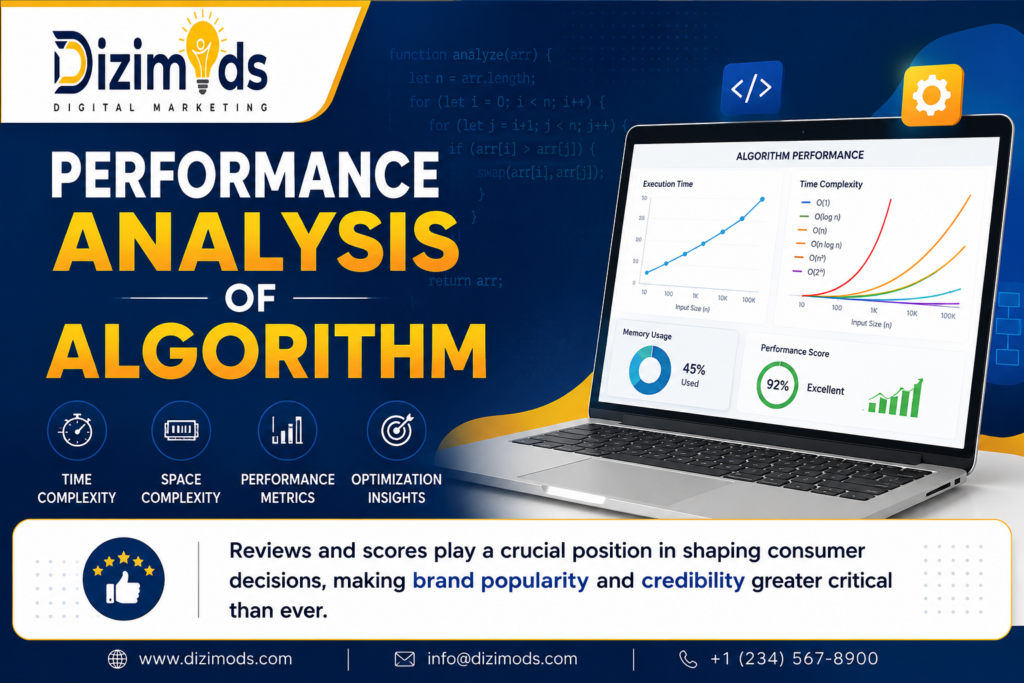

Performance Analysis of Algorithms
Performance analysis of algorithms focuses on how the end users perceive the efficiency of an algorithm in terms of the time taken, memory consumed, and other resources spent. The performance of algorithms is important to the developer of any software application, the designer of a web application, and the solver of a computationally intensive problem. An application may be fast and scalable, but the algorithms may be slow and consume many resources.
Analyzed algorithms enable the developer to find bottlenecks in the algorithms and even improve the algorithms at the cost of reduced resource consumption and improved user experience. Performance metrics enable organizations to safely deploy applications and ensure reliability with the increased volume of data the application will process.
What is Performance Analysis of Algorithms
Performance analysis of algorithms studies the efficiency of algorithms in the presence of varying input conditions and large amounts of input data.
The main goals of performance analysis of algorithms are:
1. Measuring the time taken to complete a task.
2. Measuring the memory taken by an algorithm.
3. Measuring the resources consumed.
4. Comparing multiple algorithms performing the same task.
5. Finding the most efficient algorithm.
Performance analysis of algorithms is important to distinguish between algorithms when the cost of executing one algorithm is measured in milliseconds and the cost of executing another algorithm is in seconds.
Why is Performance Analysis Important?
There are many advantages of analyzing the performance of algorithms.
1. It improves the speed of execution of an application.
2. Efficient algorithms reduce the memory footprint of the application.
3. Efficiency algorithms improve the scalability of an application.
4. Reduces Infrastructure Costs
Less code leads to less resource consumption by the server, leading to lower hosting and cloud costs.
5. Increases Satisfaction
Applications that load faster improve satisfaction and decrease the bounce rate.
Performance Evaluation
There are two main types of performance evaluation for algorithms.
1. A Priori Analysis
This type of analysis occurs before the algorithm is even implemented.
It includes:
- Mathematics
- Time and space complexity
- Theoretical performance
- It does not require the execution of a program.
2. A Posteriori Analysis
This type of analysis occurs after the algorithm has been implemented.
It includes:
- The execution of the algorithm
- The measurement of the execution time
- The observation of CPU time and memory usage
- This type of analysis affords the performance of the algorithm.
Time Complexity
Time complexity defines the growth of execution time in relation to the growth of the size of the input.
Some of the more common classes of complexity are:
Complexity Performance
O(1) Constant Time
O(log n) Logarithmic Time
O(n) Linear Time
O(n log n) Linearithmic Time
O(n²) Quadratic Time
O(n³) Cubic Time
O(2ⁿ) Exponential Time
O(n!) Factorial Time
The algorithms that have a lower complexity are preferred because they tend to perform better with larger datasets.
Space Complexity
Space complexity is the measurement of the space a program uses in relation to how fast it executes.
It includes the:
- Variables
- Data structures
- Recursive calls
- Temporary space
Eliminating space that is unnecessarily allocated enhances the performance of the application.
Best, Average, and Worst Cases
Performance is commonly evaluated using the three types of cases.
Best Case
The algorithm executes with a minimum number of operations.
Example:
Finding a value in a list that is sorted in a manner that is ascending.
Average Case
The case represents what is expected most of the time in terms of performance.
Most applications depend on the average case.
Worst Case
The algorithm executes with the maximum number of operations.
To guarantee that the performance of the algorithm meets the required expectations for the highest load, a worst-case evaluation has to be conducted.
Common Performance Metrics
Metrics assist in analyzing effectiveness of algorithms.
Execution Time
Total Time taken to complete execution, of an algorithm.
CPU Utilization
Measures CPU usage, during an algorithm execution.
Memory Consumption
Measures RAM, during algorithm execution.
Input Size
Evaluates performance, with varying sizes of input data.
Throughput
Measures number of operations completed, during a specific time.
Scalability
Evaluates performance, with increasing size of workload.
Big O Notation
Big O Notation, is the most common way of representing algorithm performance.
E.g. of Big O Notation:
Binary Search → O(log n)
Linear Search → O(n)
Bubble Sort → O(n²)
Merge Sort → O(n log n)
Quick Sort (Average) → O(n log n)
Big O is important for the algorithm performance assessment, independent of the system being used.
Techniques to Improve Algorithm Performance
There are several ways, to improve the performance of an algorithm.
Use Better Data Structure
Choosing better data structures, has great performance impact.
e.g.
Hash Tables, Arrays, Linked Lists, Trees, Graphs.
Reduce Nested Loops
The more loops are nested, the more time complexity is increased.
Replacing nested loops, with optimized logic, improves performance.
Use Better Performing Sorts
Better performing sorts, like: Merge Sort, Quick Sort, and Heap Sort, are preferred over Bubble Sort, for large datasets.
Reduce Memory Allocation
Reducing the number of created variables/objects, improves the performance of an algorithm.
Dynamic Programming
Dynamic (functional) programming retains results of previous calculations (memoization) to reduce repeated calculations.
This greatly impacts performance for recursive problems.
Divide and Conquer
Divide and Conquer technique is used to break large problems, into smaller, sub problems. This, greatly reduces overall computation time.
E.g. of Divide and Conquer technique includes Merge Sort, Binary Search.
Real-World Applications
Performance analysis is vital to many fields.
Web Development
Performance analysis helps optimize load times.
Mobile Applications
Performance analysis helps optimize battery usage.
Artificial Intelligence
Performance analysis helps with efficiently handling large datasets.
Database Systems
Performance analysis helps optimize the speed of searches and indexes.
E-Commerce Platforms
Performance analysis helps with handling multitudes of customer requests.
Cloud Computing
Performance analysis helps optimize cost and resource usage.
Tools for Performance Analysis
Developers use many tools for algorithm analysis.
Visual Studio Profiler
- Intel VTune Profiler
- JProfiler
- Valgrind
- GNU gprof
- Google Benchmark
- Python cProfile
These tools support detecting sluggish areas of code.
Best Practices
- The following practices should be observed for successful algorithm analysis.
- Analyze both time and space complexity.
- Test with a variety of input sizes.
- Use multiple algorithms for the same problem.
- Profile actual performance over theoretical analysis.
- Use the best data structure.
- Avoid unnecessary calculations.
- Only optimize performance after pinpointing sluggish areas.
- Record complexity for easier future management.
Conclusion
The analysis of algorithm performance focuses on the speed, efficiency, and scalability of software applications. Time and space complexity can help developers choose effective algorithms. Combining the theoretical methods of analysis, such as Big O, with practical profiling, assist developers in creating high-performance software. Optimizing software performance, especially with the cost of computation, benefits both developers and users. Regular performance analysis helps ensure future growth and scaling.
READ MORE BLOG –Why Amazon Product Listing Services Are Essential for Success in 2026