

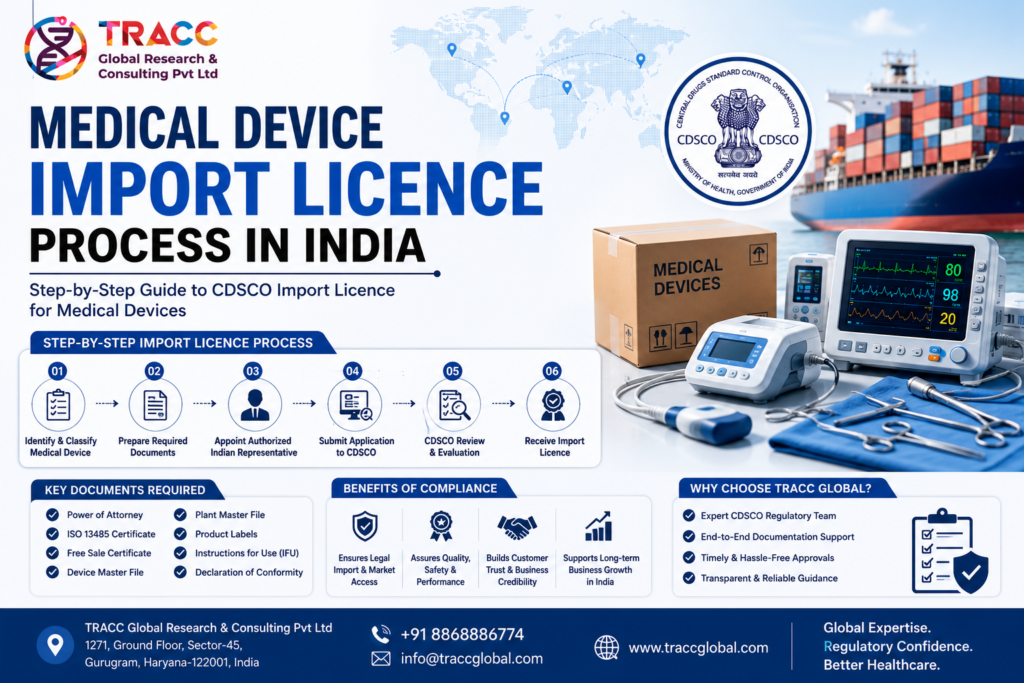

India’s medical device industry is growing rapidly, creating significant opportunities for manufacturers and importers looking to supply high-quality healthcare products. However, before importing regulated medical devices into India, businesses must comply with the regulatory requirements established by the Central Drugs Standard Control Organisation (CDSCO). One of the most important requirements is obtaining an Import Licence for Medical Devices.
This guide provides an overview of the CDSCO import licensing process, key documentation requirements, and practical tips to help businesses navigate the regulatory framework efficiently.
What Is an Import Licence for Medical Devices?
An Import Licence for Medical Devices is an official authorization issued by CDSCO that allows approved medical devices to be imported and marketed in India. The licence ensures that imported products meet the quality, safety, and performance standards outlined in the Medical Devices Rules, 2017.
Obtaining this licence is essential for businesses that want to legally distribute medical devices in the Indian market while maintaining compliance with applicable regulations.
Why Is a CDSCO Import Licence Important?
Medical devices directly affect patient care, making regulatory oversight essential. The import licensing process helps ensure that only compliant and safe medical devices enter the healthcare system.
Some key advantages include:
- Legal authorization to import medical devices.
- Compliance with Indian medical device regulations.
- Increased confidence among hospitals and healthcare providers.
- Reduced regulatory risks and shipment delays.
- Stronger business credibility and market acceptance.
Businesses that prioritize compliance are often better positioned for sustainable growth in the Indian healthcare sector.
CDSCO Import Licence Process
Obtaining an Import Licence involves a structured regulatory process that begins with identifying the correct classification of the medical device.
The next step is preparing technical documentation, quality certificates, product information, and supporting regulatory records. Foreign manufacturers generally appoint an Authorized Indian Representative (AIR) to coordinate communication with CDSCO throughout the application process.
After documentation is completed, the application is submitted through the CDSCO online portal along with the required forms and applicable fees. CDSCO then evaluates the submission and may request additional clarification before issuing the Import Licence.
Careful preparation and timely responses to regulatory observations help improve the efficiency of the approval process.
Documents Commonly Required
Applicants should prepare the following documents before submitting an application:
- Power of Attorney
- ISO 13485 Certificate
- Free Sale Certificate
- Device Master File
- Plant Master File
- Product Labels
- Instructions for Use (IFU)
- Declaration of Conformity
- Product Specifications
- Manufacturer Information
Complete and consistent documentation helps minimize regulatory queries and supports smoother application processing.
Common Challenges
Although the process is well defined, businesses may experience delays because of avoidable mistakes such as:
- Incorrect device classification
- Incomplete technical documentation
- Expired certificates
- Non-compliant product labeling
- Delayed responses to CDSCO queries
Reviewing documents carefully before submission significantly reduces these risks.
Best Practices for a Successful Application
Organizations can improve their chances of approval by adopting a proactive regulatory approach.
Some recommended practices include:
- Understand the applicable CDSCO requirements.
- Verify product classification before applying.
- Prepare complete technical documentation.
- Maintain updated quality certificates.
- Ensure labeling complies with Indian regulations.
- Monitor regulatory updates regularly.
- Seek professional regulatory guidance whenever necessary.
These practices help simplify the licensing process while supporting long-term regulatory compliance.
Why Choose Tracc Global?
Medical device import regulations require technical expertise and careful documentation. Tracc Global provides end-to-end regulatory consulting to help manufacturers, importers, and healthcare businesses navigate the CDSCO import licensing process with confidence.
Our team supports clients with regulatory planning, documentation review, compliance assessments, application preparation, and submission guidance. By combining practical industry knowledge with a transparent approach, we help businesses achieve regulatory readiness while maintaining compliance with evolving medical device regulations.
Conclusion
Obtaining an Import Licence for Medical Devices is an essential step for businesses seeking to enter India’s growing healthcare market. A well-prepared application supported by accurate documentation and regulatory planning helps reduce approval delays while ensuring compliance with CDSCO requirements.
Whether you are importing medical devices for the first time or expanding your existing product portfolio, understanding the licensing process is key to successful market entry. With expert guidance from Tracc Global, businesses can confidently navigate the CDSCO approval process and build a strong foundation for long-term success.