
A soldering iron that drifts ten degrees off target doesn’t sound like much. Until you’re three thousand joints into a batch and QC starts flagging cold solder on a random sample. That’s the moment most production managers realize their soldering station isn’t a commodity purchase — it’s a variable in their yield rate. Buyers searching for soldering station manufacturers are usually past the browsing stage. They’ve already had a bad batch, a bad vendor, or a bad surprise on an invoice. This one’s for them.
The Spec Detail Most Buyers Skip
Everyone checks wattage. Almost nobody checks recovery time — how fast the tip returns to set temperature after contact with a large ground plane or a thick copper pad. A unit that recovers in under two seconds behaves completely differently on a dense PCB than one that takes five.
Core Specifications to Evaluate
- Temperature range and stability: Look for a Temperature Controlled Soldering Station holding ±1°C, not ±5°C advertised as “precision.”
- Tip technology: Ceramic heating elements outlast nichrome-wound tips by a wide margin in high-cycle environments.
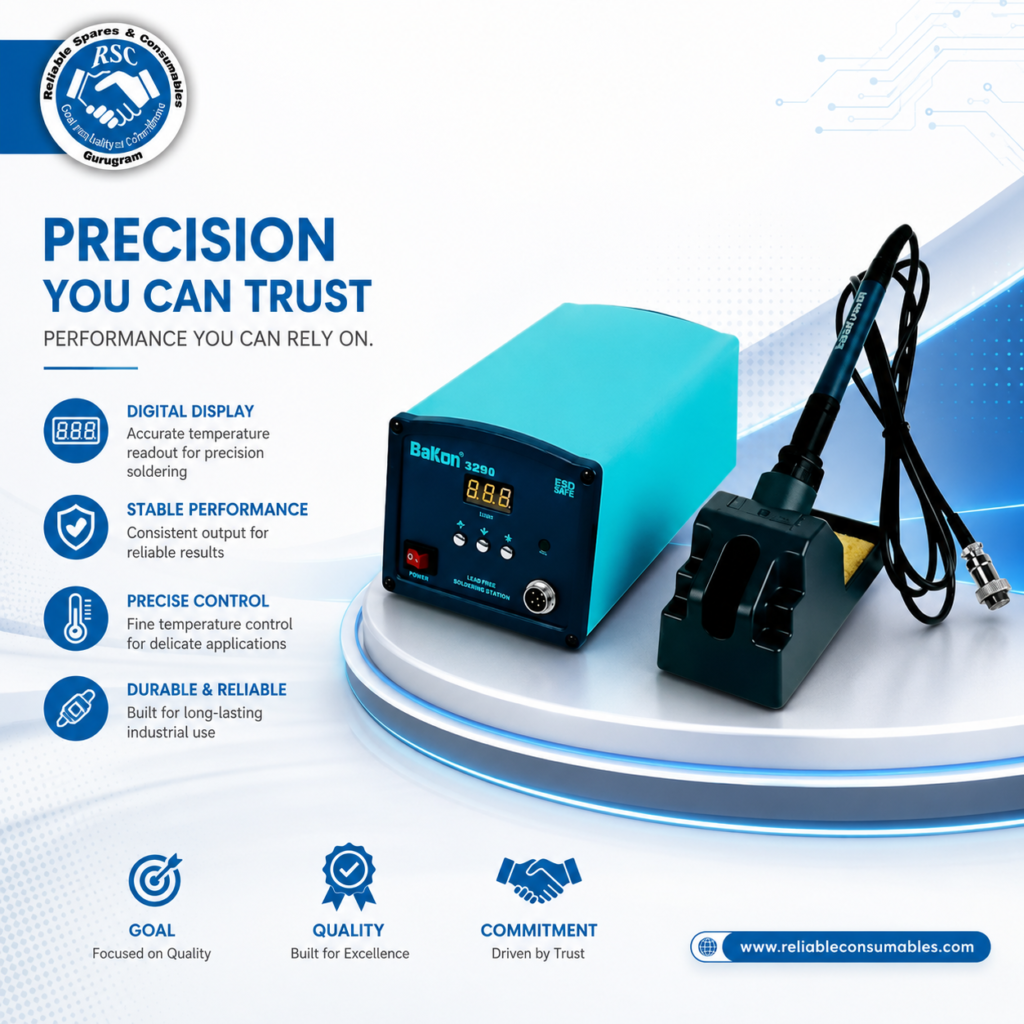
- Display and control: A Digital Soldering Station with PID control gives repeatable results across shifts and operators.
- ESD compliance: An ESD Safe Soldering Station needs a genuine grounded tip and grip, not a sticker claiming compliance.
- Environmental compatibility: A Lead-Free Soldering Station must run reliably above 350°C without tip oxidation problems — lead-free alloys are harder on equipment than most spec sheets admit.
What a Bad Answer Actually Reveals
Ask five suppliers the same five questions. The gaps in their answers tell you more than their brochures.
- “What’s your tip replacement lead time?” — A bad answer is “depends.” A real supplier gives you a number, in days, with a reason if it varies by tip type.
- “Can I see calibration certificates?” — If they hesitate or say “we can arrange that,” they don’t test every unit. They test samples.
- “What happens if a unit fails in month four?” — Vague warranty language here means you’re funding their R&D with your downtime.
- “Do you manufacture or trade?” — Some suppliers relabel imported units. Nothing wrong with that on its own, but you deserve to know before you sign a PO.
- “What’s your minimum order for custom configurations?” — If they can’t answer without a sales call, they haven’t built custom orders before.
A supplier who says “we’ll handle defects case by case” doesn’t have a policy. That’s a negotiation you’ll lose after the shipment lands.
Benefits That Actually Move the Needle
Quality claims are cheap. Here’s what actually protects margin on the factory floor.
- Fewer rework cycles. Stable temperature control at the tip means fewer cold joints, which means fewer boards pulled back for touch-up — a direct labor cost most buyers underestimate until they measure it.
- Lower tip replacement spend. Ceramic elements in an Industrial Soldering Station typically outlast standard tips by 3 to 4x in continuous-use environments, which changes your consumables budget more than the unit price ever will.
- Operator consistency across shifts. Digital presents remove the guesswork a night-shift operator inherits from a day-shift operator’s manual settings.
- Reduced ESD-related returns. Field returns tied to static damage are expensive to trace and worse to explain to your own customer.
- Faster changeover between jobs. Present memory slots cut setup time when a line moves between component types multiple times a day.
- Defensible compliance documentation. When an auditor asks for ESD or RoHS records, having them ready — not promised — saves a week of scrambling.
Why Location Is a Supply Chain Decision, Not Just an Address
We ship from India, and that’s not a footnote — it’s a logistics advantage for Soldering Station Suppliers in India serving EMS units, PCB assembly floors, and repair centres across the country. Domestic dispatch means replacement tips and spare heating elements arrive in days, not the six-to-eight weeks buyers often accept as normal when importing from overseas. As Soldering Station Manufacturers in India, we also hold safety stock regionally, which matters more than most procurement teams plan for until a line goes down waiting on a part.
A Straight Answer About Who We Are
We started in industrial ESD products before expanding into production tools, and that sequencing matters — we understand static-sensitive environments from the ground up, not as an add-on category. We stopped sourcing one tip alloy in 2022 after two clients in humid coastal plants reported early oxidation. We switched suppliers within a quarter. That’s the kind of correction you only make when you’re actually accountable for what leaves the warehouse, not just reselling a catalog.
Talk to Us Directly
Share your soldering station specifications or let us know the challenges you’re facing with your current supplier, and our team will provide a tailored solution with pricing and lead time as quickly as possible. Whether you need standard models or custom-built configurations, we offer flexible manufacturing options to meet your requirements. Get in touch by email or phone, and you’ll communicate directly with our technical team for prompt, expert assistance.
The Bottom Line
A soldering station is one of the smaller line items on a procurement sheet and one of the biggest hidden contributors to your defect rate. Get the spec wrong, and you’ll pay for it in rework long after the invoice is settled. The manufacturers who last in this business are the ones willing to answer hard questions before the sale, not after the complaint.
FAQs
- Is a Temperature Controlled Soldering Station worth the price difference over a basic iron?
Yes, if you’re running more than a handful of units a day. The price gap closes fast once you factor in reduced rework. For hobbyist or one-off repair work, it’s a harder case to make.
- How often should soldering station tips be replaced?
Ceramic tips in moderate daily use typically last 6 to 9 months. High-cycle production lines should budget for replacement closer to every 3 to 4 months — anyone promising a full year under heavy use is rounding generously.
- Are your units suitable for lead-free soldering?
Yes. Our Lead-Free Soldering Station models are rated for sustained operation above 350°C, which lead-free alloys generally require.
- Do you supply Soldering Station Suppliers in India for both large EMS providers and smaller repair shops?
Both. Order volumes and support levels differ, but the underlying product line is the same.
- What’s the difference between ESD safe and ESD compliant?
“Compliant” sometimes just means labeled correctly. “Safe” means the grounding path is actually tested. We test every unit before dispatch.
- Can I get a custom temperature profile for a specific component type?
Yes, on orders above our standard MOQ. Below that threshold, it’s not cost-effective for either side, and we’ll say so upfront.