
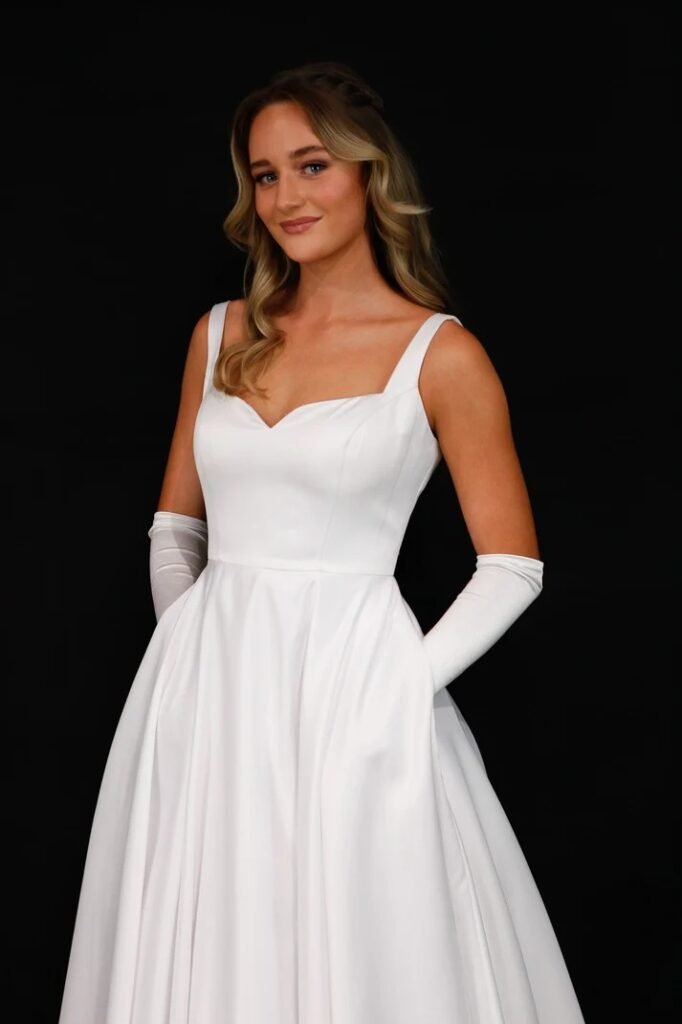

Choosing a wedding dress is rarely just about how it looks in a photo it’s about how it feels when you’re standing in front of the mirror, turning slowly, watching the fabric move. Among all the fabric options a bride will encounter, satin holds a special place. It has a quiet elegance, a soft glow under light, and a structure that suits an enormous range of body shapes and wedding styles. But “satin” isn’t just one fabric it’s a family of weaves, weights, and finishes, and understanding those differences is the real key to finding a dress that feels right, not just looks right in a catalogue.
This guide walks through what satin actually is, how it differs from other bridal fabrics, and the practical steps to take when you’re trying to choose a white satin wedding dress that suits your body, your venue, and the way you want to feel on the day.
What Makes Satin a Popular Choice for Wedding Dresses?
Satin isn’t defined by the fibre it’s made from it’s defined by its weave. A satin weave uses long floating threads on the surface of the fabric, which is what gives it that smooth, lustrous sheen and soft handle. This is different from fabrics like chiffon or tulle, which use plain or open weaves that create a matte or airy texture instead.
Because of this weave structure, satin has a few qualities that make it especially popular for bridal gowns:
- A natural sheen that catches light beautifully in photographs, especially outdoors or under warm venue lighting
- A structured drape that holds shape well for fitted bodices, ballgown skirts, and clean silhouettes alike
- A substantial feel, which many brides associate with a more “formal” or “traditional” wedding look
- Versatility across seasons, since satin can be lightweight or heavier depending on the weave
This combination of structure and shine is part of why satin remains one of the most requested fabrics in bridal boutiques, particularly for brides who want a timeless rather than trend-driven look.
Understanding the Different Types of Satin (A Quick Fabric Guide)
Not all satin is created equal, and this is where a lot of brides get confused when shopping. Here’s a simple breakdown of the main types you’ll come across:
Duchess Satin A heavier, stiffer satin with a subtle sheen. It holds its shape exceptionally well, which makes it a common choice for structured ballgowns and A-line skirts. It’s less clingy, so it can be more forgiving through the midsection.
Charmeuse Satin Lighter and more fluid than duchess satin, with a higher shine and a softer drape. Charmeuse skims the body more closely, which suits fitted or mermaid-style gowns but shows more of the body’s natural shape underneath.
Silk Satin Made from natural silk fibres, this is considered the most luxurious version breathable, with a deep, rich lustre. It’s also the most expensive and typically the most delicate to care for.
Polyester (or “Bridal”) Satin A more affordable, widely available alternative to silk satin. Modern polyester satin has improved significantly in quality and can offer a similar look at a lower price point, though it may not breathe quite as well in warm weather.
Knowing which type of satin is used in a gown you’re considering and asking directly if it isn’t listed gives you a much clearer sense of how it will actually move, fit, and feel, rather than relying on how it looks in a single photo.
How to Choose a White Satin Wedding Dress That Suits Your Body and Style
This is the part most brides actually want answered: not just “what is satin” but “will it work for me.” Here’s a practical framework.
1. Consider your silhouette goals first, fabric second
Before falling in love with a fabric, think about the shape you want the dress to create. Satin is available in almost every silhouette A-line, ballgown, mermaid, sheath, and fit-and-flare but the weight of satin you choose should match that silhouette. Heavier duchess satin supports structured, voluminous skirts, while lighter charmeuse satin is better suited to close-fitting or draped styles.
2. Think about your venue and season
Satin can run warmer than airier fabrics like chiffon or tulle, simply because of its density. If you’re marrying outdoors in summer heat, a lighter charmeuse or silk satin — or a satin bodice paired with a softer skirt fabric may feel more comfortable than a full duchess satin gown. For cooler-weather or evening weddings, satin’s weight and warmth become an advantage rather than a drawback.
3. Test how it photographs under different light
Satin’s sheen behaves differently depending on lighting. Under harsh flash photography, satin can sometimes appear shinier than intended, while in natural or golden-hour light, it tends to glow softly. If photography is a priority, ask to see the fabric under a few different lighting conditions in the store, not just under standard boutique lighting.
4. Pay attention to how it feels against your skin, not just how it looks on the hanger
This might be the most overlooked step. A fabric that looks beautiful on a hanger can feel stiff, heavy, or scratchy once it’s actually on the body and moving. Walk in it. Sit down in it. Raise your arms as you would during a first dance. A dress that “feels right” is one that lets you move naturally without constant awareness of the fabric.
5. Ask about lining and structure, not just the outer fabric
Many satin gowns include a separate lining fabric beneath the satin layer, which affects both comfort and how the satin drapes. A well-constructed lining can make even a heavier satin feel more comfortable against the skin for a full day of wear.
Satin vs. Other Bridal Fabrics: A Side-by-Side Look
It’s easier to appreciate what satin offers once you see it next to the other fabrics commonly used in bridal wear:
- Satin vs. Chiffon — Chiffon is sheer, lightweight, and floaty, ideal for soft, romantic, and often bohemian-style gowns. Satin, by comparison, offers more structure and a richer sheen, better suited to more formal or classic silhouettes.
- Satin vs. Tulle — Tulle is almost always used for volume (think dramatic ballgown skirts or veils) rather than as the primary fabric of a bodice, since it has little structure of its own. Satin is far more versatile as a standalone fabric for the whole gown.
- Satin vs. Crepe — Crepe has a matte, slightly textured finish and a soft, clingy drape, making it popular for minimalist, modern bridal looks. Satin’s shine and firmer hand give it a more traditional, formal character.
None of these fabrics is objectively “better” the right choice depends entirely on the silhouette, season, and feeling you’re going for.
Caring for a Satin Bridal Gown
Once you’ve chosen your dress, a little care knowledge goes a long way toward keeping it in beautiful condition until (and on) the big day:
- Store it properly. Hang your gown on a padded hanger in a breathable garment bag, away from direct sunlight, to prevent creasing and fading.
- Steam, don’t iron. Satin can scorch or develop shine marks under direct heat from an iron. A garment steamer held at a slight distance is the safer option for removing wrinkles.
- Handle stains carefully. Satin can water-spot easily, so blot rather than rub any spills, and avoid attempting to remove stains yourself before consulting a professional bridal cleaner.
- Mind sharp jewellery and accessories. Satin can snag, so be mindful of rings, watches, and bracelets when putting on or moving in the dress.
- Book a professional clean and preservation service if you plan to keep the gown long-term, ideally within a few weeks of the wedding.
Common Mistakes to Avoid When Choosing Satin
- Choosing based on photos alone. Fabric behaves very differently in person than on a screen always request a swatch or try the actual gown before deciding.
- Ignoring the season. A heavy duchess satin gown at a midsummer outdoor wedding can feel uncomfortably warm; plan the weight of the fabric around your date and venue.
- Overlooking undergarments. Satin can cling and reveal lines from underwear or shapewear more than textured fabrics do, so it’s worth trying the dress with the undergarments you actually plan to wear.
- Skipping the “movement test.” Always walk, sit, and raise your arms in the dress before deciding a gown that looks perfect standing still may feel very different once you’re actually moving through your day.
Final Thoughts
A white satin wedding dress can be a beautiful, timeless choice but the “rightness” of it isn’t found in a single photo or trend. It comes from understanding how the fabric moves, how it suits your particular silhouette and venue, and how it genuinely feels once it’s on your body for hours at a time. Taking the time to compare satin weights, test the fabric in different lighting, and ask questions about lining and construction will serve you far better than choosing based on appearance alone.
If you’d like to feel these differences for yourself rather than imagining them from a screen, visiting a boutique in person makes a real difference something the team at Jullia Bridal in Deer Park, Melbourne, understands well, offering hands-on styling appointments where you can try different satin weights and silhouettes side by side before deciding. Wherever you shop, the goal is the same: a dress that doesn’t just look like “the one” in a photograph, but genuinely feels like it when you’re standing in it.