

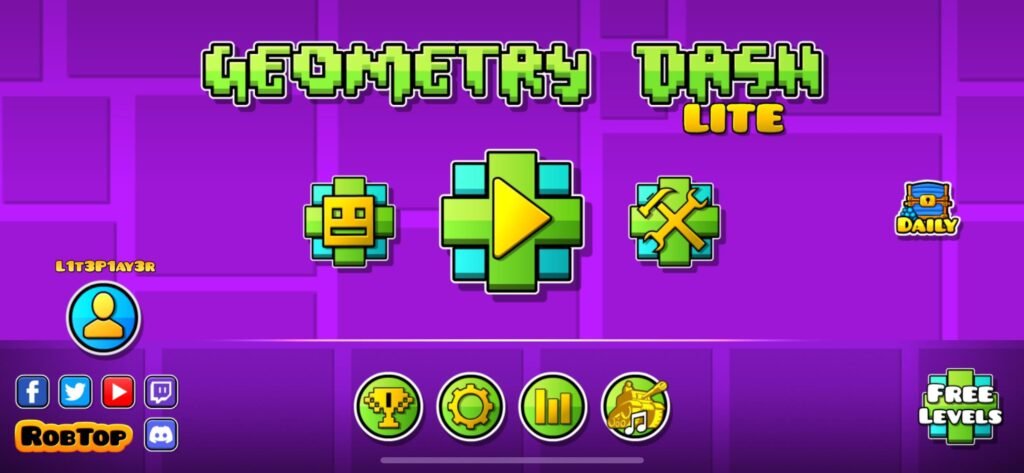

In the vast and ever-growing world of mobile gaming, some titles manage to capture our attention with their simplicity, challenge, and addictive nature. One such game is geometry dash lite, a rhythm-based platformer that has garnered a massive following for its unique blend of precise timing, pulsating soundtracks, and visually striking levels. If you’ve ever seen those colorful cubes zipping through treacherous obstacle courses and wondered what all the fuss was about, you’ve come to the right place. This guide will walk you through the fundamentals of Geometry Dash Lite, offering insights into its gameplay and providing valuable tips to help you conquer even the most daunting levels.
The Beat-Driven Journey: What is Geometry Dash Lite?
Geometry Dash Lite, the free-to-play version of the full Geometry Dash experience, offers a tantalizing glimpse into a world of gravity-defying jumps and perfectly timed maneuvers. At its core, it’s a 2D side-scrolling platformer where you control a geometric icon – typically a cube – through a series of increasingly difficult levels. The catch? Everything moves to the beat of the music. Each jump, each flip, each gravity alteration is intrinsically linked to the soundtrack, making rhythm not just an aesthetic choice, but a fundamental gameplay mechanic.
The objective is simple: reach the end of the level without crashing into any obstacles. These obstacles come in a dizzying array of forms: spikes, moving saws, treacherous gaps, and even other geometric shapes that react to your presence. The beauty lies in the game’s deceptive simplicity. With just a single tap or click, you make your icon jump. Hold down, and it will often perform a longer jump or activate a special ability depending on the form it currently takes. This seemingly straightforward control scheme belies a deep level of precision and muscle memory required for true mastery.
Unpacking the Gameplay: More Than Just Tapping
While the primary action in Geometry Dash Lite is indeed tapping, the game offers a surprising amount of variety through its different “modes” or icon transformations. As you progress through a level, your cube will often encounter portals that change its form, drastically altering its movement and the way you interact with the environment:
- Cube: The default and most common form. Tapping makes it jump. Holding down for longer usually results in a higher jump.
- Ship: Transforms your icon into a spaceship. Holding down makes it fly upwards, releasing makes it fall downwards. This mode demands constant adjustments to navigate narrow passages.
- Ball: Your icon becomes a rolling ball. Tapping in this mode flips its gravity, allowing you to roll on the ceiling or the floor.
- UFO: Similar to the ship, but with a more “flappy” jump. Tapping makes it jump a short distance, and repeated taps keep it airborne.
- Wave: A triangular wave that moves diagonally. Holding down makes it go up, releasing makes it go down. This mode requires incredibly precise timing to weave through tight corridors.
Each transformation introduces a new set of challenges and demands a different approach to timing and control. Furthermore, levels are punctuated by speed changes, gravity portals that flip your world upside down, and jump pads that launch you to new heights. The interplay of these elements, combined with the pulsating music, creates a truly dynamic and engaging experience.
Conquering the Rhythm: Essential Tips for Success
Geometry Dash Lite is notoriously challenging, and it’s easy to get discouraged by repeated failures. However, with the right mindset and a few strategic approaches, you can steadily improve your skills and conquer even the most intricate levels.
- Embrace Practice Mode: This is your best friend. Every level in Geometry Dash Lite has a practice mode that allows you to place checkpoints. Use these liberally! Break down difficult sections into smaller, manageable chunks. Master each segment before attempting the full run. This incremental approach is crucial for building muscle memory and understanding the rhythm of the level.
- Listen to the Music: This cannot be stressed enough. The music isn’t just background noise; it’s a vital part of the gameplay. Many jumps and actions are perfectly synchronized with the beat. Pay close attention to the rhythm, and you’ll find yourself intuitively knowing when to tap.
- Learn from Your Mistakes: Don’t get frustrated by dying. Each death is an opportunity to learn. What killed you? Was it a mistimed jump? Did you misjudge a gravity flip? Analyze your failures and adjust your approach.
- Start with the Basics: The “Lite” version offers a good selection of introductory levels. Don’t jump straight into the hardest ones. Work your way up, building your skills and understanding the different mechanics.
- Focus on Precision, Not Speed: While the game is fast-paced, rushing will only lead to more mistakes. Concentrate on precise timing and controlled movements. Speed will come naturally as your muscle memory develops.
- Experiment with Icon Skins: While purely aesthetic, choosing an icon that you enjoy looking at can subtly enhance your experience and keep you motivated.
- Take Breaks: If you find yourself getting consistently frustrated, step away for a bit. Fresh eyes and a clear mind can often work wonders.
The Addictive Appeal of Perfection
Geometry Dash Lite offers an incredibly satisfying gameplay loop. The sense of accomplishment after finally completing a level that once seemed impossible is genuinely rewarding. It’s a game that demands patience, precision, and a willingness to learn from every setback. Whether you’re looking for a quick and challenging distraction or a deep dive into rhythm-based platforming, Geometry Dash Lite provides an experience that is both frustratingly difficult and incredibly addictive. So, download the app, put on your headphones, and prepare to embark on a beat-driven journey where every tap counts. Who knows, you might just find yourself addicted to the thrill of the perfect run. For those looking to explore more, the full experience with a plethora of user-created levels awaits.