

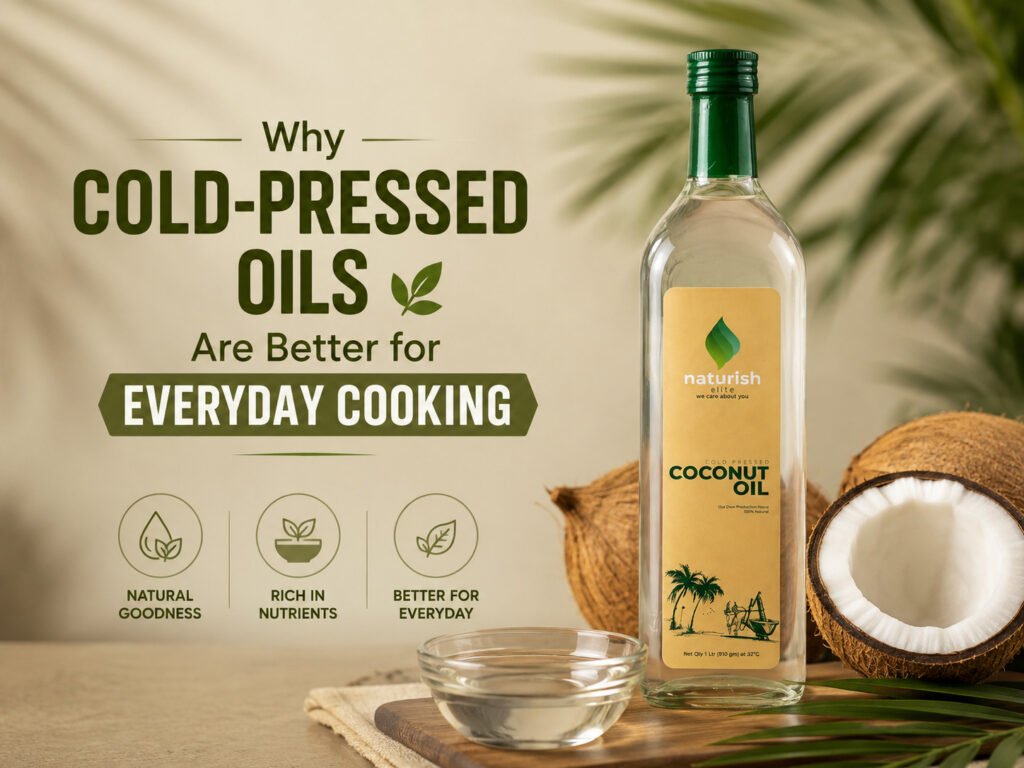

Cooking oil is used so regularly that most people rarely stop to consider how it is made. It goes into the pan for sautéing vegetables, frying spices, preparing curries, making snacks, and even baking.
Yet the extraction and processing method can influence an oil’s flavour, aroma, texture, and overall characteristics. For those looking for coconut oil for cooking, understanding these differences can help in choosing an oil that suits their recipes and preferences.
This is one reason cold-pressed oils have gained attention. Instead of relying heavily on heat and extensive industrial processing, cold pressing generally uses mechanical pressure to extract oil from seeds, nuts, or fruits.
The result is an oil that tends to retain more of the natural characteristics of its source ingredient. Cold pressed coconut oil is one example, particularly suited to recipes where the natural coconut aroma and flavour complement the dish.
What Does Cold-Pressed Oil Actually Mean?
Cold pressing refers to a mechanical extraction process in which pressure is used to separate oil from the raw material. The exact process can vary depending on the ingredient and manufacturer, so the term should not be understood as meaning that absolutely no heat is involved at any stage.
Compared with heavily refined oils, cold-pressed oils generally undergo less processing. Refining may involve processes such as filtration, deodorisation, bleaching, or other treatments designed to produce a more neutral and consistent oil.
Cold-pressed oils, on the other hand, often have a stronger natural aroma, deeper colour, and more noticeable flavour. These qualities can be desirable when the oil is being used in traditional or flavour-focused cooking.
Why Are Cold-Pressed Oils Popular for Everyday Cooking?
The biggest reason is simple: they bring the character of the original ingredient into the kitchen. A cold-pressed sesame oil, for example, can add a distinctive nutty aroma to tempering. Similarly, coconut oil can contribute a mild coconut fragrance to curries, vegetables, and other preparations.
For people who prefer less processed ingredients, choosing cold pressed coconut oil can also be a practical way to incorporate a traditionally produced cooking oil into regular meals.
However, it is important not to confuse minimally processed with automatically healthier in every respect. Every cooking oil has a different nutritional profile, and the right choice depends on the rest of the diet, cooking method, and individual dietary requirements.
Coconut Oil in Everyday Cooking
Coconut oil has a particularly strong connection with traditional Indian cooking. In Kerala and several other southern regions, coconut-based ingredients have been part of everyday cuisine for generations.
The natural flavour of coconut oil works well with ingredients such as curry leaves, mustard seeds, dried chillies, ginger, garlic, and a range of regional spices. People looking for coconut oil for cooking often choose it because they enjoy this distinctive flavour. It can be used for sautéing, tempering, preparing vegetable dishes, and cooking traditional curries.
It is also useful to distinguish between different types of coconut oil. Refined coconut oil generally has a milder aroma and undergoes more processing, while virgin and cold-pressed varieties tend to retain more of the natural coconut characteristics.
Pure Coconut Oil for Cooking: What Should You Check?
The word “pure” on a label should not be the only factor considered when purchasing an oil. Consumers should examine the ingredient list and product information to understand exactly what they are buying.
When choosing pure coconut oil for cooking, check whether coconut oil is the only listed ingredient. Look at the extraction method, manufacturing information, storage instructions, packaging, and relevant quality or food-safety certifications.
It is also useful to consider the intended use. An oil with a strong coconut aroma may be excellent for traditional recipes but less suitable if a neutral flavour is preferred. Reading the label carefully is a better approach than relying entirely on front-of-pack claims.
Why the Source of Coconut Oil Matters
Coconut-growing regions often develop their own traditions around coconut processing. Kerala is a well-known example, where coconut has long been closely associated with local food culture.
This is why consumers searching for pure coconut oil from thrissur may be interested not only in the product itself but also in where and how the oil is produced.
The source can provide useful context, but geographical origin alone does not guarantee quality. Production standards, raw-material quality, hygiene, extraction practices, storage, and packaging all matter. A good product should be evaluated based on transparent information rather than simply its location.
Cold-Pressed Coconut Oil vs Refined Coconut Oil
The main difference is the degree and type of processing. Cold-pressed coconut oil is generally extracted mechanically with relatively limited processing. It tends to retain more of the characteristic coconut aroma and flavour.
Refined coconut oil typically undergoes additional processing to produce a more neutral and consistent product. It may be preferred when a cook wants an oil without a strong coconut taste.
Neither option needs to be presented as universally superior. The choice depends on cooking preferences, recipe requirements, and dietary considerations. For traditional Indian recipes where coconut flavour is welcome, cold-pressed oil can be particularly appealing.
Is Organic Coconut Cooking Oil Better?
Organic certification and cold pressing describe different things. One refers primarily to how the agricultural ingredients are produced and certified, while the other describes an extraction method. Therefore, organic coconut cooking oil is not automatically the same thing as cold-pressed coconut oil. A product may be organic, cold-pressed, both, or neither.
If organic certification matters to you, check whether the product carries an appropriate certification rather than assuming that words such as natural or pure mean organic. This distinction is important because food labels can sometimes make different concepts sound interchangeable when they are not.
How to Use Cold-Pressed Oils Sensibly
Cold-pressed oils can fit easily into everyday cooking, but using them well requires some basic awareness. For sautéing, use an appropriate quantity and allow the oil to heat without letting it smoke excessively. For tempering, a small amount can be enough to release the aroma of spices and herbs.
cold pressed coconut oil works naturally in dishes where its flavour complements the ingredients. It can be particularly enjoyable in South Indian preparations, vegetable dishes, and recipes using coconut, curry leaves, or warm spices.
It is also worth rotating cooking oils rather than assuming that one oil has to be used for every dish. Different oils offer different flavours and nutritional compositions, so variety can make sense as part of a balanced diet.
Are Cold-Pressed Oils Always the Healthiest Choice?
This is where it is important to avoid exaggerated claims. Cold pressing is an extraction method. It does not automatically make an oil healthier than every refined oil. Nutritional quality depends on the specific oil, its fatty-acid composition, serving quantity, and the broader diet.
Coconut oil, for example, is relatively high in saturated fat. People who are monitoring saturated-fat intake should take this into account when deciding how frequently and how much coconut oil to consume. A sensible approach is to focus on overall dietary balance rather than searching for one “perfect” cooking oil.
Choosing the Right Oil for Your Kitchen
The best cooking oil is often the one that suits both the recipe and your dietary needs. If you enjoy traditional flavours and minimally processed ingredients, cold-pressed oils can be an interesting choice. Before purchasing, consider the extraction method, ingredient list, source, certification, packaging, storage requirements, and intended cooking use.
These details provide a much clearer basis for comparison than marketing claims alone. For coconut oil specifically, think about whether you want a pronounced coconut flavour or a more neutral cooking medium. Both can have a place in the kitchen.
Learning more about cold-pressed virgin coconut oil can also help you understand its extraction process, characteristics, and potential uses before making a choice.
Cold-pressed oils are not a magic solution for healthy eating, but they can be part of a thoughtful approach to cooking. When selected carefully and used in appropriate quantities, they can add distinctive flavour and connect everyday meals with traditional food practices.
FAQs
1. What is cold-pressed oil?
Cold-pressed oil is generally extracted mechanically from seeds, nuts, or fruits using pressure and relatively limited processing. The exact extraction process can differ depending on the raw material and manufacturer.
2. Is cold-pressed coconut oil suitable for everyday cooking?
Yes, it can be used for everyday cooking when its flavour suits the recipe. It works particularly well in many traditional Indian dishes, sautéing, and tempering.
3. What is the difference between cold-pressed and refined coconut oil?
Cold-pressed coconut oil generally undergoes less processing and tends to retain more of its natural coconut aroma and flavour. Refined coconut oil undergoes additional processing and usually has a milder taste.
4. Is organic coconut oil the same as cold-pressed coconut oil?
No. Organic certification relates to how the agricultural ingredients are grown and certified, while cold pressing refers to the oil extraction method. An oil can be organic, cold-pressed, both, or neither.
5. How should I choose coconut oil for cooking?
Check the ingredient list, extraction method, source, certifications, packaging, and storage instructions. Also consider whether you prefer the natural coconut flavour and whether the oil fits your overall dietary requirements.