

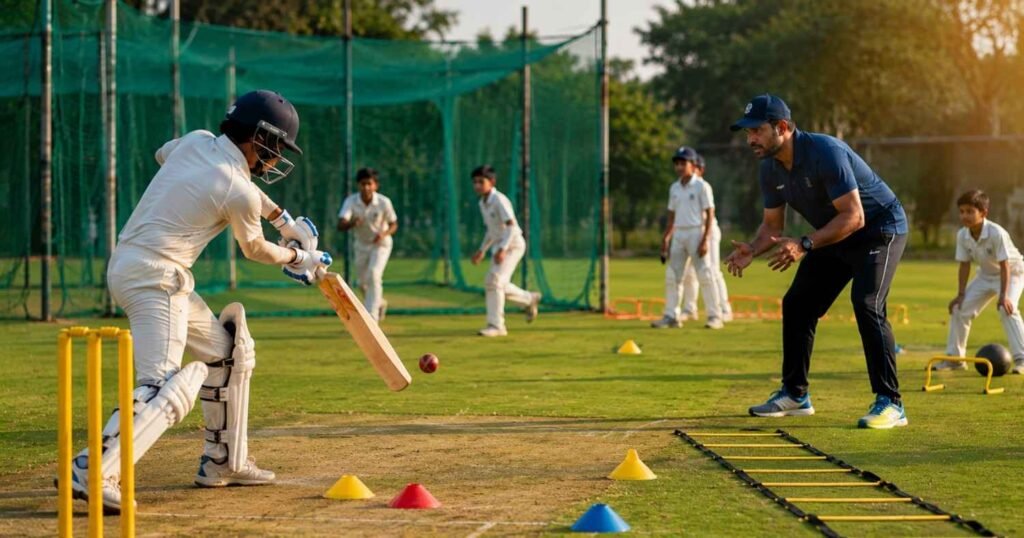

Young cricketers can improve their skills much faster when training is structured, practical, and consistent. Talent is important, but regular practice, proper coaching, fitness work, and match experience play an even bigger role in long-term development. A good training program helps young players understand their strengths, correct mistakes, and build confidence on the field.
For parents looking for the right place to develop a child’s cricket skills, choosing a professional Cricket Academy In Gurgaon can provide access to experienced coaches, suitable practice facilities, and structured training sessions. SportyZo focuses on creating an environment where young players can learn the game while developing discipline, fitness, and competitive skills.
1. Skill-Based Practice
One of the most effective training methods is skill-based practice. Instead of simply spending hours batting or bowling, young players should focus on specific techniques during each session. A batsman may work on footwork, defensive shots, drives, or playing against different types of bowling. Similarly, bowlers can focus on line, length, pace, swing, and variations.
Short, focused practice sessions allow players to understand individual techniques and gradually improve them. Coaches can also identify technical mistakes and provide immediate corrections.
2. Repetition With Purpose
Repetition helps young cricketers develop muscle memory, but practice should always have a clear purpose. Repeating the same skill incorrectly can reinforce bad habits. Coaches should therefore observe players carefully and make small corrections during practice.
For example, a young batsman can repeatedly practice playing straight drives while focusing on balance, head position, and timing. With regular repetition, the movement becomes more natural and controlled.
3. Match-Simulation Training
Practice becomes more useful when it reflects real match situations. Match-simulation drills allow young players to experience pressure, decision-making, and changing game conditions.
A coach might give a batsman a target to chase within a specific number of overs or ask a bowler to defend a small total. These situations encourage players to think rather than simply perform techniques. This type of training can improve game awareness and confidence.
4. Fitness and Agility Training
Cricket requires much more than batting and bowling skills. Players need strength, flexibility, speed, balance, and endurance to perform effectively throughout a match.
Young cricketers can benefit from age-appropriate running drills, agility exercises, coordination activities, mobility work, and basic strength training. Fitness sessions should be designed according to the player’s age and development level rather than focusing only on heavy workouts.
Better fitness can help players move quickly between wickets, chase the ball efficiently, maintain bowling speed, and stay focused for longer periods.
5. Fielding Drills
Fielding is sometimes overlooked by young players, but it can significantly influence the result of a match. Regular catching, throwing, ground-fielding, and movement drills help develop confidence and quick reactions.
Coaches can introduce different fielding situations, such as stopping hard-hit balls, taking high catches, or throwing quickly at the stumps. Practicing these situations regularly makes players more comfortable during competitive matches.
6. Video Analysis
Modern cricket training can also use video analysis to help players understand their technique. Recording batting, bowling, or fielding sessions allows coaches and players to review movements carefully.
A young batsman may notice an unnecessary movement before playing a shot, while a bowler may identify an issue with their run-up or release point. Seeing these mistakes visually can make technical corrections easier to understand.
7. One-to-One Coaching
Group training is useful, but individual coaching can address specific weaknesses more effectively. One-to-one sessions allow a coach to spend more time understanding a player’s technique, playing style, and development needs.
For example, a batsman struggling against short deliveries may need specialized drills, while a young spinner may require more attention on flight and variations. Personalized coaching ensures that practice is relevant to the player’s current level.
8. Mental Skills Training
Cricket is also a mental game. Young players need to learn how to handle mistakes, pressure, competition, and unexpected situations. Coaches can encourage players to remain positive after getting out or conceding runs.
Simple habits such as setting realistic goals, concentrating on the next ball, and learning from mistakes can gradually improve mental strength. A supportive coaching environment is particularly important because young players should feel comfortable learning from failure.
9. Regular Practice and Consistency
Improvement rarely happens overnight. Consistent training is one of the most important factors in developing a young cricketer. Practicing regularly helps players retain techniques and gradually build confidence.
However, training should also include adequate rest. Young players need recovery time to avoid unnecessary fatigue and maintain enthusiasm for the sport.
10. Learning Through Competitive Matches
Finally, young cricketers need real match experience. Training teaches techniques, but matches teach players how to apply those techniques under pressure. Playing against different teams exposes young cricketers to different bowling styles, batting approaches, field settings, and match situations.
At SportyZo, structured cricket development can combine technical practice, fitness, fielding, match preparation, and practical experience. Choosing the right Cricket Academy In Gurgaon can give young players a strong foundation while helping them develop at their own pace.
Conclusion
Young cricketers improve faster when training is purposeful, consistent, and balanced. Skill-based practice, repetition, match simulations, fitness training, fielding drills, video analysis, personal coaching, mental preparation, and competitive matches all contribute to development.
The goal should not simply be to make a child perform better in the next match. Good cricket training should build strong fundamentals, confidence, discipline, and a genuine understanding of the game. With proper guidance and regular practice at a suitable Cricket Academy In Gurgaon, young players can steadily develop their abilities and prepare themselves for higher levels of cricket.
Read More: