

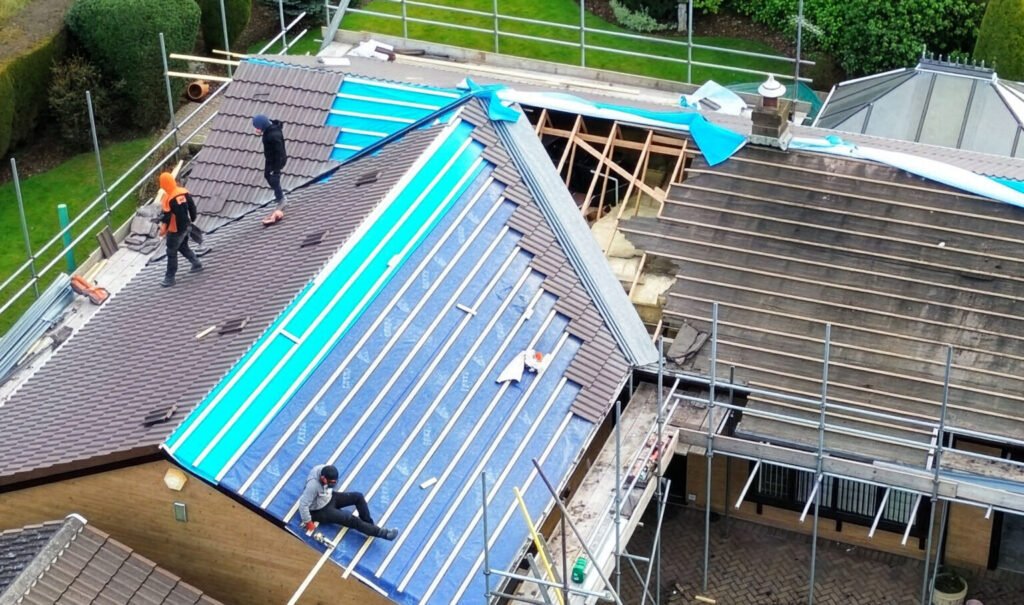

When most people think of a roof, the sight that comes to mind is the tiled surface, the edges and maybe even the chimney that stick out at the top. But what most people see is only a part of the whole.
A roof is a complex structure that protects a building from the elements, and to do that it has to resist rain, wind, temperature changes and other forces that take a toll on the materials year after year. But there are other, less obvious, parts to a roof that should be inspected and maintained on a regular basis.
Roofing Repair Tips
A roof is made up of more than just tiles or other surface materials. True, these are the most obvious part, together with the edges and the chimney, if any. But underneath them there are membranes, flashing places and other parts that all play a role in directing water away from the building.
This is why a roof should be inspected on a regular basis, not just to check the condition of the surface materials. A roof can look good from the outside but still have issues in other, less obvious, places.
Drainage Is Key
The whole point of a roof is to keep water out, but without proper drainage the water will accumulate and eventually get in, anyway. Gutters and downspouts attached to the roof edges are usually enough to let water flow from the roof without damaging the building foundations. But these parts of a roof also need cleaning and inspection from time to time, so that they can carry out their function properly.
During heavy rains a small obstruction in the gutters or downspouts can cause water to spill over the edges, damaging the roof and its edges. And that, too, is a reason to perform regular maintenance on a roof.
Edges Require Special Maintenance
The edges of a roof are often the weakest part, since they bear the brunt of the weather and are usually the meeting place of other materials. Fascias and soffits, for example, are two structural elements of a roof that provide support, protection and ventilation. But they also tend to suffer the effects of the weather the most, and any issues with them should be addressed as soon as possible.
Noticing discolored spots, cracks, swelling or other problems on these parts of a roof should be enough of a reason to call a professional roofer and have them inspected. A fascia that is not in the proper condition can cause gutters to malfunction, and blocked soffit vents can interfere with roof ventilation. And roof ventilation is another aspect of roofing that should be checked during a routine maintenance session.
Moisture Is Not an Option
Even if a roof is well built and maintained, moisture can accumulate in the structure, creating ideal conditions for mold to grow. This happens because the air coming from the heated interior of a house meets cooler areas inside the roof, causing condensation. Proper roof ventilation helps a lot in this situation, since it lets warmer air out, thus reducing the temperature difference between the inside of the building and the roof space.
But even if a roof looks fine from the outside, the condensation could still be happening from the inside, damaging the roofing membranes and the structure of the building. Which is another reason why a roof should not be inspected only from the outside, during maintenance sessions.
Flashing and Seals Are Often Overlooked
As mentioned above, a roof consists of various parts, some of which are usually overlooked when it comes to maintenance and repairs. Places where the roof meets other surfaces such as walls, chimneys or vents are vulnerable to weathering and leakage, so they need additional protection. Flashing and roof sealants are installed in these weak spots to prevent water from penetrating the roof structure.
But these elements can be damaged by the weather, as well. And since they are not always easy to see, small tears or breaks might go unnoticed until there is an inspection. Checking all parts of a roof, including those that are not usually seen, is an integral part of any roofing maintenance, especially after a storm or a severe wind.
Looking Beyond Obvious Issues
One of the best ways to inspect a roof and make sure that there are no serious problems is looking at it as a whole, and not just at its most obvious parts.
If a homeowner notices that the gutters are clogged with leaves or other debris it might seem like the problem is there, but if the fascias are damaged the issue could be somewhere else. The same goes for other problems with a roof: in most cases, the whole structure has to be inspected in order to locate the problem.
And not only that, looking at the whole structure can help solve the issue faster and with fewer expenses. A maintenance session should always consider the interconnection between parts and the specific role that each plays in the overall structure.
When in Doubt, Contact a Professional Roofer
For most roofing maintenance jobs there are no great dangers, apart from the usual safety measures. Unless an obvious issue is spotted, most homeowners should not attempt repairs on their own if they need to climb on the roof to do so. A roofing inspector can usually locate the issue better than an amateur with little or no experience, and determine if the problem is isolated or affects the whole roof structure.
Getting professional assistance with Roofing in Lincoln can also help prevent more serious issues in the future. A minor problem that seems insignificant could be the first sign of something more serious, and the sooner it is addressed the better.
Taking Care of a Roof
A roof is meant to last for a long time, and keeping it in good condition is essential for maintaining a home. But a roof is more than just the tiles, membranes, fascias and soffits that are usually seen from the ground. The drainage system, the roof edges, the roof space and even the flashings all need to be taken care of, so that they can perform their function.
And while it is not necessary for a homeowner to be an expert on all aspects of roofing, knowing the basics can help them understand the importance of each element and know when it is time to call a professional. It is also a lot easier to spot an issue when you know what to look for.
A roof is a complex structure that serves to protect a building from the outside elements, and most of these effects are seen on the roof surface. The roof tiles are just one part of a home’s roofing, but they are the most visible. Beyond them there are flashing and other protective elements, the gutters and the roof edges, all of which need to be taken care of to ensure that the roof does its job properly.