
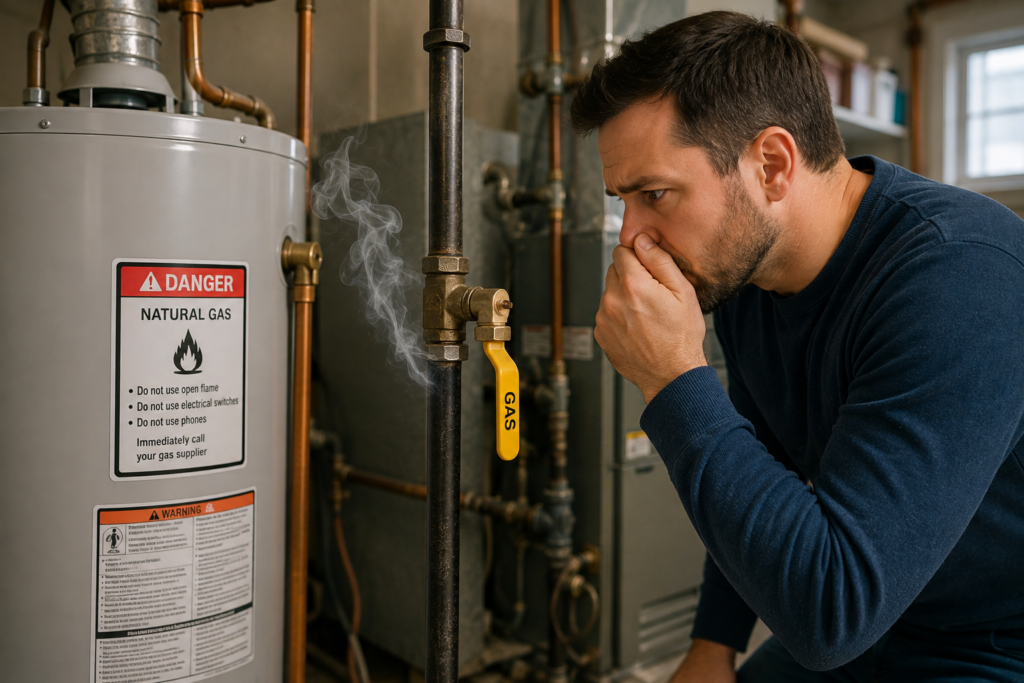

If your plumbing suddenly stops working, you may wonder whether a gas leak is responsible. A gas leak does not normally stop water from flowing through your plumbing system because gas lines and water lines are separate systems. However, a gas-line problem can affect gas-powered plumbing appliances, especially a gas water heater. If you suspect a gas leak, safety should come first, and professional gas line repair should never be attempted as a DIY project.
Can a Gas Leak Stop Your Plumbing System?
Generally, no. Your home has separate systems for water, drainage, and natural gas.
Water lines deliver water to faucets, showers, toilets, and appliances. Drain pipes carry wastewater away from your property. Gas lines supply fuel to appliances such as water heaters, stoves, and furnaces.
Because these systems perform different functions, a gas leak usually will not prevent cold water from coming out of your faucets or stop your drains from working.
However, a gas leak or gas-supply problem can affect gas-powered appliances. If your gas water heater shuts down, for example, you may suddenly have no hot water even though your cold-water plumbing continues to function.
How Can a Gas Problem Affect a Water Heater?
A gas water heater requires a reliable fuel supply to heat water. If the gas supply is interrupted or the appliance shuts down because of a safety issue, the water heater may stop producing hot water.
You may notice:
- Cold water from hot-water faucets
- A water heater that will not ignite
- A pilot light that repeatedly goes out
- Unusual odors around the appliance
- Unusual sounds from the water heater
- A gas appliance that is not operating normally
A gas-powered water heater that stops working does not automatically mean there is a gas leak. Problems with the ignition system, thermostat, burner, safety controls, or other components can also cause a failure.
A professional inspection can determine whether the issue involves the appliance, gas supply, or another plumbing component.
What Are the Signs of a Gas Leak?
Recognizing possible gas-leak warning signs is important because a suspected leak can create a serious safety hazard.
Natural gas is commonly odorized with a chemical that produces a strong smell similar to rotten eggs or sulfur. Other potential warning signs include:
- Hissing or unusual sounds near a gas line
- An unexplained increase in gas usage
- Gas appliances not working properly
- Dead or discolored vegetation near an outdoor gas line
- Physical symptoms such as dizziness, nausea, or headaches
Not every gas leak will be obvious from smell alone. If you suspect a leak, do not attempt to locate the source yourself.
AAA AUGER’s gas-line service information notes that unusual odors, unexplained gas-bill increases, and malfunctioning gas-powered appliances can be warning signs that deserve professional attention.
What Should You Do If You Smell Gas?
A suspected gas leak should be treated as an emergency.
If you smell gas inside your home, leave the building immediately. Take everyone and pets to a safe location away from the suspected leak.
Do not:
- Turn lights or switches on or off
- Use electrical appliances inside
- Light matches or candles
- Use a phone inside the building
- Try to find the leak
- Attempt to repair the gas line
Once you are safely outside and away from the suspected leak, contact your local gas utility or emergency services according to your local emergency procedures. A qualified professional can handle the gas-line inspection and repair after the immediate danger has been addressed.
Never attempt to tighten fittings, disconnect pipes, or repair a gas line yourself.
Why Does a Gas Problem Sometimes Look Like a Plumbing Problem?
Gas-related appliance problems and plumbing problems can produce similar symptoms.
For example, imagine you turn on the shower and the water is cold. It may seem like your plumbing system has stopped working. But if cold water still flows normally, the issue could be with the gas water heater rather than the home’s water supply.
Likewise, if a gas-powered water heater stops operating, you may have no hot water throughout the house even though the faucets, pipes, and drains are functioning normally.
Understanding this difference can help you avoid assuming that every water problem is caused by a water-line issue.
Can a Gas Leak Cause Low Water Pressure?
A gas leak itself generally does not cause low water pressure because gas and water travel through separate plumbing systems.
If your water pressure suddenly drops, other causes are more likely, including:
- A water leak
- A partially closed shutoff valve
- A clogged fixture
- Corroded plumbing
- A damaged water line
- A pressure-regulating problem
If low water pressure occurs together with signs of a gas leak, treat the gas concern separately as a safety issue and have both problems professionally evaluated.
When Should You Call a Plumber?
Professional help is appropriate when you have a suspected gas-line problem, recurring gas-appliance failures, unexplained gas odors, or a gas water heater that will not operate correctly.
AAA AUGER Plumbing Services provides gas line repair and installation, leak detection, water heater repair, and general plumbing repair. Its plumbing technicians are licensed and insured, and the company offers 24/7 emergency plumbing service.
A professional can determine whether the problem involves:
- The gas supply line
- A gas appliance
- The water heater
- A plumbing pipe
- A water leak
- Another component of the plumbing system
Getting the correct diagnosis is important because treating the wrong problem can waste time and money.
Can Gas-Line Maintenance Prevent Problems?
Routine professional maintenance can help identify developing issues before they become major failures.
A technician can inspect accessible gas-line connections, appliances, water heaters, and other relevant components for signs of damage or abnormal operation.
Maintenance is particularly useful when you have an older system, frequently use gas-powered appliances, or have noticed repeated problems.
AAA AUGER offers plumbing maintenance along with gas repair, leak detection, water-heater services, sewer services, and other plumbing solutions for residential and commercial properties.
Final Thoughts
So, can a gas leak cause your plumbing system to stop working?
Usually, a gas leak will not stop your home’s water supply because gas and water systems are separate. However, a gas-line problem can cause a gas-powered appliance, such as a water heater, to stop operating. This can make it appear as though your plumbing system has failed.
If you smell gas or suspect a leak, do not investigate or attempt a repair yourself. Leave the property, move to a safe location, and contact the appropriate local gas utility or emergency services. Once the immediate safety concern has been addressed, a qualified professional can inspect and repair the gas system.
FAQs
Can a gas leak affect my water heater?
Yes. A gas leak or interruption in the gas supply can prevent a gas water heater from operating properly, resulting in little or no hot water.
Can a gas leak cause low water pressure?
Not normally. Gas and water systems are separate. Low water pressure usually has another cause, such as a leak, blockage, valve problem, damaged pipe, or water-line issue.
Why is my gas water heater not working?
Possible causes include a gas-supply problem, pilot or ignition issue, thermostat failure, safety-control problem, sediment buildup, or another component failure. A professional inspection can identify the specific cause.
Can I repair a gas leak myself?
No. Gas-line repairs should be handled by qualified professionals. DIY repairs can create serious fire, explosion, and health risks.
What should I do if I smell gas near my water heater?
Leave the property immediately and move to a safe location. Do not operate switches, appliances, or other potential ignition sources inside. From a safe location, contact your local gas utility or emergency services and follow their instructions.