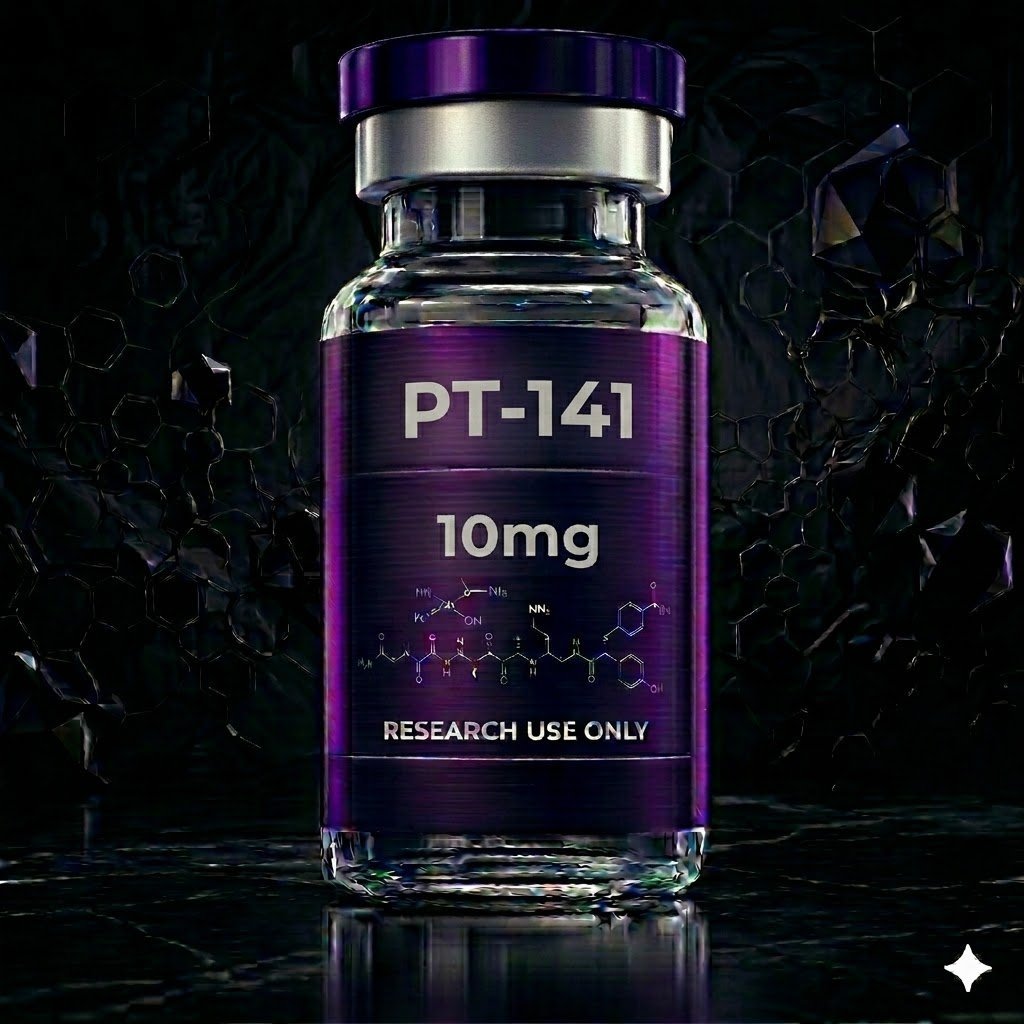
Purity is an important consideration when laboratories evaluate synthetic peptides for scientific research. However, terms such as high purity should always be supported by relevant analytical evidence rather than accepted solely on the basis of a product description. When reviewing a high purity PT-141 research peptide, researchers should understand how purity is assessed and what supporting documentation can establish.
Understanding PT-141
PT-141, also known as bremelanotide, is a synthetic peptide associated with melanocortin receptor research. It is discussed in scientific contexts involving peptide structure, biochemical properties, and receptor-related investigations.
As with other research compounds, its evaluation requires attention to product identity and the quality of available analytical information.
What Does Peptide Purity Mean?
Peptide purity generally refers to the proportion of the target peptide relative to other detected components under a specified analytical method. It is an important measurement, but its interpretation depends on the testing procedure and reporting conditions.
A purity figure should not be viewed in isolation. Researchers should examine the analytical method, the sample tested, and the report’s limitations.
Analytical Methods and Their Role
Laboratories may use different analytical techniques to characterise peptides.
High-performance liquid chromatography (HPLC): HPLC can be used to separate components in a sample and assess the relative amount of a target compound under defined conditions.
Mass spectrometry (MS): Mass spectrometry can provide information about molecular mass and support compound identification.
These methods provide different kinds of information. A purity result from HPLC, for example, does not independently establish molecular identity, sterility, or suitability for a specific research application.
What Should a Certificate of Analysis Include?
A Certificate of Analysis may help researchers review testing information associated with a particular batch. When available, check whether it includes:
- Product or compound identification
- Batch or lot number
- Analytical method used
- Reported test results
- Testing date or report details
- Laboratory or testing organisation information, where applicable
The document should correspond to the material being evaluated. Researchers should contact the supplier if the relationship between the report and product batch is unclear.
Reviewing PT-141 Product Information
Impact Aminos provides a PT-141 product listing that researchers can review. Before relying on any purity-related description, check the available documentation and request clarification where necessary. Do not assume a particular purity percentage or testing result unless it is supported by relevant evidence.
Responsible Laboratory Practices
Peptide handling should follow product-specific storage instructions and established laboratory safety procedures. Qualified personnel should maintain appropriate records and use suitable protective equipment.
Research materials are not intended for human or veterinary use.
Conclusion
Evaluating a high-purity PT-141 research peptide requires more than reading a product label. Researchers should understand analytical methods, examine batch-specific documentation, and interpret purity results within their proper limits. Careful verification supports more reliable laboratory procurement and responsible scientific work.