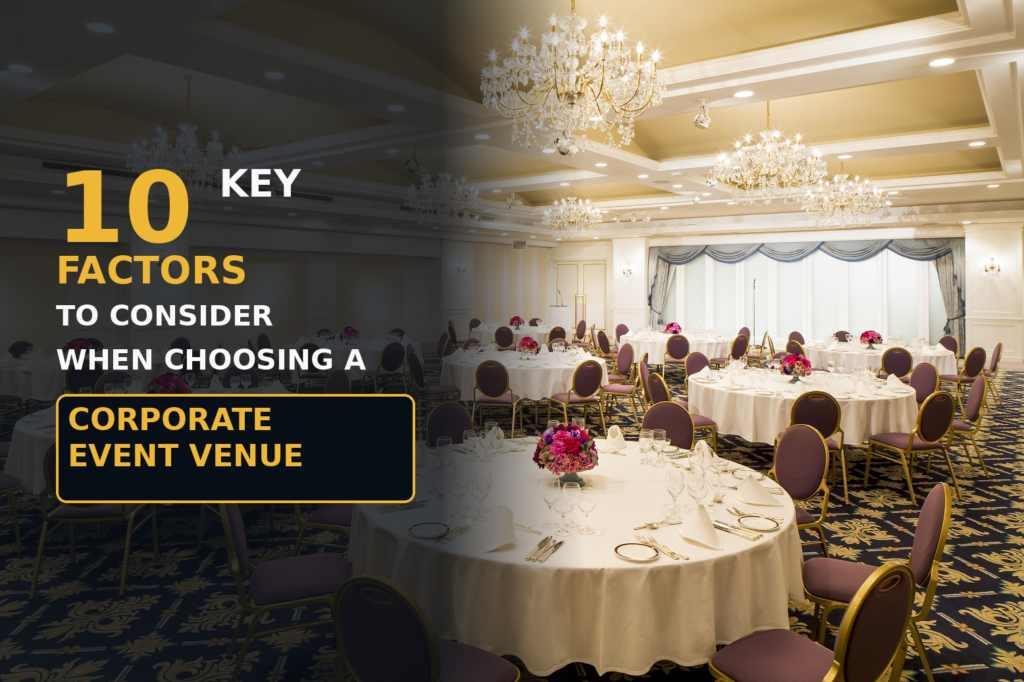

Choosing the right venue is one of the most important decisions in planning a successful corporate event. The venue affects the attendee experience, event flow, technical arrangements, accessibility, and overall budget. Whether the event is a conference, seminar, business meeting, training session, networking gathering, or employee event, the selected space should match the purpose and practical requirements of the occasion.
With many corporate event venues available, selecting the right option requires more than comparing prices or choosing an attractive location. Capacity, facilities, technology, accessibility, catering, operational flexibility, and safety should all be considered before making a final decision.
1. Understand the Purpose of the Event
The purpose and format of the event should determine the type of venue required. A large conference may need a spacious hall with presentation facilities, while a training session may require flexible seating and separate breakout areas. Similarly, an executive meeting may need a quieter and more private environment.
Understanding the event objectives helps organisers identify the facilities that are genuinely necessary. The venue should support the programme rather than create limitations for speakers, attendees, or event teams.
2. Evaluate Location and Accessibility
Location directly influences attendance and convenience. A venue that is easy to reach can reduce travel difficulties for employees, clients, speakers, and other participants. Access to major roads, public transportation, parking facilities, hotels, airports, and railway stations can be particularly useful when attendees are travelling from different locations.
Accessibility should also be considered for people with mobility requirements. Entrances, elevators, restrooms, seating areas, and movement within the venue should provide a comfortable experience for all attendees.
3. Check Capacity and Space
The venue should comfortably accommodate the expected number of attendees without creating overcrowding. At the same time, an excessively large space can make a smaller gathering feel disconnected.
Capacity should include more than seating requirements. Space may also be needed for registration, stages, presentation equipment, catering, networking, speaker preparation, and attendee movement. Flexible seating arrangements can provide additional value by allowing the space to accommodate different sessions throughout the event.
4. Assess Technology and Audiovisual Facilities
Technology plays a major role in modern corporate events. Presentations, speeches, panel discussions, video conferences, demonstrations, and hybrid sessions often depend on reliable audiovisual infrastructure.
Before selecting a venue, organisers should evaluate internet connectivity, microphones, speakers, displays, projectors, lighting, and video conferencing facilities. Compatibility with presentation equipment should also be confirmed beforehand.
Reliable technical infrastructure reduces the possibility of interruptions and allows the event programme to run more efficiently.
5. Examine Available Facilities
The venue’s supporting facilities can significantly affect event operations. Registration areas, breakout rooms, restrooms, storage spaces, catering areas, parking, loading zones, and speaker preparation rooms may all be required depending on the event.
A physical site inspection is useful because photographs cannot always show important details such as room dimensions, acoustics, accessibility, entrances, and movement between different areas. These practical aspects should be checked before the booking is confirmed.
6. Review Catering Options
Food and beverage arrangements should be aligned with the event schedule and attendee requirements. For full-day conferences and seminars, properly timed meals, refreshments, and breaks can contribute to a smoother event experience.
Menu flexibility is also important when attendees have different dietary preferences or restrictions. Catering policies, menu choices, service timings, and additional charges should be understood in advance to avoid unexpected issues during the event.
7. Evaluate the Total Cost
Budget is an essential part of corporate event management, but the rental price alone should not determine the final choice. Additional expenses may apply to audiovisual equipment, catering, technical support, setup, cleaning, parking, extended hours, or other services.
A complete cost comparison helps organisers understand the actual financial commitment. The best venue is not necessarily the cheapest option. It should provide appropriate facilities and services while remaining within the planned budget.
8. Consider Setup and Operational Flexibility
Corporate events often require extensive preparation before attendees arrive. Seating, staging, lighting, presentation systems, registration desks, and other equipment may need to be installed and tested.
The venue should provide sufficient access for setup and dismantling. Restrictions regarding equipment, external vendors, access timings, decoration, or loading procedures can affect event execution.
This is particularly important when working with corporate event production companies, as production teams may require adequate time and access to install and test technical equipment.
Confirm Venue Policies
Setup timings, overtime charges, vendor policies, equipment restrictions, and loading procedures should be confirmed before booking. Clear information allows organisers and production teams to plan efficiently and avoid last-minute complications.
9. Assess Professional Support
Venue staff can have a significant impact on the smooth execution of an event. Support with room preparation, catering coordination, technical arrangements, and guest movement can make event operations more manageable.
For larger programmes, coordination between venue personnel, organisers, suppliers, and corporate event management companies becomes particularly important. Responsibilities should be clearly established before the event so that operational issues can be addressed quickly.
10. Prioritise Safety and Security
Safety should always be considered when evaluating a corporate venue. Emergency exits, fire safety systems, first-aid arrangements, security procedures, evacuation plans, and crowd management should be reviewed before confirmation.
Large events may require additional safety planning because of higher attendance and more complex technical arrangements. A venue should have appropriate procedures in place to manage unexpected situations and protect attendees.
Making the Final Decision
After evaluating multiple venues, organisers should compare them according to their ability to meet the event’s complete requirements. Location, capacity, accessibility, technology, facilities, catering, cost, setup flexibility, professional support, and safety should all be considered together.
A site visit can help confirm whether the venue is suitable in practice. The final choice should balance attendee comfort, operational efficiency, event objectives, and budget rather than focusing only on appearance or rental cost.
Conclusion
Selecting the right corporate event venue requires careful planning and attention to practical details. A suitable venue should provide enough space, convenient access, reliable technology, useful facilities, flexible arrangements, appropriate catering, professional support, and strong safety measures.
When these factors are evaluated systematically, organisers can reduce logistical problems, control expenses, and create a professional environment for business events. Effective corporate event management begins with choosing a venue that can support the event from initial setup through to completion.
Frequently Asked Questions
1. What is the most important factor when choosing a corporate event venue?
The venue should first match the purpose, size, format, and operational requirements of the event. Capacity, location, facilities, technology, and accessibility should then be evaluated together.
2. Why is accessibility important for corporate events?
Good accessibility makes it easier for attendees to reach and navigate the venue. Transportation, parking, entrances, elevators, and accessible facilities can significantly improve attendee convenience.
3. What technology should a corporate venue provide?
Depending on the event, useful facilities may include reliable internet, microphones, sound systems, displays, projectors, lighting, and video conferencing equipment.
4. Why is setup time important?
Corporate events often require staging, seating, technical equipment, registration areas, and other preparations. Adequate setup time allows everything to be installed and tested before attendees arrive.
5. Should price be the main factor in selecting a venue?
No. Price should be considered alongside facilities, services, accessibility, technology, capacity, and operational requirements. A slightly more expensive venue may provide significantly better overall value.