
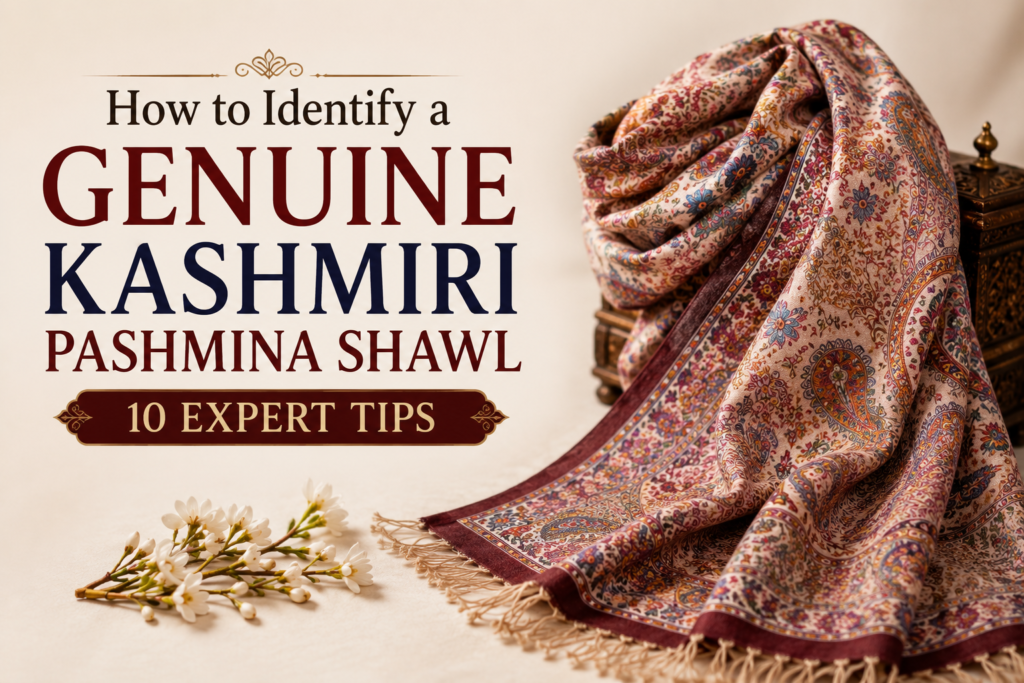

If you’ve ever searched for a genuine Kashmiri Pashmina shawl, you’ve probably noticed something confusing. Almost every seller claims their product is “100% pure Pashmina.” The prices, however, can vary from a few thousand rupees to several lakhs. Naturally, that raises a question—how can all of them be authentic? The truth is, they can’t.
With machine-made imitations and blended fabrics becoming increasingly common, knowing how to identify an authentic Pashmina is more important than ever. A few simple checks can help you avoid costly mistakes and invest in something that genuinely reflects the craftsmanship of Kashmir.
Why Authentic Kashmiri Pashmina Is So Special
The Story Behind a Genuine Kashmiri Pashmina Shawl
A genuine Kashmiri Pashmina shawl is made from the exceptionally fine undercoat of the Changthangi goat, found in the high-altitude regions of Ladakh. The fibre is collected during the natural moulting season, carefully cleaned, hand-spun, and woven by skilled Kashmiri artisans using traditional techniques that have been passed down through generations.
This detailed process takes time, patience, and expertise, which is why authentic Pashmina is considered one of the world’s finest luxury textiles. It isn’t just another winter accessory—it carries a rich heritage that machine-made products simply cannot replicate.
10 Expert Tips to Identify an Authentic Kashmiri Pashmina Shawl
1. Check the Fibre Instead of the Label
Labels can be changed within minutes, but the fabric itself tells the real story. Authentic Pashmina has an incredibly soft feel without being unnaturally silky or slippery. It offers gentle warmth the moment you drape it over your shoulders, yet remains surprisingly lightweight. If the material feels overly smooth like synthetic fabric or unusually stiff, there’s a good chance it contains artificial fibres or wool blends rather than pure Pashmina.
2. Look for Slight Handcrafted Imperfections
One thing many first-time buyers don’t realise is that handmade products are rarely flawless. Tiny variations in the weave, subtle differences in texture, or slight irregularities along the edges often indicate that the shawl has been woven by hand. Perfectly identical patterns and completely uniform finishes usually suggest machine production. Those little imperfections? They’re often signs of genuine craftsmanship rather than defects.
3. Feel the Warmth Without Heavy Weight
A pure Kashmiri Pashmina shawl provides impressive insulation despite feeling incredibly light. That’s one of the reasons travellers and collectors admire it so much. Unlike heavier woollen shawls that can feel bulky after a while, authentic Pashmina traps warmth naturally without adding unnecessary weight. If a shawl feels thick but doesn’t provide much warmth, it’s probably made from ordinary wool or blended fibres.
4. Examine the Hand Embroidery Carefully
Many premium Kashmiri Pashmina shawls feature traditional Sozni hand embroidery. Looking closely at the embroidery reveals a lot about authenticity. Hand-embroidered patterns usually have neat but slightly natural variations because every stitch is created individually by skilled artisans. Machine embroidery often appears overly uniform on both sides, lacking the character that handcrafted work naturally develops over time.
5. Buy Only from Trusted Sellers
Perhaps the simplest advice is also the most important. Purchase from established retailers who specialise in authentic Kashmiri textiles and provide detailed product information. Reliable sellers are transparent about fibre origin, weaving techniques, craftsmanship, and authenticity certifications where applicable. Reputed stores like Pashmina Vogue focus on genuine handcrafted collections, making it easier for buyers to invest with greater confidence instead of relying solely on marketing claims.
6. Check for a GI Certification or Authenticity Details
Although not every handcrafted shawl comes with the same documentation, many genuine products include authenticity details or are associated with the Geographical Indication (GI) tag for Kashmiri Pashmina. This certification helps protect traditional craftsmanship and gives buyers extra confidence about the product’s origin. If you’re investing in a premium shawl, don’t hesitate to ask questions. A trustworthy seller will usually explain where the shawl was woven, how it was made, and what makes it authentic.
7. Don’t Let a Very Low Price Fool You
A genuine Kashmiri Pashmina shawl requires weeks of skilled craftsmanship, from hand-spinning the delicate fibres to weaving and, in many cases, adding intricate embroidery. Because of this labour-intensive process, authentic pieces are rarely inexpensive. If you come across a “pure Pashmina” being sold at an unbelievably low price, it’s worth being cautious. A good deal is always welcome, of course, but when something feels too good to be true, it often is.
8. Observe the Weave Up Close
Take a closer look at the weave if you have the chance. Handmade Pashmina usually has a soft, natural texture with tiny variations that reflect the artisan’s work. Machine-made shawls often appear perfectly even and identical from edge to edge. Those small differences in a handcrafted weave aren’t flaws—they’re part of what makes every authentic piece unique. Personally, that’s one of the things that gives handmade textiles their charm.
9. Understand the Difference Between Pure and Blended Pashmina
Not every shawl labelled as “Pashmina” is made entirely from Pashmina fibre. Many products combine Pashmina with silk, merino wool, or other fibres to create different textures, finishes, and price points. There’s nothing wrong with blends if they’re described honestly. The problem begins when blended fabrics are marketed as pure Kashmiri Pashmina. Reading the fibre composition carefully helps you make an informed purchase and ensures you know exactly what you’re paying for.
10. Buy from Brands That Value Craftsmanship
Choosing a seller that works directly with skilled artisans often makes all the difference. Established brands usually provide better transparency about sourcing, weaving techniques, and quality standards. Reputed names like Pashmina Vogue focus on preserving traditional Kashmiri craftsmanship while offering handcrafted collections that reflect the heritage behind every shawl. When authenticity matters, buying from a trusted source gives much greater peace of mind than simply choosing the lowest price available.
A Beautiful Shawl Deserves a Thoughtful Choice
Buying a genuine Kashmiri Pashmina shawl isn’t simply about owning a luxurious accessory. It’s about appreciating centuries of craftsmanship, supporting traditional artisans, and investing in something that can remain part of your wardrobe for many years.
Taking a little extra time to examine the fabric, understand its origin, and purchase from a reliable seller makes the experience far more rewarding. Once you’ve wrapped yourself in an authentic handcrafted Pashmina, the difference is surprisingly easy to feel—and even harder to forget.
FAQs
How can I identify a genuine Kashmiri Pashmina shawl?
Check the fibre, weaving quality, warmth, handcrafted details, and seller credibility. Authentic Pashmina feels lightweight, naturally warm, and usually reflects subtle variations created through hand weaving.
Why is an authentic Pashmina shawl expensive?
Pure Pashmina is made from rare Changthangi goat fibre and requires skilled hand-spinning, weaving, and embroidery. The craftsmanship and limited raw material naturally increase its value.
Are all Pashmina shawls made from pure Pashmina wool?
No. Many shawls are blended with silk, wool, or other fibres. Always read the fibre composition carefully and buy from trusted sellers who clearly mention whether the shawl is pure or blended.
Is a GI tag important when buying a Pashmina shawl?
A GI tag helps verify the traditional origin of Kashmiri Pashmina and supports authentic craftsmanship. While not every product carries one, it adds confidence when purchasing genuine handmade shawls.