

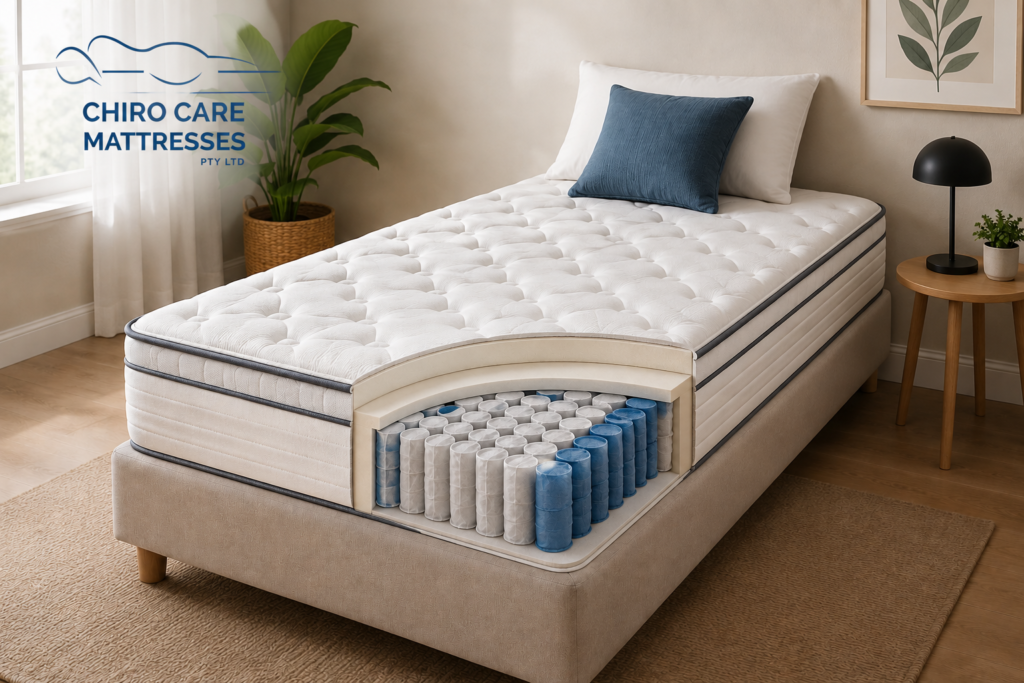

Buying a single mattress often gets treated as an afterthought something for a spare room, a growing child, or a first apartment. But whoever ends up sleeping on it deserves the same quality of rest as anyone else in the house. If you’ve started researching options, you’ve probably come across the term “pocket spring” more than once, and for good reason: it’s one of the most widely recommended constructions for single beds. This guide breaks down what a pocket spring single mattress actually is, how it works, who it suits, and exactly what to check before you spend your money.
What Is a Pocket Spring Single Mattress?
A pocket spring mattress uses hundreds sometimes over a thousand individual steel coils, each one sewn into its own fabric pocket. Unlike older open-coil designs where springs are linked together in a single interconnected wire system, pocket springs move independently of one another.
That single design difference changes everything about how the mattress feels and performs. When one coil is compressed, the springs around it aren’t pulled down with it. The result is a mattress that responds to the specific shape and weight distribution of the body lying on it, rather than flexing as one uniform sheet.
For a single mattress specifically, this matters because single beds are frequently used by:
- Children and teenagers who are still growing and need consistent support
- Adults in guest rooms, granny flats, or share housing
- People in aged care, supported accommodation, or NDIS-funded housing
- Anyone using a single bed as their primary, everyday sleeping surface
In all of these cases, the mattress isn’t a “just for guests” purchase it’s someone’s actual bed, night after night.
The Core Pocket Spring Mattress Benefits
Understanding the main pocket spring mattress benefits helps explain why this construction has remained popular for decades, even as newer materials like memory foam and hybrid designs have entered the market.
1. Better Motion Isolation
Because each coil compresses on its own, movement in one part of the mattress doesn’t transfer across the whole surface. This is less about couples sharing a bed (less relevant for a single) and more about how the mattress handles someone changing position through the night tossing and turning creates less overall disturbance to their own sleep, since the support around them doesn’t shift dramatically with every movement.
2. Contouring, Point-Elastic Support
Pocket springs respond to pressure at each point of contact shoulders, hips, lower back rather than the whole mattress sinking or bridging under heavier areas. This is sometimes called “point elasticity,” and it’s one of the reasons pocket spring designs are often recommended for people with back or joint discomfort, alongside general spinal alignment during sleep.
3. Airflow and Temperature Regulation
The coil layer itself is mostly open space, allowing air to move through the mattress rather than trapping heat the way a solid block of foam can. Many sleepers who run warm at night find spring-based mattresses more breathable than all-foam alternatives.
4. Durability When Well Made
Individually wrapped coils, when constructed with quality steel and properly finished pockets, tend to hold their shape well over time. Sagging is often more localized and less likely to affect the entire sleeping surface at once, compared to some foam mattresses that can develop broad body impressions.
How Individually Pocketed Coils Actually Work
It’s worth understanding the mechanics in a little more detail, because the term “individually pocketed coils” gets used loosely in marketing, and not all pocket spring mattresses are built to the same standard.
Each coil is:
- Wound from tempered steel wire
- Inserted into a fabric sleeve or “pocket”
- Stitched or heat-sealed closed
- Connected to its neighboring pockets by glue or stitching not by wire so the fabric holds the layout together while each spring remains free to move vertically
The number of coils, their gauge (wire thickness), and the height of each spring all affect how the mattress performs. As a general guide:
- Higher coil counts in a given mattress size typically mean more precise, targeted support, since there are more individual points of contact.
- Lower gauge numbers indicate thicker, firmer wire, while higher gauge numbers mean thinner, more flexible wire.
- Taller coils generally allow for a greater range of compression, which can improve contouring for a wider range of body weights.
Who Should Consider This Type of Mattress?
Pocket spring construction suits a wide range of sleepers, but it isn’t automatically the right choice for every situation. It tends to be a strong fit if:
- You want a mattress with a traditional, slightly bouncier feel rather than the slower sink of memory foam
- You or the person using the bed run warm at night
- The bed will be used long-term as a primary mattress, not just occasionally
- You want good edge-to-edge support without one section of the bed sagging independently of the rest
It may be less ideal if:
- You specifically prefer the close, contouring “hug” of all-foam or full memory foam mattresses
- The mattress needs to be extremely lightweight or easy to fold or transport, since coil layers add weight
- Budget is very tight, since higher coil counts and better-quality steel do add to the cost
What to Look for Before You Buy
Once you’ve decided a spring-based design suits your needs, the details below will help you compare individual mattresses rather than just brands.
Coil Count and Quality
More coils generally mean more contouring precision, but quality matters as much as quantity. A mattress with a moderate coil count made from well-tempered steel can outperform one with a higher count but lower-quality wire.
Comfort Layer Materials
The layer sitting above the coils affects how the mattress feels against the skin, even though the coils do most of the structural work. Common options include:
- Foam layers for cushioning and pressure relief
- Gel-infused foam to help offset heat retention
- Natural or organic fillings, such as wool or cotton, for breathability
- Pillow tops for a softer, plusher feel on the surface
Firmness Level
Firmness is subjective, but as a general starting point:
- Lighter sleepers and children often do well on medium mattresses
- Back and stomach sleepers typically benefit from medium-firm to firm support
- Side sleepers often prefer a touch more give at the shoulders and hips
If possible, test the mattress in person or check the retailer’s trial and return policy before committing.
Certifications and Materials Transparency
Look for information on where and how the mattress is made, what the foam and fabric components are certified against, and whether the retailer can clearly explain the materials used. Reputable manufacturers are typically upfront about coil counts, foam densities, and fabric composition vague or missing specifications are worth questioning.
Size Accuracy
Standard single mattress dimensions in Australia are generally around 92 cm wide by 187–188 cm long, though it’s worth confirming exact measurements against your bed frame before ordering, as slight variations exist between manufacturers.
Caring for Your Mattress After Purchase
A pocket spring mattress is a longer-term investment, and a few simple habits help protect that investment:
- Rotate it periodically (head to foot) if the mattress isn’t one-sided, to encourage even wear
- Use a mattress protector to guard against spills, dust, and allergens
- Air it out occasionally by leaving bedding off for a short period, especially in humid climates
- Avoid folding or bending the mattress, since this can damage the coil structure and pockets
- Check the base or frame underneath is providing adequate, even support an unsupportive base can undermine even a high-quality mattress
Common Mistakes to Avoid
- Buying on price alone. The cheapest option in a range often uses thinner steel or fewer coils, which shortens the mattress’s usable lifespan.
- Ignoring the comfort layer. Two mattresses with similar coil counts can feel very different depending on what sits above the springs.
- Skipping the trial period. Firmness preference is personal, and what feels right in a showroom for ten minutes can feel different after a full night’s sleep.
- Overlooking the base. A mismatched or worn-out base can cause a new mattress to sag prematurely, regardless of how well it’s built.
Final Thoughts
A well-made pocket spring single mattress can offer a genuinely good night’s sleep for children, adults, and anyone using a single bed as their main sleeping space provided you look past the marketing and check the details that actually affect comfort and durability: coil count, wire quality, comfort layer materials, and firmness suited to the sleeper. If you’re comparing options in Victoria, Chiro Care Mattresses is an Australian-made and owned retailer with showrooms in Thomastown and Ravenhall offering a range of pocket spring mattresses in single size, including choices with organic fillings, gel inserts, and pillow tops, and they’re also a registered NDIS provider worth a look if you’d like to see and feel the different coil and comfort options in person before deciding.