

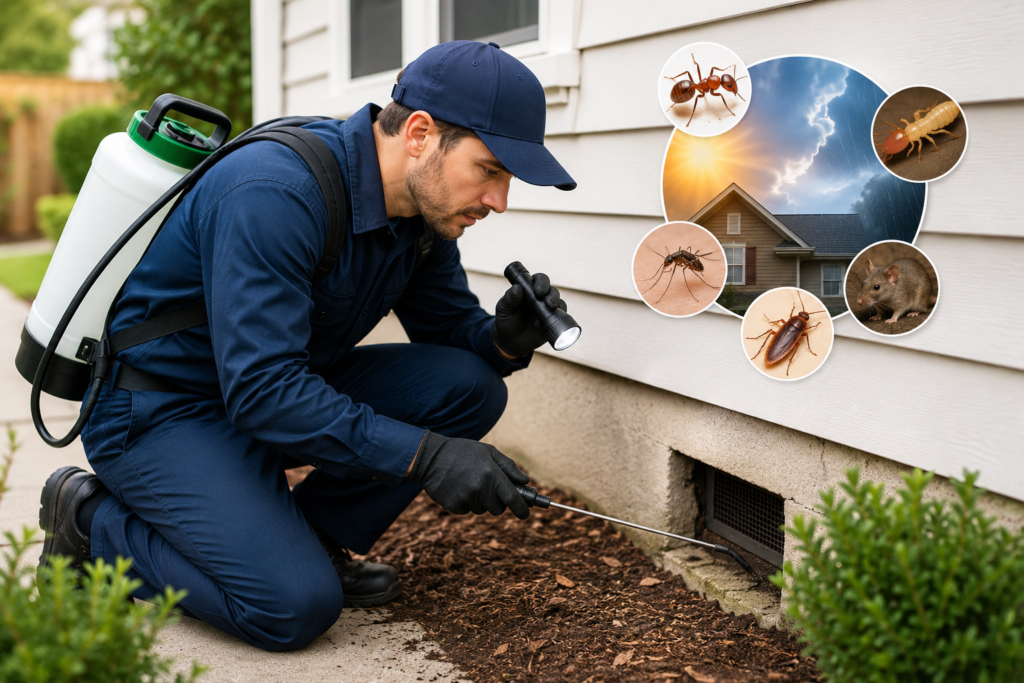

Weather plays a major role in pest activity throughout the year. Changes in temperature, humidity, rainfall, and seasonal conditions can affect where pests live, how quickly they reproduce, and when they invade homes or businesses. In Wilmington, Delaware, weather patterns create ideal conditions for many common pests, including termites, ants, rodents, mosquitoes, and cockroaches.
Understanding how weather affects pest populations can help property owners stay ahead of infestations. At Delaware Pest Pros we help homeowners and businesses protect their properties through every season with effective pest management solutions tailored to local conditions.
Understanding the Connection Between Weather and Pest Activity
Pests depend on environmental conditions to survive. Just like people, they respond to changes in temperature, moisture, and food availability. When conditions are favorable, pest populations can grow quickly. When conditions become harsh, pests often seek shelter indoors.
Weather also affects pest breeding cycles. Warm temperatures and increased humidity often speed up reproduction, while colder conditions may slow activity. However, many pests simply move indoors during unfavorable weather, which means they can remain active year-round.
How Spring Weather Increases Pest Populations
Spring is one of the busiest times for pest activity in Wilmington. As temperatures begin to rise, many pests emerge from winter hiding places and start looking for food, water, and nesting sites. Increased rainfall during spring also creates ideal breeding conditions.
Termites become especially active during spring. Swarming termites leave existing colonies to establish new ones. Ants, spiders, and mosquitoes also become more noticeable as warmer weather creates better survival conditions. This is why spring inspections are important for preventing infestations before they become larger problems.
Summer Heat and Rapid Pest Growth
Summer brings higher temperatures and increased pest activity. Many insects thrive in warm weather because heat speeds up their life cycles. This allows them to reproduce more quickly and create larger populations in a shorter period.
Mosquitoes are particularly active during summer. Standing water from rainstorms provides breeding grounds, while humidity helps them survive longer. Cockroaches, flies, and wasps also become more common. Property owners often notice increased outdoor pest activity during this season, making professional pest control an important part of summer maintenance.
Why Fall Drives Pests Indoors
As temperatures begin to cool, many pests start searching for warm places to spend the winter. Homes and commercial buildings provide shelter, food, and protection from harsh weather conditions. This often leads to an increase in indoor infestations during the fall. Property owners who take preventive steps early can reduce the likelihood of seasonal pest problems before they become serious.
Rodents are among the most common fall invaders. Mice and rats can enter through tiny openings around foundations, doors, and utility lines in search of warmth and food. This is why professional rodent control becomes especially important during the fall months. Stink bugs and spiders also seek indoor shelter as temperatures drop. Scheduling a pest inspection and implementing effective rodent control measures in early fall can help protect your home or business from costly infestations throughout the winter season.
Winter Does Not Eliminate Pest Problems
Many people assume that cold weather kills pests. While some insects become less active, many pests survive by moving indoors. Heated homes, offices, and commercial buildings provide comfortable environments where pests can continue to live and reproduce.
Rodents remain highly active throughout winter. Cockroaches often thrive in warm indoor environments, especially where food and moisture are available. Bed bugs are unaffected by outdoor temperatures because they spend their entire life cycle indoors. Winter pest control remains essential for maintaining a healthy property.
The Impact of Rainfall on Pest Populations
Rainfall can have both positive and negative effects on pests. Moderate rain often increases pest activity by providing water sources and creating humid environments. Many insects rely on moisture to survive and reproduce.
Heavy rainfall can force pests to relocate. Flooded nests and underground colonies may drive ants, rodents, and other pests into nearby buildings. After major storms, property owners often experience a sudden increase in pest sightings as displaced pests search for new shelter.
How Humidity Influences Pest Behavior
Humidity is one of the most important factors affecting pest survival. Many pests require moisture to thrive. High humidity levels help insects avoid dehydration and support their reproductive cycles.
Cockroaches, termites, and mosquitoes are especially attracted to humid conditions. Wilmington’s seasonal humidity levels can create ideal environments for these pests. Managing moisture inside and outside a property is one of the most effective ways to reduce pest activity.
Extreme Weather Events and Pest Infestations
Severe weather events can significantly impact pest populations. Hurricanes, strong storms, flooding, and prolonged droughts all force pests to adapt to changing conditions. These changes often bring pests closer to homes and businesses.
During drought conditions, pests may enter buildings in search of water. Following major storms, damaged structures can provide new entry points. Extreme weather often creates opportunities for infestations that might not otherwise occur.
Common Wilmington Pests Affected by Weather
Several pests commonly found in Wilmington respond directly to weather conditions. Understanding their behavior can help property owners identify risks early and take preventive action.
Termites become more active during warm and humid periods. Mosquitoes thrive after rainfall and during humid summers. Rodents move indoors when temperatures drop. Ants often become more noticeable after heavy rain disrupts their colonies. Each pest responds differently, making year-round monitoring important.
How Delaware Pest Pros Helps Protect Local Properties
At Delaware Pest Pros, we understand how Wilmington’s weather patterns influence pest activity. Our team uses local knowledge and proven pest management strategies to help protect homes and businesses throughout every season.
We provide comprehensive inspections, customized treatment plans, and preventive services designed to address seasonal pest risks. By identifying problems early and implementing targeted solutions, we help reduce infestations before they become costly issues.
Seasonal Pest Prevention Tips
Preventing pest infestations requires a proactive approach throughout the year. Seasonal maintenance can significantly reduce the likelihood of pest problems and protect your property from damage.
Property owners should eliminate standing water, repair leaks, seal cracks, maintain landscaping, and schedule regular inspections. Keeping food properly stored and maintaining a clean environment also helps discourage pest activity. Consistent prevention is often more effective and less expensive than dealing with a major infestation later.
Why Professional Pest Control Matters
Weather-related pest activity can be difficult to predict and manage without professional assistance. Different pests require different treatment methods, and seasonal changes often create new challenges for property owners.
Professional pest control services provide expert inspections, effective treatments, and long-term prevention strategies. Delaware Pest Pros works with homeowners and businesses throughout Wilmington to deliver reliable pest management solutions that address local pest pressures and changing weather conditions.
Frequently Asked Questions
How does weather affect pest populations?
Weather affects pest survival, breeding, feeding habits, and movement. Warm temperatures and moisture often increase pest activity, while colder conditions may drive pests indoors.
What pests are most active during summer in Wilmington?
Mosquitoes, cockroaches, ants, flies, and wasps are among the most active pests during Wilmington summers.
Why do rodents enter homes during fall?
Rodents seek warmth, shelter, and reliable food sources when outdoor temperatures begin to drop.
Can pests survive cold winter temperatures?
Yes. Many pests survive winter by moving indoors where temperatures remain warm and food is available.
Does heavy rain increase pest infestations?
Heavy rain can flood nests and force pests into homes and businesses, increasing the risk of infestations.
How often should I schedule a pest inspection?
Most homeowners should schedule at least one annual inspection, while properties with ongoing pest concerns may benefit from more frequent visits.
Conclusion
Weather changes have a direct impact on pest populations throughout the year. Warm temperatures, humidity, rainfall, and seasonal transitions all influence pest behavior, reproduction, and movement. Understanding these patterns helps property owners take preventive action before infestations occur.
For homeowners and businesses in Wilmington, Delaware, staying ahead of seasonal pest activity is essential. Delaware Pest Pros offers professional inspections, customized treatment plans, and year-round pest management services designed to protect your property from weather-related pest problems. With the right prevention strategy, you can enjoy a safer, healthier, and pest-free environment throughout every season.