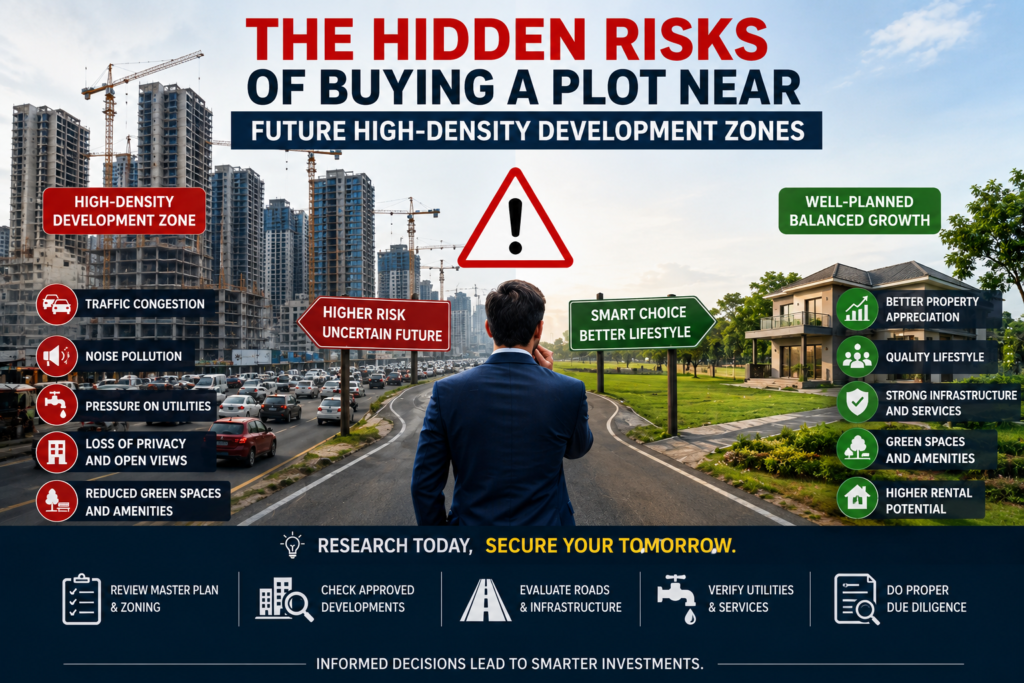

The Hidden Risks of Buying a Plot Near Future High-Density Development Zones
Buying a residential plot is one of the most important financial decisions you’ll make. While location, price, and future growth potential are often top priorities, many buyers overlook another critical factor—planned high-density development nearby.
Large apartment complexes, mixed-use developments, commercial towers, and high-rise residential projects can significantly change a neighborhood over time. Although these developments may bring new businesses and infrastructure, they can also introduce challenges that affect daily living, long-term property value, and investment returns.
Understanding future development plans before purchasing land allows buyers to make more informed decisions and avoid unexpected surprises. A plot that seems ideal today could face increased traffic, reduced privacy, or pressure on local infrastructure as surrounding areas continue to develop.
In this guide, you’ll learn what high-density development zones are, the hidden risks they may create, and how to evaluate a property’s long-term investment potential before buying.
What Are High-Density Development Zones?
High-density development zones are areas designated for larger-scale residential, commercial, or mixed-use construction. These developments are designed to accommodate growing populations by making more efficient use of available land.
While they support urban growth, they can also change the character of nearby residential communities.
Understanding Urban Development Planning
Cities and housing authorities use master plans to guide future development.
These plans often identify areas for:
- High-rise residential buildings.
- Commercial centers.
- Mixed-use developments.
- Business districts.
- Public transportation projects.
- Community facilities.
Understanding these plans helps buyers anticipate how a neighborhood may evolve over the coming years.
Why High-Density Projects Change Residential Communities
As new developments are completed, surrounding neighborhoods often experience significant changes.
Potential impacts include:
- Increased population.
- More vehicle traffic.
- Greater demand for public services.
- Higher commercial activity.
- Changes to neighborhood character.
While some buyers welcome these changes, others may prefer quieter communities with lower population density.
Hidden Risks That Can Affect Your Investment
High-density developments can offer economic benefits, but they may also introduce risks that affect both homeowners and property investors.
Evaluating these factors before purchasing helps reduce future surprises.
Traffic Congestion and Reduced Accessibility
One of the most noticeable effects of high-density development is increased traffic.
As more residents move into the area, roads may experience:
- Longer travel times.
- Increased congestion.
- Limited parking.
- Busier intersections.
- Greater commuting delays.
If road infrastructure does not expand alongside new developments, accessibility may become a long-term concern.
Noise Pollution from High-Rise Developments
Construction activity can continue for several years in rapidly developing areas.
Even after completion, larger developments often generate additional noise from:
- Increased traffic.
- Commercial activity.
- Public transportation.
- Delivery vehicles.
- Higher population density.
For buyers seeking a peaceful residential environment, this may reduce overall quality of life.
Pressure on Water, Electricity, and Sewerage Infrastructure
Rapid population growth places greater demand on essential utilities.
Without timely infrastructure upgrades, communities may experience:
- Water supply interruptions.
- Reduced water pressure.
- Electricity shortages.
- Sewerage capacity issues.
- Increased maintenance requirements.
Reviewing local infrastructure plans helps determine whether future demand can be supported.
Loss of Privacy and Open Views
A plot with attractive open surroundings today may look very different after nearby high-rise construction.
Potential changes include:
- Blocked scenic views.
- Reduced natural light.
- Less privacy.
- Overlooking from taller buildings.
- Increased building density.
These factors may influence both everyday living and future resale appeal.
Reduced Green Spaces and Community Amenities
As urban density increases, available open land often decreases.
If development is not carefully planned, communities may experience:
- Smaller parks.
- Fewer recreational areas.
- Reduced green space.
- Higher demand for existing facilities.
- More crowded public amenities.
Access to quality open spaces remains an important factor for many homebuyers.
How Future Development Can Influence Property Value
Future development does not always increase property values.
Its impact depends on planning quality, infrastructure investment, and market demand.
When Property Appreciation Slows
Some high-density developments support long-term growth.
However, excessive development without supporting infrastructure may reduce buyer demand over time.
Factors that can slow appreciation include:
- Traffic congestion.
- Infrastructure strain.
- Reduced neighborhood appeal.
- Oversupply of nearby housing.
- Limited public services.
Understanding local planning helps buyers assess long-term investment potential more accurately.
Changes in Buyer Demand and Market Appeal
Homebuyer preferences continue to evolve.
Many buyers look for communities that offer:
- Good accessibility.
- Reliable infrastructure.
- Green spaces.
- Privacy.
- Modern amenities.
- Balanced population density.
Areas that become overly congested may become less attractive to certain buyers, affecting resale opportunities.
Rental Potential in High-Density Neighbourhoods
High-density areas may create opportunities for rental demand, particularly where employment centers, universities, or transport hubs are nearby.
However, investors should also consider:
- Competition from new housing.
- Rental supply levels.
- Tenant preferences.
- Infrastructure quality.
- Long-term neighborhood desirability.
A balanced assessment helps investors make informed decisions rather than relying solely on projected growth.
Due Diligence Before Buying a Plot
Buying a plot is a long-term investment, so it’s important to research the area before making a decision. Proper due diligence helps you identify future developments that may affect your property’s value, lifestyle, and resale potential.
Reviewing the Local Master Plan
A local master plan outlines how an area is expected to develop over time.
Reviewing this plan can help you identify:
- Future residential projects.
- Commercial developments.
- Road expansion plans.
- Public transport routes.
- Parks and recreational areas.
- Community facilities.
Understanding these plans allows you to assess whether the surrounding environment will continue to meet your needs.
Identifying Approved High-Rise Projects Nearby
Not every planned development is immediately visible when visiting a site.
Before purchasing a plot, find out whether nearby land has approval for:
- Apartment buildings.
- Mixed-use developments.
- Shopping centers.
- Office complexes.
- High-rise residential towers.
Knowing what is planned nearby helps you avoid unexpected changes after your purchase.
Evaluating Road Capacity and Future Infrastructure
Infrastructure should grow alongside population growth.
Check whether local authorities have planned:
- Road widening projects.
- New access roads.
- Traffic management improvements.
- Public transport upgrades.
- Parking facilities.
Well-planned infrastructure helps maintain accessibility as communities expand.
Checking Utility Capacity and Public Services
Reliable infrastructure is essential for long-term property value.
Before investing, evaluate:
- Water supply.
- Electricity capacity.
- Sewerage systems.
- Internet connectivity.
- Waste management.
- Emergency services.
Communities with strong infrastructure are generally better positioned to support future growth.
Warning Signs Investors Often Overlook
Many buyers focus only on current conditions without considering future development indicators.
Recognizing these warning signs can help reduce investment risk.
Large Undeveloped Commercial Parcels
Large vacant parcels near residential communities may indicate future commercial or mixed-use developments.
While these projects can increase convenience, they may also introduce:
- More traffic.
- Higher noise levels.
- Increased population density.
- Greater demand on infrastructure.
Understanding how these sites are zoned provides valuable insight into future neighborhood changes.
Frequent Zoning Amendments
Frequent zoning changes often indicate that an area is undergoing rapid development.
This may lead to:
- Increased construction activity.
- Higher-density housing.
- Expanded commercial districts.
- Changing neighborhood character.
Reviewing local planning updates helps buyers stay informed about future development.
Planned Mixed-Use Developments
Mixed-use projects combine residential, commercial, and retail spaces.
Although they offer convenience, buyers should consider:
- Traffic generation.
- Parking demand.
- Noise levels.
- Population growth.
- Infrastructure capacity.
Evaluating these factors provides a more balanced view of long-term investment potential.
Delayed Infrastructure Expansion
New developments often progress faster than supporting infrastructure.
Warning signs include:
- Congested roads.
- Frequent utility interruptions.
- Limited public facilities.
- Slow infrastructure upgrades.
- Overcrowded community services.
Areas where infrastructure lags behind development may face long-term challenges.
How to Choose a Plot That Balances Growth and Liveability
The best property investments combine future appreciation with a high quality of life.
When comparing plots, consider:
- Access to major roads.
- Planned infrastructure improvements.
- Utility reliability.
- Community amenities.
- Green spaces.
- Population density.
- Long-term development plans.
- Market demand.
Choosing a location with balanced growth helps protect both your lifestyle and your investment.
It is also beneficial to visit the area at different times of the day to observe traffic patterns, neighborhood activity, and ongoing construction. Speaking with local residents and reviewing publicly available planning information can provide valuable insights that may not be obvious during a single site visit.
Conclusion
Buying a plot is about more than finding the right price or location. Understanding how an area will develop in the future is equally important. High-density developments can bring economic growth and improved amenities, but they may also create challenges such as increased traffic, pressure on utilities, reduced privacy, and changing neighborhood appeal.
By researching local master plans, reviewing approved developments, assessing infrastructure capacity, and recognizing early warning signs, buyers can make better-informed investment decisions. Careful planning today can help protect both your property’s long-term value and your quality of life.
If you’re looking for a thoughtfully planned community that balances modern development with comfortable living, Kohistan Enclave offers an opportunity to invest in a location designed with long-term growth, quality infrastructure, and resident well-being in mind.
Frequently Asked Questions
What are the risks of buying a plot near a high-density development zone?
Potential risks include increased traffic congestion, noise pollution, pressure on utilities, reduced privacy, fewer green spaces, and changes in neighborhood character that may affect long-term property value.
How do high-rise developments affect nearby residential properties?
High-rise developments can increase population density, create additional traffic, reduce open views, place greater demand on public infrastructure, and influence buyer demand in surrounding neighborhoods.
Can future urban development reduce property value?
Yes. If development outpaces infrastructure improvements or creates congestion and reduced livability, property appreciation may slow and resale appeal may decline.
What should I check before investing in a housing society plot?
Review the local master plan, confirm approved nearby developments, assess road capacity, evaluate utility services, verify zoning regulations, and consider future infrastructure projects.
How does infrastructure pressure affect homeowners?
Insufficient infrastructure can lead to water shortages, electricity issues, traffic congestion, sewerage problems, and reduced access to community services, affecting both daily life and property value.
Are high-density development zones good for long-term investment?
They can be, provided development is supported by strong infrastructure, effective urban planning, and growing demand. Buyers should carefully evaluate each location before investing.
How can buyers identify future development plans before purchasing land?
Buyers should review municipal master plans, zoning maps, planning authority approvals, infrastructure proposals, and public development announcements, while also consulting reputable real estate professionals to understand future growth in the area.