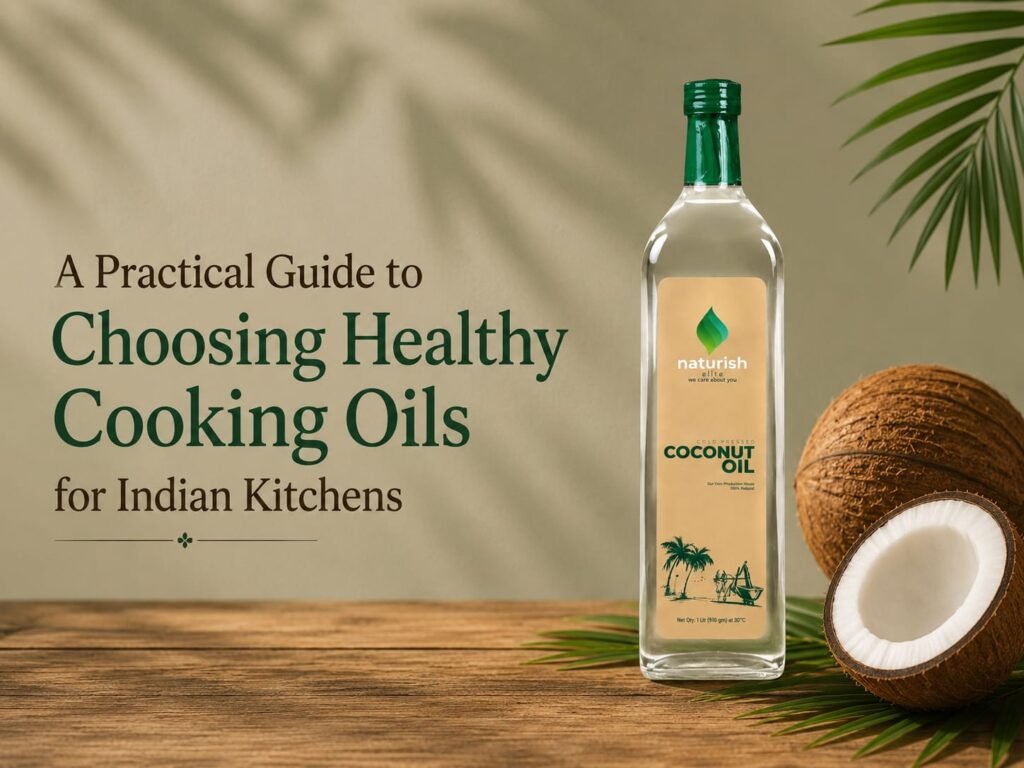

Choosing the right cooking oil is an important part of building a balanced Indian kitchen. With so many options available, including coconut, mustard, groundnut, sunflower and other oils, deciding which one is right can be confusing. The ideal choice depends on the type of cooking, flavour preferences, nutritional needs and how frequently the oil is used.
Rather than searching for one universally perfect oil, it is better to understand the characteristics of different oils and choose them according to your everyday cooking requirements.
What Makes Cooking Oil a Good Choice?
A good cooking oil should suit the cooking method, be stored properly and fit comfortably into your overall diet. Oils differ in their fatty acid composition, flavour, processing methods and heat tolerance.
Consider the Type of Fat
Different oils contain different proportions of saturated, monounsaturated and polyunsaturated fats. Coconut oil, for example, contains a relatively high proportion of saturated fat, while several other commonly used oils contain higher amounts of unsaturated fats. This is why portion size and dietary variety matter. Using a reasonable quantity of oil is generally more important than searching for an oil marketed as a miracle solution.
Look at the Processing Method
Processing can influence the flavour, aroma and characteristics of an oil. Cold-pressed and minimally processed oils are often preferred by consumers who want an oil with more natural characteristics. When buying cooking oil, check the label for information about the source, extraction method, ingredients and packaging.
Choosing Oil According to Indian Cooking Methods
Indian kitchens use a wide variety of cooking techniques, from tempering and sautéing to deep frying and slow cooking. Not every oil needs to be used in exactly the same way.
For Everyday Sautéing and Cooking
An oil with a suitable heat tolerance and neutral or complementary flavour can work well for everyday vegetable preparations, dals and curries.
Coconut oil can be particularly appealing when its distinctive aroma complements the recipe. It is commonly used in several regional Indian cuisines and works well for many moderate-heat preparations.
For Traditional Regional Recipes
Cooking traditions vary considerably across India. Coconut oil is closely associated with the cuisines of Kerala and other coastal regions, where it is used in curries, vegetable dishes and other traditional preparations.
People specifically searching for kerala coconut oil for cooking should look beyond the location and also evaluate sourcing, extraction method, purity and packaging.
For Baking and Special Preparations
Some oils can also be used in baking, marinades and dressings. Coconut oil can add a subtle coconut flavour to suitable recipes, particularly when paired with ingredients that naturally complement it.
Is Coconut Oil a Good Choice for Cooking?
Coconut oil can be a useful cooking option when used appropriately. Its characteristic flavour makes it especially suitable for dishes where a coconut note is desirable.
When selecting the best coconut oil for cooking, consider more than just the product name. Check whether it is suitable for your preferred cooking temperature, whether the ingredients are clearly listed and whether the extraction and storage information is transparent.
Understanding Virgin and Organic Coconut Oil
Virgin coconut oil is generally made from fresh coconut and undergoes relatively limited processing. Organic coconut oil refers to oil produced according to applicable organic production standards.
Therefore, organic coconut cooking oil is not automatically the right choice for every person or recipe. Consumers should still compare certifications, processing methods, ingredient information and quality standards before purchasing.
What About Heart-Healthy Cooking Oils?
The term Heart Healthy Oil is commonly used in marketing, but consumers should be careful with broad health claims. No single cooking oil can guarantee cardiovascular health.
Overall dietary pattern, physical activity, body weight, smoking status, blood pressure, cholesterol levels and other lifestyle factors all influence heart health.
Focus on Balance and Portion Size
Because oils are calorie-dense, even a nutritionally suitable oil should be used in sensible quantities. Measuring oil rather than pouring freely can make it easier to manage overall fat and calorie intake.
For people concerned about cardiovascular health, choosing oils with a favourable unsaturated-fat profile and following individual dietary advice from a qualified healthcare professional may be more appropriate than relying on a single product claim.
How to Compare Cooking Oils Before Buying
Before purchasing any cooking oil, consider these practical factors.
1. Check the Ingredients
A quality cooking oil should clearly state what it contains. Avoid products with unclear ingredient information.
2. Understand the Extraction Method
Look for clear information about whether the oil is cold-pressed, centrifuged, refined or produced through another method.
3. Consider the Cooking Temperature
Think about whether you mainly sauté, bake, simmer, shallow-fry or deep-fry. The cooking method should influence your choice.
4. Examine the Packaging
Good packaging should protect the oil from light, heat and contamination. Always check the storage instructions and expiry information.
5. Compare Price With Quality
When comparing coconut oil for cooking price, do not evaluate products solely on the lowest cost per bottle. Consider the quantity, extraction method, sourcing, quality testing and packaging as well. A cheaper product is not necessarily better value if the quality or suitability does not meet your requirements.
Should You Buy Cooking Oil Online?
The option to Buy cooking oil online can make it easier to compare product specifications, ingredients, packaging sizes and customer information before making a purchase.
However, online shoppers should check the seller’s product details carefully. Look for transparent information about the ingredients, source, processing method, net quantity, storage requirements and relevant quality certifications.
Avoid choosing an oil solely because of attractive packaging or exaggerated health claims.
How to Store Cooking Oil Properly
Even a good-quality cooking oil can deteriorate if it is stored incorrectly. Keep the bottle tightly closed and protect it from excessive heat, moisture and direct sunlight.
Do not keep cooking oil next to a stove where repeated exposure to heat can affect its quality. Always use clean, dry utensils when handling the oil and follow the manufacturer’s recommended storage conditions.
Building a Better Cooking Oil Routine
Indian cooking does not require one oil for every dish. A practical approach is to understand the characteristics of different oils and use them according to the recipe and cooking method.
Coconut oil can be useful for traditional dishes and moderate-heat preparations, while other oils may be better suited to different recipes. Maintaining variety can also help prevent excessive dependence on one type of dietary fat.
The goal should be simple: choose quality oils, use appropriate quantities, store them correctly and maintain an overall balanced diet.
Final Thoughts
Choosing a cooking oil should be based on more than popularity, price or health claims on a label. Look at the oil’s composition, processing method, source, cooking suitability and storage requirements before making a decision.
For those considering coconut oil, factors such as extraction method, freshness, sourcing and intended use can help identify a suitable option. Whether you are looking for Best coconut oil for cooking, organic coconut cooking oil or Kerala coconut oil for cooking, informed comparison is the key. A thoughtful approach to cooking oils can help you make better everyday food choices without unnecessarily complicating your kitchen.
FAQs
1. Which is the best coconut oil for cooking?
The best option depends on your cooking method, flavour preference and dietary requirements. Look for clear ingredient information, suitable processing, reliable sourcing and appropriate packaging.
2. Is coconut oil suitable for everyday cooking?
Coconut oil can be used for many everyday cooking applications, particularly when its flavour suits the dish. Because it is high in saturated fat, moderation is important.
3. What should I check before buying cooking oil online?
Check the ingredients, extraction method, source, quantity, packaging, storage instructions, expiry date and applicable certifications before purchasing.
4. Is organic coconut cooking oil healthier?
Organic certification primarily relates to how the product is produced and handled according to applicable standards. It does not automatically mean that the oil is nutritionally superior for every individual.
5. Does coconut oil for cooking price indicate quality?
Price alone does not determine quality. Compare the oil’s source, extraction method, quantity, testing information, packaging and overall product specifications before deciding.