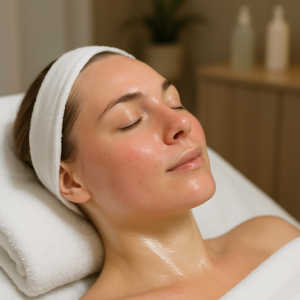



Cleansing feels like the most straightforward step in any skincare routine. Wet the face, apply something, rinse. But the reality is that the cleansing step is where a surprising number of people undo their own routine not through neglect, but through small, compounding mistakes that accumulate over time. The right facial cleansing gel does more than just clean the skin. Used correctly, it actively prevents the kind of barrier disruption, comedone buildup, and chronic irritation that make the rest of a routine work harder than it needs to.
Why Cleansing Mistakes Are So Easy to Make and So Hard to Detect
The tricky part about cleansing errors is that their consequences are rarely immediate. Skin doesn’t react to a single over-aggressive wash the same way it reacts to a contact allergen. The damage tends to be cumulative. Weeks or months of the wrong technique, the wrong formula, or the wrong frequency gradually degrade the stratum corneum (the outermost layer of the epidermis) before anything visible appears. By the time redness, sensitivity, or persistent breakouts become noticeable, the cleansing step has often been doing damage for a while.
The Most Common Cleansing Mistakes and How the Right Gel Prevents Them
1. Using Water That’s Too Hot
Hot water feels thorough. It steams open pores, cuts through oil, and creates a satisfying clean sensation that warm or lukewarm water doesn’t quite replicate. But from a dermatological standpoint, hot water is one of the fastest ways to compromise the skin’s hydrolipidic film – the protective layer of lipids and water that sits on the skin’s surface and regulates moisture retention.
Repeated exposure to high-temperature water accelerates trans-epidermal water loss (TEWL), denatures the naturally occurring proteins in the epidermis, and can trigger visible vasodilation – the redness and flushing that some people misattribute to their cleanser. The cleanser isn’t always the cause; the water temperature is.
The correct approach is lukewarm water, which is warm enough to soften sebum and allow the cleanser to emulsify properly without stripping the lipid barrier. A well-formulated facial cleansing gel is designed to work at this temperature range, lifting impurities effectively without needing heat to do the work.
Why gel formulas handle this better
Gel cleansers are typically water-based and designed with surfactant systems that perform optimally at moderate temperatures. Unlike heavy cream or oil-based formulas, a facial cleansing gel rinses cleanly with lukewarm water and doesn’t require a high-temperature rinse to prevent a residue.
2. Using Too Much Product
More cleanser does not mean a cleaner result. It means more surfactant contact with the skin, a longer rinse time to remove it fully, and a higher likelihood of over-stripping the intercellular lipid matrix. This is one of the most common mistakes across all skin types and it tends to worsen through seasons or when switching to a foaming formula, because the perceived lather feels proportional to effectiveness.
A dime-sized amount of cleanser is genuinely sufficient for the entire face when massaged properly. Gel-based formulas, particularly those with collagen enrichment, are concentrated enough that a small amount activates into an adequate cleansing lather with water. Using more than necessary doesn’t improve the cleanse, it increases the chemical load on the skin’s surface and makes it harder to rinse completely.
Residual cleanser left on the skin from incomplete rinsing is itself a common trigger for low-grade contact dermatitis and post-wash sensitivity. Starting with the correct amount eliminates this issue before it begins.
3. Scrubbing Instead of Massaging
Physical pressure is not a substitute for proper formulation. Rubbing the face aggressively with a washcloth, a rough pad, or even bare hands using friction creates micro-tears in the epidermis, stimulates inflammatory pathways, and can break down collagen in the dermis over time particularly in skin that is already thinning with age.
The correct technique is a gentle circular massage. This motion activates the cleanser’s surfactant system, encourages emulsification of sebum and impurities, and supports lymphatic circulation without mechanical trauma.
A non-abrasive facial cleansing gel formulated for all skin types including sensitive and mature skin, is designed to do the cleansing work biochemically, not mechanically.
4. Skipping Cleansing at Night
Morning cleansing is largely optional for most skin types, particularly those who don’t sweat heavily overnight. Evening cleansing is non-negotiable. Throughout the day, the skin accumulates sebum, environmental particulate matter, residual SPF, and oxidized pollution that, if left overnight, generates reactive oxygen species (ROS) on the skin’s surface. These free radicals drive low-grade cutaneous inflammation, accelerate photoaging, and interfere with the skin’s natural overnight repair cycle.
The skin undergoes its primary regenerative processes – cellular turnover, collagen synthesis, and barrier restoration, during sleep. Residual impurities block this process and reduce the efficacy of any treatment applied on top of them, including serums and night moisturizers.
Using a gentle facial cleansing gel in the evening, one that removes makeup, oil, and impurities without compromising the barrier, allows the skin to enter its repair phase with a clean surface and an intact stratum corneum.
5. Using a Formula That Doesn’t Match the Skin Type
The most damaging cleansing mistake is simply using the wrong formulation. High-sulfate foaming cleansers, bar soaps with alkaline pH, and heavily astringent gels can all disrupt the acid mantle, the slightly acidic surface environment that sits between pH 4.5 and 5.5 and is essential for maintaining the skin microbiome and barrier integrity.
For skin that is aging, sensitized, or prone to dehydration, a cleanser with a pH above 6.5 creates a window of barrier vulnerability with every use. Skin compensates through reactive seborrhea or inflammatory responses that are then misread as inherent skin problems rather than formula-driven ones.
For those following up with actives, pairing a balanced cleansing gel with the right cleanser & toner combination ensures that neither step is working against the other. The cleanser preserves the acid mantle; the toner primes the skin for whatever treatment follows.
6. Not Rinsing Thoroughly
Incomplete rinsing is underestimated as a source of skin problems. Cleanser residue left in the hairline, along the jaw, or across the sides of the nose is one of the more consistent contributors to localized breakouts and contact irritation in those areas. People often rinse the center of the face well and miss the perimeter entirely.
Rinsing should be deliberate, several passes of clean lukewarm water across the entire face, including the hairline and jawline. After rinsing, patting dry with a clean towel rather than rubbing preserves the moisture that remains on the skin’s surface, making the skin more receptive to whatever is applied next.
The directions for a well-formulated gel – wet face with lukewarm water, massage a small amount in circular motions, rinse completely, pat dry, and follow with a skin refresher and a serum aren’t arbitrary. Each step is designed to optimize both the cleanse itself and the skin’s readiness for the next layer of the routine.
Conclusion
Cleansing is the step that makes every other part of a skincare routine either work or struggle. The mistakes covered here – hot water, excess product, aggressive technique, skipping the evening cleanse, wrong formula, and incomplete rinsing are common precisely because they don’t produce immediate consequences. The right facial cleansing gel, used with the right technique, eliminates most of these variables and gives the skin the clean, balanced foundation it needs to actually respond to everything that follows.