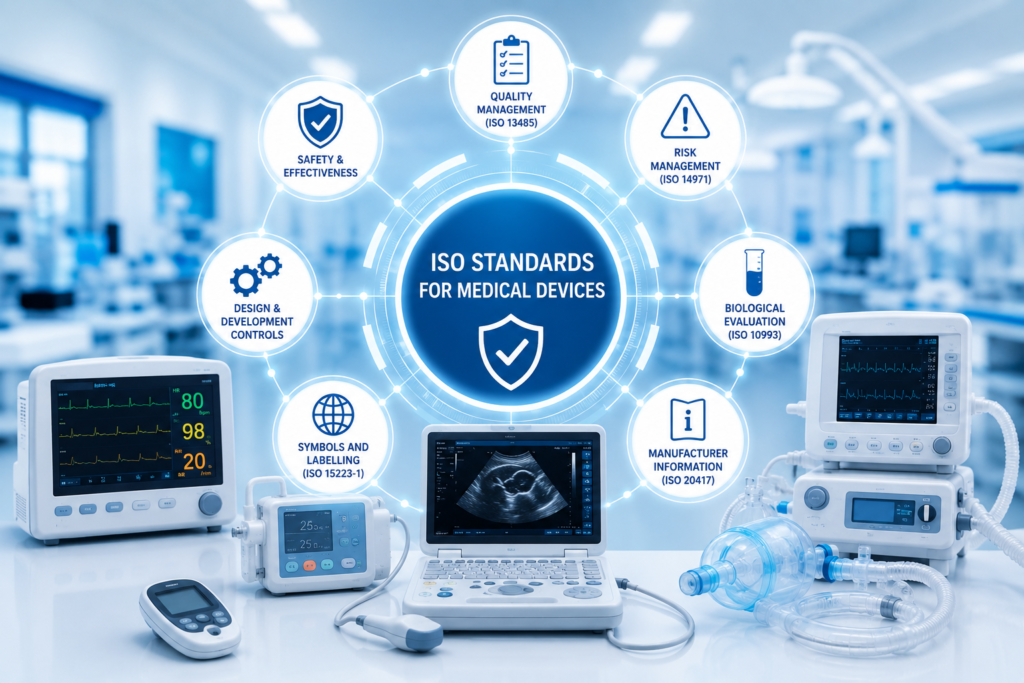

Medical devices are essential in modern healthcare, helping healthcare professionals diagnose, monitor, and treat patients effectively. Because these products directly impact patient safety, manufacturers must comply with internationally recognized quality and safety standards. ISO standards for medical devices provide a structured framework that helps organizations maintain product quality, manage risks, and meet regulatory expectations throughout the device lifecycle.
What Are ISO Standards for Medical Devices?
ISO (International Organization for Standardization) develops globally accepted standards that establish best practices for quality management, risk control, safety, and performance. In the medical device industry, these standards help manufacturers create reliable products while supporting compliance with national and international regulations.
Implementing ISO standards can improve operational efficiency, strengthen quality systems, and enhance confidence among regulators, healthcare providers, and patients.
Why ISO Standards Matter in the Medical Device Industry
The medical device sector operates under strict regulatory requirements due to the potential risks associated with product failures. ISO standards help organizations establish systematic processes to ensure devices are designed, manufactured, tested, and maintained according to recognized quality principles.
Key benefits include:
- Improved product quality and consistency
- Better risk management practices
- Enhanced patient safety
- Stronger documentation and traceability
- Increased regulatory readiness
- Greater confidence among customers and stakeholders
ISO 13485: Quality Management Systems for Medical Devices
ISO 13485 is widely recognized as the primary quality management standard for the medical device industry. It outlines requirements for establishing and maintaining an effective Quality Management System (QMS).
The standard focuses on:
- Quality planning and control
- Design and development processes
- Supplier management
- Production controls
- Corrective and preventive actions
- Documentation and record management
Organizations implementing ISO 13485 can improve process consistency while demonstrating a commitment to quality and regulatory compliance.
ISO 14971: Risk Management for Medical Devices
Risk management is a critical component of medical device development and manufacturing. ISO 14971 provides a framework for identifying, evaluating, controlling, and monitoring risks throughout the product lifecycle.
The standard helps manufacturers:
- Identify potential hazards
- Assess risks associated with device use
- Implement risk control measures
- Evaluate residual risks
- Monitor post-market performance
A structured risk management process helps reduce the likelihood of device-related incidents and supports patient safety.
ISO 10993: Biological Evaluation and Biocompatibility
Many medical devices come into contact with the human body. ISO 10993 provides guidance for evaluating the biological safety of materials used in medical devices.
Testing may include assessments for:
- Cytotoxicity
- Sensitization
- Irritation
- Systemic toxicity
- Implantation effects
The goal is to ensure that materials used in medical devices are safe for their intended purpose and do not pose unacceptable biological risks.
ISO 15223-1: Medical Device Symbols and Labeling
Medical devices are distributed globally, making standardized communication essential. ISO 15223-1 establishes internationally recognized symbols used on labels, packaging, and instructions for use.
These symbols help communicate important information regarding:
- Product identification
- Sterility status
- Storage conditions
- Expiration dates
- Safety warnings
Standardized labeling improves user understanding and supports regulatory compliance.
ISO 20417: Information Provided by Manufacturers
ISO 20417 outlines requirements for information supplied with medical devices. Accurate and comprehensive information helps users operate devices safely and effectively.
Manufacturers should provide details regarding:
- Intended use
- Product specifications
- Safety precautions
- Installation instructions
- Maintenance requirements
- Storage recommendations
Clear documentation contributes to both compliance and patient safety.
Design Controls and Product Development
ISO standards emphasize structured design and development processes. Manufacturers should establish procedures for planning, reviewing, verifying, and validating product designs before commercialization.
Effective design controls help ensure that devices:
- Meet intended performance requirements
- Address user needs
- Comply with applicable regulations
- Maintain safety and effectiveness throughout their lifecycle
Supplier and Manufacturing Controls
Medical device quality often depends on the quality of supplied materials and components. ISO standards encourage organizations to implement supplier qualification and monitoring procedures.
Important activities include:
- Supplier evaluation
- Performance monitoring
- Purchasing controls
- Traceability management
- Quality inspections
Strong supplier management contributes to a reliable and compliant supply chain.
Internal Audits and Continuous Improvement
Regular internal audits help organizations evaluate the effectiveness of their quality management systems and identify opportunities for improvement.
Internal audits can help detect:
- Process inefficiencies
- Documentation gaps
- Training needs
- Compliance risks
Continuous improvement ensures that quality systems remain effective as regulations and industry expectations evolve.
How Professional Guidance Can Help
Implementing ISO standards often involves extensive documentation, process development, employee training, and ongoing compliance monitoring. Regulatory consulting organizations such as Tracc Global support medical device manufacturers by providing guidance on quality management systems, risk management practices, internal audits, technical documentation, and regulatory compliance strategies.
Expert support can help organizations better understand applicable standards, identify compliance gaps, and prepare for certification or regulatory inspections more efficiently.
Conclusion
ISO standards serve as the foundation of quality, safety, and compliance within the medical device industry. Standards such as ISO 13485, ISO 14971, ISO 10993, ISO 15223-1, and ISO 20417 provide valuable guidance for managing quality systems, controlling risks, ensuring product safety, and supporting regulatory requirements.
By implementing these standards effectively, medical device manufacturers can improve product reliability, strengthen patient safety, and enhance their ability to compete in global healthcare markets. A well-managed quality system remains one of the most important investments for long-term success in the medical device industry.
Last Update: June 23, 2026