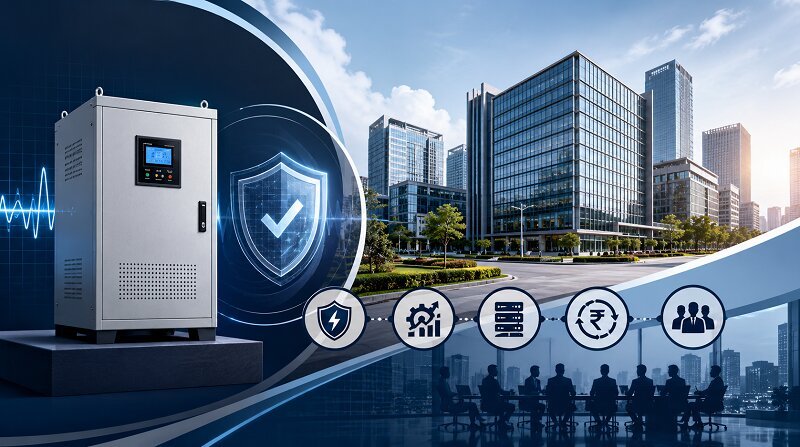

Large companies rely on a wide array of electrical machines and equipment to operate smoothly. Heavy industrial machinery, lighting, fans, and other devices all require a consistent power supply. However, power fluctuations are common – especially when machines are switched on and off frequently – and these can disrupt operations or even damage equipment. Servo voltage stabilizers are essential devices designed to solve this problem. They automatically monitor and correct voltage variations, ensuring that every machine receives the proper voltage it needs. This protection makes servo stabilizers indispensable in the day-to-day operations of big companies.
What Is a Servo Voltage Stabilizer?
A servo voltage stabilizer is an electronic device used to control and stabilize the power supply. Internally, it contains a motorized transformer that adjusts voltage levels. When the input voltage from the power source rises or falls, the stabilizer senses the change and uses its motor to modify the transformer’s output. This keeps the output voltage within the desired range. Manufacturers focus on high-quality engineering and materials when building these stabilizers. Because of their reliable performance, servo stabilizers have become basic necessities for large companies that demand uninterrupted and safe power.
Why Big Companies Need Servo Stabilizers
Big companies operate expensive and sensitive equipment that cannot tolerate unstable power. Even though machines can technically run without a stabilizer, frequent switching or sudden voltage spikes can cause:
- Frequent Interruptions:Sudden on/off cycles in equipment lead to voltage swings.
- Equipment Damage:High or low voltage can fry electronic circuits or burn out motors.
- Reduced Productivity:Fluctuations can cause unexpected shutdowns or malfunctions.
Servo voltage stabilizers prevent these issues by ensuring a steady voltage supply. By correcting fluctuations in real time, they keep machinery running safely and efficiently. In this way, stabilizers protect investments in equipment and help maintain consistent productivity in large-scale operations.
How a Servo Stabilizer Works
The core of a servo stabilizer is its Automatic Voltage Regulator (AVR) and servo motor. Together, they continuously monitor input voltage and adjust the output. Here’s how they work:
- Automatic Monitoring:The AVR constantly senses the incoming voltage from the power grid.
- Microprocessor Feedback:A microprocessor processes this information and determines if the voltage is too high or too low.
- Motorized Adjustment:If adjustment is needed, the stabilizer’s servo motor moves the transformer’s arm or winding position, changing the output voltage.
- Stable Output:Thanks to this feedback loop, the output voltage is kept at the desired level even when the input fluctuates.
These mechanisms ensure the stabilizer responds quickly. Additionally, many stabilizers include an AC synchronize component. This unit fine-tunes the transformer’s output, further improving stability and precision. In practice, this means the stabilizer delivers a smooth, steady voltage that prevents shocks and surges from reaching company equipment.
Key Features and Reliability
Servo voltage stabilizers are built with quality and performance in mind. Key features include:
- High-Quality Components:Skilled engineers use durable materials and precise parts to handle rapid voltage changes. This ensures a fast response whenever fluctuations occur.
- Automatic Voltage Regulation:Built-in microprocessors and feedback circuits allow automatic correction without human intervention. This makes the stabilizer reliable for continuous use.
- AC Synchronizer:An added synchronizing circuit enhances accuracy by aligning the transformer output perfectly with the voltage requirements.
- Rigorous Testing and R&D:Companies continuously improve stabilizer designs. R&D teams refine the technology, resulting in devices that are both efficient and long-lasting.
Together, these features mean servo stabilizers not only maintain stable voltage but also do so consistently over time. Their reliability helps save power and boost productivity, as machines run smoothly without damage or wear caused by unstable electricity.
Read Also: The Role of Servo Voltage Stabilizers in Safe Elevator Performance
Benefits of Using a Servo Stabilizer
Installing a servo voltage stabilizer offers several clear advantages for big companies:
- Protects Equipment:It prevents damage from voltage spikes or drops, extending the lifespan of machinery and electronics.
- Ensures Consistent Performance:With stabilized voltage, equipment runs at its optimal level without unexpected failures.
- Reduces Energy Waste:By correcting over-voltages, the stabilizer can help lower overall power consumption, contributing to energy savings.
- Improves Productivity:Fewer power-related interruptions mean smoother operations and less downtime in production.
- Cost-Effective:While there is an initial investment, companies often find that servo stabilizers pay for themselves by avoiding repair costs and lost production time.
After comparing various stabilizers on the market, many experts and engineers recommend servo voltage stabilizers for critical applications. Their ability to handle wide input variations makes them a preferred choice in industrial and commercial settings.
Purchasing a Servo Voltage Stabilizer
When selecting a stabilizer, it’s important to choose a reputable manufacturer. For example, Shakti Electronics offers a range of servo voltage stabilizers and transformers known for quality and affordability. These stabilizers are designed with genuine, reliable components and come with ongoing service support. There are many transformer and stabilizer manufacturers across India. In any case, investing in a well-built servo voltage stabilizer will safeguard your company’s electrical systems, ensuring stable power and protecting your equipment for years to come.