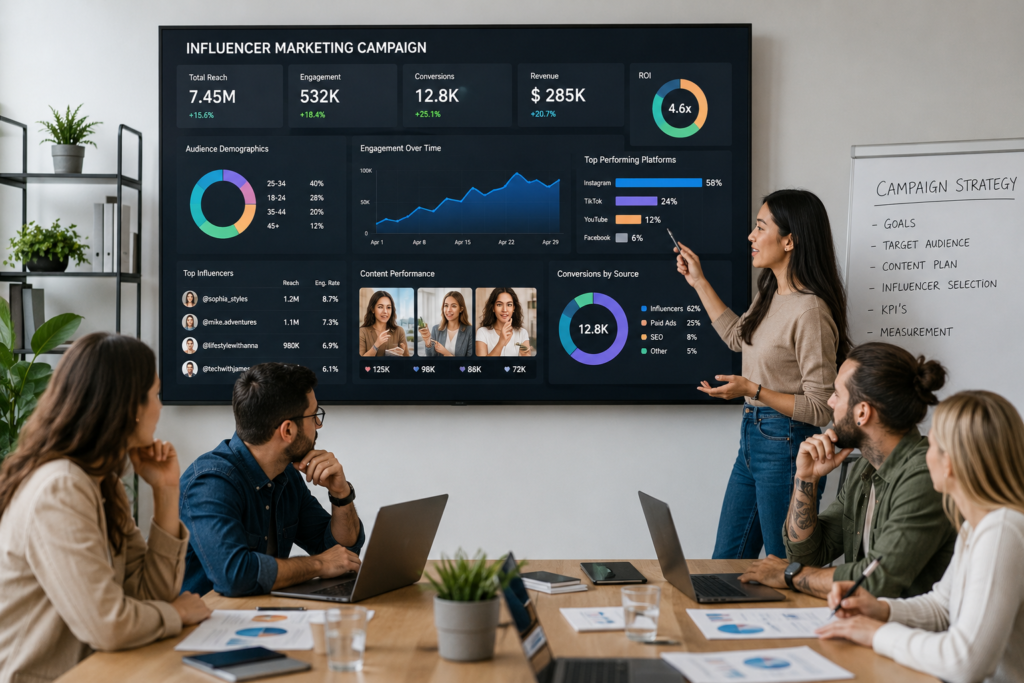

Why Influencer Marketing Has Evolved Into a Performance Strategy for Modern Digital Agencies
Introduction
Influencer marketing has changed significantly over the past few years. What was once viewed mainly as sponsored social media posts has developed into a measurable marketing channel that supports business growth. Today, successful campaigns are planned around clear objectives, audience insights, and performance data rather than simply increasing visibility.
This shift has encouraged digital agencies to rethink how they work with creators. Instead of focusing solely on follower numbers or viral content, agencies now build long-term creator partnerships that support brand awareness, customer engagement, and measurable conversions.
Modern influencer campaigns rarely operate in isolation. They are often integrated with SEO, paid advertising, content marketing, email marketing, and social commerce to create a consistent customer journey. This connected approach enables businesses to understand how influencer activity contributes to wider marketing objectives and long-term growth.
Understanding why influencer marketing continues to evolve helps agencies develop campaigns that generate meaningful business results instead of relying on vanity metrics alone.
Quick Summary
Influencer marketing is now a measurable performance channel rather than simply a brand awareness tactic. By combining authentic creator partnerships with audience research, campaign attribution, performance analytics, and continuous optimisation, digital agencies can improve engagement, strengthen customer trust, and achieve measurable business outcomes.
What Is Influencer Marketing and Why Does It Still Work?
Influencer marketing is a strategy in which businesses collaborate with individuals who have established trust and influence within a particular audience. These creators promote products, services, or ideas through authentic content that reflects their own style and relationship with their followers.
Unlike traditional advertising, influencer marketing focuses on recommendations from trusted voices rather than direct promotional messaging. This approach often feels more natural because audiences choose to follow creators whose opinions and experiences they value.
What Influencer Marketing Means
At its core, influencer marketing is about building meaningful connections between brands and consumers through trusted creators.
These creators may include:
- Industry specialists
- Content creators
- Bloggers
- Video creators
- Subject matter experts
- Community leaders
Their influence comes from audience trust rather than celebrity status alone.
Why Creator Recommendations Influence Buying Decisions
People are more likely to consider recommendations from individuals they already trust. When creators share genuine experiences, audiences often perceive their content as more relatable than conventional advertising.
This trust can influence different stages of the buying journey, including:
- Discovering new products or services
- Comparing available options
- Building confidence before making a purchase
- Encouraging repeat engagement with a brand
For this reason, influencer marketing continues to play an important role in helping businesses connect with potential customers.
The Psychology Behind Audience Trust
Trust develops over time through consistent, authentic communication. Successful creators build communities by sharing useful information, honest opinions, and personal experiences rather than constant promotional content.
This ongoing relationship helps audiences feel more confident when creators recommend products or services that align with their interests.
For agencies, selecting creators whose values genuinely match a brand is often more valuable than simply choosing those with the largest audience.
Influencer Marketing in the Modern Customer Journey
Today’s customer journey rarely follows a straight path. A potential customer may first discover a brand through creator content, research it through search engines, compare reviews, and finally complete a purchase after seeing additional marketing messages.
Because of this, influencer marketing now works alongside other digital channels, including:
- Search engine optimisation (SEO)
- Paid media campaigns
- Content marketing
- Email marketing
- Social commerce
When these channels support one another, agencies can build more consistent customer experiences while measuring how influencer activity contributes to wider business objectives.
Why Influencer Marketing Has Become Part of Performance Marketing
Modern digital agencies increasingly treat influencer marketing as part of their wider performance marketing strategy because campaigns can now be measured against specific business outcomes rather than awareness alone.
Instead of asking how many people viewed a campaign, agencies now evaluate questions such as:
- Did the campaign generate qualified website traffic?
- Did it increase conversions?
- Did it improve customer acquisition?
- Did it contribute to long-term customer value?
This shift has transformed creator partnerships into measurable marketing assets.
Performance-focused influencer campaigns are typically built around:
- Clearly defined business objectives
- Audience-first planning
- Conversion-focused creator partnerships
- Campaign attribution
- Continuous performance optimisation
- Revenue-focused reporting
As tracking technology and analytics continue to improve, agencies are increasingly able to connect influencer activity with measurable business performance, making influencer marketing an important part of a broader digital marketing strategy.
Why Some Influencer Campaigns Hit a Performance Ceiling
Not every influencer marketing campaign delivers meaningful business results. While some campaigns generate strong engagement and measurable conversions, others struggle to produce value despite significant investment.
In many cases, the problem is not influencer marketing itself. It is how the campaign has been planned, executed, and measured.
Understanding the following challenges helps digital agencies avoid common mistakes and improve campaign performance.
Choosing Creators Based Only on Follower Count
One of the most common mistakes is selecting creators purely because they have a large audience.
Although a high follower count may increase visibility, it does not necessarily lead to stronger engagement or better conversions.
Potential issues include:
- Low audience engagement
- Poor conversion rates
- Fake or inactive followers
- Weak campaign return on investment (ROI)
Many smaller creators with highly engaged communities often produce better results because their audiences have greater trust in their recommendations.
For this reason, successful influencer partnerships should be based on audience quality rather than audience size.
Ignoring Audience Intent
Even an experienced creator may produce disappointing results if their audience does not match the campaign objectives.
For example, a creator may generate:
- High impressions
- Large numbers of video views
- Strong engagement
Yet produce very few enquiries or sales because their audience is not actively looking for the product or service being promoted.
Before launching a campaign, agencies should evaluate:
- Audience demographics
- Interests
- Purchasing behaviour
- Geographic location
- Stage of the customer journey
Matching the right creator with the right audience improves both campaign relevance and overall influencer marketing effectiveness.
One-Off Campaigns Instead of Long-Term Partnerships
Many brands still approach influencer marketing as a single promotional activity.
While one-off campaigns may create short-term awareness, they rarely build lasting trust or sustained engagement.
Long-term creator partnerships offer several advantages:
- More authentic recommendations
- Greater audience familiarity
- Consistent brand messaging
- Stronger customer trust
- Improved long-term performance
When creators regularly work with the same brand, their audience is more likely to view the partnership as genuine rather than purely promotional.
Measuring Vanity Metrics Instead of Business Outcomes
High engagement does not always indicate campaign success.
Metrics such as:
- Likes
- Views
- Shares
- Comments
can provide useful insights, but they should not be the only measures of performance.
Modern digital agencies increasingly focus on business outcomes, including:
- Website traffic
- Qualified leads
- Sales conversions
- Revenue generated
- Customer acquisition cost
- Return on investment
Using influencer analytics and campaign attribution tools helps agencies understand how creator activity contributes to measurable business growth rather than simply reporting impressive-looking numbers.
How Influencer Marketing Builds Brand Awareness Better Than Traditional Advertising
Traditional advertising often interrupts the customer experience with promotional messages. Influencer marketing takes a different approach by introducing products and services through trusted creators who have already established relationships with their audiences.
This difference explains why influencer marketing continues to be an effective channel for building long-term brand awareness.
Human Storytelling
Creators naturally communicate through personal experiences.
Instead of presenting scripted advertising, they often demonstrate how a product fits into their everyday lives. This storytelling approach makes content feel more authentic and easier for audiences to relate to.
Community Engagement
Unlike traditional advertising, influencer content encourages ongoing conversations.
Followers frequently:
- Ask questions
- Share opinions
- Discuss personal experiences
- Recommend products to others
This interaction creates stronger engagement than many conventional advertising formats.
Authentic Recommendations
People are generally more receptive to recommendations from individuals they already trust.
When creators explain how they genuinely use a product or service, audiences often perceive the recommendation as more credible than a traditional advertisement.
This trust is one of the main reasons authentic influencer marketing continues to perform well across many industries.
Social Proof
Seeing trusted creators use a product provides valuable social proof.
When potential customers observe others using and recommending a brand, it can increase confidence during the buying process and reduce uncertainty before making a purchase.
Stronger Brand Recall
Stories, experiences, and educational content are often remembered more easily than display advertisements.
As a result, influencer campaigns frequently improve:
- Brand recognition
- Brand recall
- Customer trust
- Audience loyalty
Traditional Advertising vs Influencer Marketing
| Traditional Advertising | Influencer Marketing |
| Brand-led messaging | Creator-led storytelling |
| Promotional communication | Authentic recommendations |
| Broad audience targeting | Community-focused engagement |
| Limited interaction | Two-way conversations |
| Short-term exposure | Long-term audience relationships |
Rather than replacing traditional advertising, influencer marketing strategy often complements other digital channels by adding credibility, trust, and authentic engagement throughout the customer journey.
Why Influencer Marketing Often Outperforms Other Marketing Strategies
Every digital marketing channel has its strengths. However, influencer marketing often delivers stronger engagement and higher-quality customer interactions because it is built on trust rather than interruption.
Instead of relying solely on paid exposure, influencer campaigns introduce brands through creators who have already established credibility with their audiences.
Influencer Marketing vs Display Advertising
Display advertising is effective for increasing visibility, but many users ignore banner adverts or use ad-blocking software.
Influencer marketing takes a different approach by integrating products and services into content that audiences actively choose to watch, read, or engage with.
This often results in:
- Higher audience engagement
- Better brand recall
- More meaningful customer interactions
Influencer Marketing vs Paid Social
Paid social campaigns provide precise audience targeting and quick results. However, they can sometimes feel promotional.
Influencer content often appears more authentic because it is presented through trusted creators rather than directly from the brand.
For many businesses, combining paid social with influencer marketing produces stronger overall campaign performance.
Influencer Marketing vs Organic Social
Organic social media helps brands build relationships with existing followers, but reaching new audiences can become increasingly difficult due to changing platform algorithms.
Influencers already have established communities, allowing brands to reach relevant audiences more efficiently through trusted recommendations.
Influencer Marketing vs Traditional Endorsements
Traditional celebrity endorsements can generate awareness, but they do not always create meaningful engagement.
Modern creators often maintain closer relationships with their communities through regular conversations, educational content, and ongoing interaction.
This stronger connection frequently leads to:
- Higher engagement
- Greater audience trust
- Better conversion quality
Influencer Marketing vs Email Marketing
Email marketing remains one of the most effective retention channels for existing customers.
Influencer marketing complements email by introducing brands to new audiences who may later enter the customer journey through email campaigns, remarketing, or other digital channels.
Rather than replacing existing marketing strategies, influencer marketing strengthens the overall marketing mix by supporting awareness, engagement, and customer acquisition.
How Digital Agencies Can Build High-Performing Influencer Campaigns
Successful campaigns are built on careful planning rather than simply selecting popular creators.
The following framework helps agencies improve campaign performance and generate measurable business outcomes.
Step 1: Define Measurable Business Goals
Every campaign should begin with clear objectives.
These may include:
- Increasing website traffic
- Generating qualified leads
- Growing online sales
- Improving brand awareness
- Increasing customer retention
Clear goals make campaign performance easier to evaluate.
Step 2: Identify Audience Intent
Understanding audience intent helps agencies match creators with people who are most likely to engage and convert.
Key considerations include:
- Demographics
- Interests
- Online behaviour
- Purchasing intent
- Customer journey stage
Step 3: Research Creators Beyond Follower Count
Follower numbers provide only limited insight.
Agencies should also review:
- Audience quality
- Engagement rate
- Previous brand collaborations
- Content quality
- Brand suitability
- Community trust
Step 4: Evaluate Engagement Quality
Strong engagement is about meaningful interaction rather than large numbers.
Useful indicators include:
- Genuine comments
- Audience discussions
- Saved content
- Repeat engagement
- Community participation
Step 5: Build Authentic Partnerships
Long-term creator relationships generally produce more consistent results than isolated sponsored posts.
Ongoing partnerships help strengthen:
- Audience trust
- Brand consistency
- Campaign performance
- Customer loyalty
Step 6: Track Campaign KPIs
Campaign performance should be measured using business-focused metrics such as:
- Website visits
- Conversion rate
- Cost per acquisition
- Revenue generated
- Return on investment
- Customer lifetime value
Step 7: Optimise Using Performance Data
Campaign optimisation should continue after publication.
Performance insights allow agencies to:
- Improve creator selection
- Refine audience targeting
- Adjust campaign messaging
- Allocate budgets more effectively
- Improve future campaign performance
Common Influencer Marketing Mistakes That Reduce ROI
Many campaigns fail to achieve their potential because agencies focus on visibility rather than measurable business outcomes.
Common mistakes include:
- Prioritising reach over audience relevance
- Selecting creators without analysing audience quality
- Failing to establish a campaign attribution model
- Providing unclear creative briefs
- Ignoring advertising disclosure requirements
- Failing to optimise campaigns after launch
- Overlooking opportunities to repurpose creator content across other marketing channels
Avoiding these mistakes helps improve campaign efficiency while supporting stronger long-term returns.
Current Influencer Marketing Trends Shaping Digital Agencies
Influencer marketing continues to evolve as consumer behaviour, technology, and social platforms change. Modern digital agencies are adopting more sophisticated strategies that prioritise measurable outcomes, authentic relationships, and long-term brand value.
Understanding these trends helps businesses remain competitive while creating campaigns that resonate with today’s audiences.
AI-Powered Influencer Discovery
Artificial intelligence is transforming how agencies identify suitable creators. Instead of relying on manual research, AI-powered tools analyse audience demographics, engagement quality, content relevance, and historical campaign performance.
This allows agencies to identify creators whose audiences genuinely align with a brand’s objectives, reducing the risk of ineffective partnerships.
The Rise of Micro and Nano Influencers
Brands are increasingly collaborating with micro and nano influencers rather than focusing exclusively on creators with millions of followers.
These smaller creators often have:
- Highly engaged communities
- Stronger audience trust
- More authentic conversations
- Better niche expertise
Although their audiences are smaller, engagement rates are frequently higher, making them valuable partners for performance-focused campaigns.
Employee-Generated Content
Businesses are also recognising the value of their own employees as trusted brand advocates.
Employee-generated content adds authenticity by showcasing real workplace experiences, industry knowledge, and company culture, helping brands build stronger credibility with prospective customers.
Creator-Led Communities
Successful creators now build communities rather than simply attracting followers.
These communities encourage ongoing conversations through newsletters, private groups, live streams, podcasts, and exclusive content, giving brands opportunities to engage with highly committed audiences.
Social Commerce Continues to Grow
The growth of social commerce has shortened the path from discovery to purchase.
Consumers can increasingly explore products, read creator recommendations, and complete purchases without leaving social media platforms.
For digital agencies, this creates new opportunities to connect influencer campaigns directly with measurable sales performance.
Video-First Content
Short-form and long-form video continue to dominate digital engagement.
Educational videos, product demonstrations, tutorials, interviews, and behind-the-scenes content often generate stronger engagement than static images because they provide greater value and encourage longer viewing times.
First-Party Performance Data
As privacy regulations continue to evolve, agencies are placing greater emphasis on first-party data collected through their own marketing channels.
This improves campaign measurement while supporting more accurate attribution and optimisation.
Cross-Platform Creator Ecosystems
Many creators now build audiences across several platforms rather than relying on a single social network.
This allows brands to maintain consistent messaging while reaching audiences through multiple touchpoints, improving campaign effectiveness.
Long-Term Ambassador Programmes
Instead of commissioning isolated sponsored posts, many agencies now develop long-term ambassador programmes.
These ongoing partnerships strengthen:
- Audience trust
- Brand consistency
- Customer loyalty
- Campaign efficiency
- Long-term return on investment
A Future-Proof Influencer Marketing Framework for Digital Agencies
As influencer marketing becomes increasingly data-driven, agencies benefit from following a structured framework that supports consistent performance and sustainable growth.
1. Build an Audience-First Strategy
Every successful campaign begins with understanding the target audience rather than selecting creators first.
Research should include:
- Customer needs
- Buying behaviour
- Interests
- Demographics
- Preferred platforms
2. Create a Creator Qualification Checklist
Before forming any partnership, agencies should evaluate:
- Audience authenticity
- Engagement quality
- Brand alignment
- Content consistency
- Professional reputation
- Previous campaign performance
3. Establish Performance KPIs
Every campaign should include measurable indicators such as:
- Website traffic
- Lead generation
- Sales conversions
- Revenue
- Cost per acquisition
- Customer lifetime value
- Influencer marketing ROI
4. Implement a Clear Attribution Model
Reliable attribution allows agencies to understand how influencer activity contributes to wider marketing objectives.
This may include:
- UTM tracking
- Conversion tracking
- Affiliate links
- Promotional codes
- CRM reporting
- Multi-touch attribution
5. Protect Brand Safety
Every partnership should include a review of:
- Content quality
- Brand values
- Advertising compliance
- Audience suitability
- Reputation risks
A structured review process helps minimise potential issues before campaigns go live.
6. Develop a Content Approval Workflow
Clear communication benefits both brands and creators.
An effective workflow should define:
- Campaign objectives
- Creative expectations
- Approval timelines
- Legal requirements
- Publishing schedules
Providing creators with creative freedom while maintaining brand consistency often produces the strongest results.
7. Build a Reporting Dashboard
Campaign reports should focus on business outcomes rather than vanity metrics.
Useful reporting categories include:
- Engagement quality
- Website performance
- Lead generation
- Revenue attribution
- Return on investment
- Campaign insights
- Recommendations for future optimisation
8. Optimise Continuously
High-performing agencies treat every campaign as an opportunity to learn.
Regular analysis allows teams to refine creator selection, improve audience targeting, strengthen messaging, and increase overall campaign performance over time.
Conclusion
Influencer marketing has evolved far beyond its origins as a brand awareness tactic. Today, it plays a central role in performance marketing by combining authentic creator relationships with measurable business objectives, campaign attribution, and continuous optimisation.
For modern digital agencies, success depends on much more than partnering with creators who have large followings. Sustainable growth comes from understanding audience intent, building long-term creator partnerships, monitoring meaningful performance indicators, and refining campaigns using reliable data.
As the creator economy continues to expand, businesses that prioritise trust, transparency, and measurable outcomes will be better positioned to strengthen customer relationships and achieve lasting returns on their marketing investment.
Frequently Asked Questions
1. What is influencer marketing, and how does it work?
Influencer marketing is a strategy where brands collaborate with trusted creators to promote products or services. These creators share authentic content with engaged audiences, helping businesses increase awareness, build trust, and encourage purchasing decisions.
2. Is influencer marketing considered part of performance marketing?
Yes. Modern influencer marketing is increasingly integrated into performance marketing because agencies can track campaign objectives such as website traffic, lead generation, conversions, revenue, and return on investment using advanced analytics and attribution tools.
3. Why do some influencer marketing campaigns fail to deliver results?
Campaigns often underperform when agencies focus solely on follower count, ignore audience relevance, fail to define measurable goals, rely on vanity metrics, or choose one-off partnerships instead of building long-term creator relationships.
4. How does influencer marketing improve brand awareness and customer trust?
Influencer marketing improves awareness through authentic storytelling and trusted recommendations. Because creators have established relationships with their audiences, their endorsements often feel more credible than traditional advertising, encouraging stronger engagement and brand recall.
5. What metrics should digital agencies use to measure influencer marketing ROI?
Agencies should monitor website traffic, engagement quality, conversion rate, lead generation, revenue, customer acquisition cost, customer lifetime value, and overall return on investment rather than relying only on likes or impressions.
6. What are the latest influencer marketing trends businesses should follow?
Key trends include AI-powered influencer discovery, micro and nano influencers, social commerce, video-first content, creator-led communities, employee-generated content, first-party data strategies, and long-term ambassador programmes.
7. How can digital agencies build long-term influencer partnerships that drive sustainable growth?
Agencies should prioritise audience alignment, establish clear campaign objectives, communicate openly with creators, provide creative flexibility, measure business outcomes, and optimise campaigns continuously to build partnerships that deliver consistent long-term value.
If you’re looking to build data-driven influencer campaigns that generate measurable business growth, strengthen audience trust, and improve long-term marketing performance, partnering with an experienced Skoma Digital Marketing Agency can help you develop strategies tailored to your business goals.