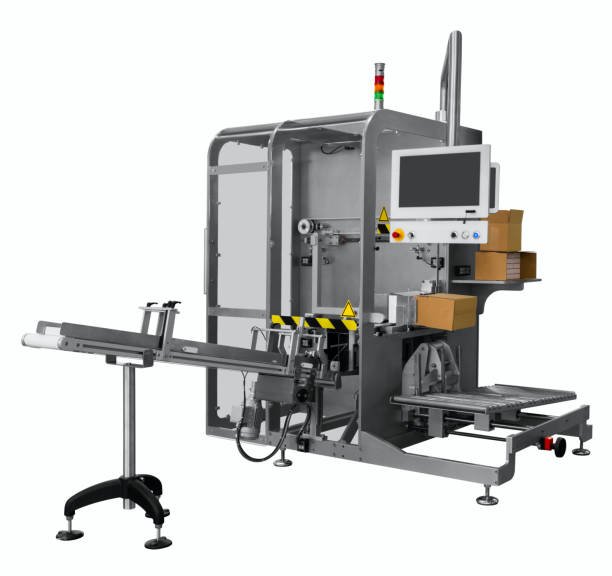

In many industries, packaging bulk materials like powders, grains, fertilizer, cement, or plastic pellets is often slow, labor-intensive, and prone to weighing errors. Companies frequently struggle with inconsistent bag weights, high labor costs, dust pollution, and production delays. These issues directly affect productivity and profit margins.
A semi-automatic bagging machine offers a practical and efficient solution by combining manual bag placement with automated weighing and filling control. It significantly improves accuracy, speed, and workplace safety while keeping operational flexibility. Our brand, Bagging Machines, focuses on delivering reliable and high-performance packaging solutions designed for modern industrial needs.
Bagging Machine
What is a semi-automatic bagging machine?
A semi-automatic bagging machine is an industrial packaging system designed to fill pre-opened bags with a controlled quantity of material. Unlike fully manual systems, it uses electronic weighing sensors, PLC control, and material feeding mechanisms to ensure precise filling while still requiring minimal operator involvement.
It is widely used for granular materials, powdered substances, and free-flowing products across industries such as agriculture, construction, chemicals, and food processing.
Key Features of Semi-Automatic Bagging System
High-Precision Weighing System
The machine integrates digital load cells that provide accurate and stable weighing results. Features like automatic tare correction and zero calibration help maintain consistency in every bag.
PLC Control System
A user-friendly PLC interface allows operators to control filling speed, weight settings, and process monitoring, improving operational efficiency and reducing human error.
Efficient Filling Performance
Designed for medium to high output operations, the system ensures stable filling speed while maintaining weighing accuracy, making it ideal for continuous production lines.
Dust-Free Operation
An integrated dust collection or extraction unit reduces airborne particles during filling, improving workplace safety and cleanliness.
Flexible Bag Handling
The system supports different bag sizes and materials, offering adjustable clamps and filling heights for various industrial applications.
How Does a Semi-Automatic Bagging Machine Work?
The working process is simple yet highly efficient:
- Bag Placement—The operator places an empty bag onto the filling spout.
- Clamping System Activation—The machine secures the bag to prevent leakage.
- Material Feeding—Products are fed through gravity or screw feeding systems depending on material type.
- Weighing Control—Load cells continuously monitor weight in real time.
- Automatic Stop – Once the target weight is reached, feeding stops instantly.
- Bag Removal—The filled bag is manually removed or transferred via conveyor.
This hybrid automation ensures speed without sacrificing human control where needed.
Industrial Applications
Semi-automatic bagging machines are widely used across multiple sectors:
- Construction Industry: Cement, sand, gypsum, and lime
- Agriculture & Feed Industry: Grain, rice, wheat, animal feed
- Chemical Industry: Fertilizers, PVC powder, detergents
- Manufacturing & Mining: Plastic pellets, minerals, ores
- Food Processing: Flour, sugar, starch, and spices
Advantages of Semi-Automatic Bagging Machine
Improved Efficiency
Reduces manual effort and increases packaging speed, helping businesses meet production targets easily.
Cost-Effective Operation
Lowers labor requirements while minimizing material wastage through precise weighing.
Accurate Weight Control
Ensures consistent bag weights, improving product quality and customer satisfaction.
Cleaner Working Environment
Dust control systems help maintain hygiene and reduce health risks for operators.
Easy Maintenance
Simple mechanical design and high-quality components ensure long-term durability and low maintenance costs.
Why Choose a Bagging Machines Brand?
At Bagging Machines, we focus on delivering industrial-grade solutions designed for reliability, precision, and performance. Our engineering team specializes in customized bagging systems tailored to different material types and production capacities.
We follow strict quality control standards, ensuring each semi-automatic bagging machine performs efficiently in demanding industrial environments. With years of expertise in packaging technology, we support clients with installation guidance, technical support, and after-sales service.
Conclusion
The semi-automatic bagging machine is an essential solution for industries that require efficient, accurate, and cost-effective packaging. It bridges the gap between manual labor and full automation, offering the perfect balance of control and productivity.
By investing in advanced bagging technology from Bagging Machines, industries can improve operational efficiency, reduce costs, and ensure consistent product quality. Whether handling powders, granules, or bulk materials, this machine is a reliable choice for modern production facilities.
FAQs
- What materials can a semi-automatic bagging machine handle?
It handles powders, grains, fertilizers, cement, chemicals, and plastic pellets with stable weighing and smooth filling performance. - How accurate is a semi-automatic bagging system?
It offers high precision with load cell technology, ensuring consistent weight accuracy and reducing product loss in every bag filled. - Is this machine suitable for small businesses?
Yes, it is ideal for small to medium operations due to its flexible design, lower cost, and easy operational requirements. - What is the maintenance requirement of this machine?
Maintenance is minimal, mainly routine cleaning and occasional calibration to ensure long-term stable performance and accuracy. - Can the machine be customized?
Yes, it can be customized for material type, bag size, filling speed, and production capacity according to industrial needs.