

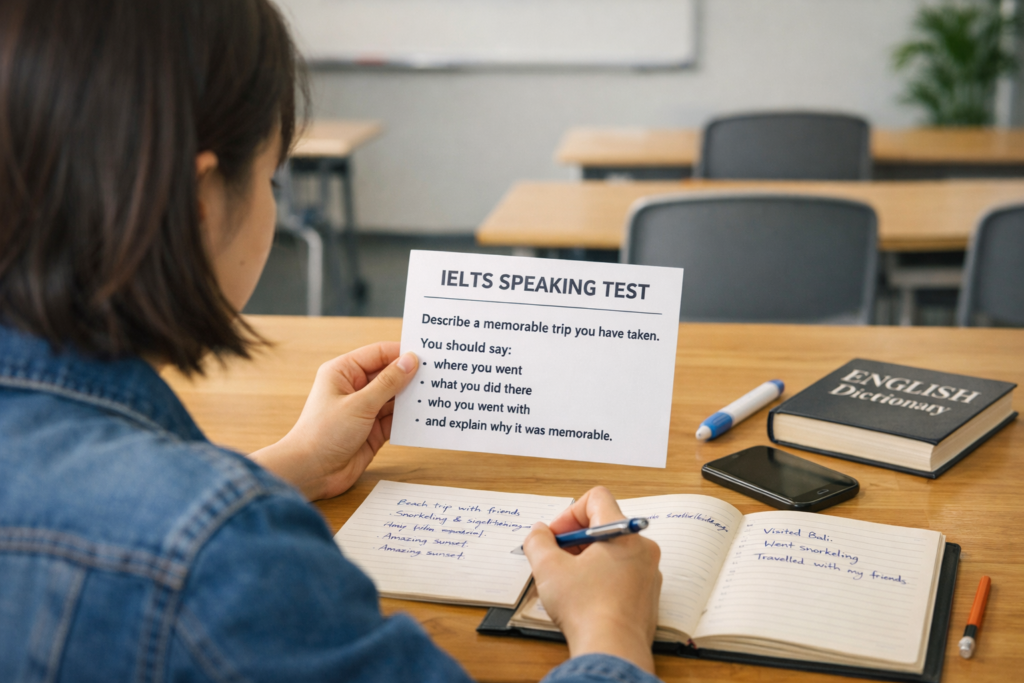

Learning how to answer IELTS speaking topics in a clear way is important for good performance in the test. Many students know vocabulary and grammar but still face difficulty when speaking for two minutes. One common reason is poor answer structure. In the IELTS Speaking Part 2 section, candidates receive cue cards with a topic and a few points to discuss. A proper structure helps ideas flow naturally and makes speaking easier.
Understanding IELTS Cue Cards
In the IELTS Speaking test, Part 2 includes a task where the examiner gives a topic card. These cue cards usually contain a main topic and 3 to 4 prompts. Candidates get one minute to prepare and then speak for up to two minutes.
The topic may ask about a person, place, object, experience, or event. Many students become nervous because they do not know how to organize their thoughts. A simple speaking pattern can make answers more clear and natural.
Why Structure Matters in Cue Cards
A well-structured answer helps candidates stay focused while speaking. Without structure, many students repeat the same ideas or stop speaking early. Good organization also improves fluency because ideas connect smoothly.
Using a clear format for cue cards can help with:
- Better time management
- More natural speaking flow
- Fewer long pauses
- Easier idea development
- Improved confidence during speaking
A structured answer also helps the listener understand the response clearly.
Start with a Simple Introduction
The first few lines should introduce the topic naturally. Candidates do not need difficult vocabulary at the beginning. A simple opening sentence is enough.
For example, if the topic is about a memorable trip, the introduction can include:
- Where the trip happened
- When it happened
- Who went there
This opening helps build the answer slowly and gives a clear direction for the rest of the response.
Follow the Cue Card Prompts
Most IELTS cue cards include small bullet points. These prompts guide the answer. Many students ignore them and speak randomly, which can affect fluency.
A better method is to answer each point one by one. This creates a natural structure and helps the speaker continue talking without confusion.
For example, if the prompts ask:
- What the place was
- Who you visited with
- What you did there
- Why it was memorable
Candidates should discuss these points in order. This keeps the response organized.
Use the Past, Present, or Future Correctly
Grammar plays an important role in speaking. Different cue cards require different tenses. Understanding the time of the topic makes answers more accurate.
If the topic is about a past experience, use past tense naturally. If it asks about future plans, use future tense. Mixing tenses too much can confuse the listener.
Simple grammar is often more effective than very difficult sentence patterns. Clear communication is more important than complicated language.
Add Small Details Naturally
Many students finish speaking too quickly because they only answer the prompts directly. Adding small details helps extend the answer smoothly.
Simple details may include:
- Feelings and emotions
- Weather or surroundings
- Personal opinions
- Small memories connected to the topic
For example, while speaking about a festival, candidates can mention the atmosphere, food, music, or people around them. These small additions make answers more natural.
Keep a Logical Flow
One important skill in IELTS speaking is connecting ideas properly. Jumping from one point to another can make the response difficult to follow.
Candidates should use simple connecting words like:
- First
- After that
- Later
- Because
- Finally
These linking words improve the flow of cue cards answers without making speech sound unnatural.
Practice Speaking for Two Minutes
Many students stop after one minute because they run out of ideas. Regular practice helps improve speaking length and confidence.
A good exercise is to choose random cue cards and practice speaking with a timer. At first, students may struggle, but daily speaking practice improves fluency over time.
Recording practice sessions can also help identify:
- Repeated words
- Long pauses
- Grammar mistakes
- Speaking speed problems
Listening to recordings allows students to notice areas that need improvement.
Avoid Memorized Answers
Some candidates try to memorize full answers for common IELTS cue cards. This can create problems during the actual test because examiners can often notice memorized speaking patterns.
Instead of memorizing complete responses, it is better to learn flexible speaking structures. This allows candidates to adapt easily to different topics.
Natural speaking sounds more genuine and helps maintain fluency during unexpected questions.
Focus on Clear Pronunciation
Good pronunciation does not mean speaking with a foreign accent. Clear speaking is more important. Candidates should pronounce words carefully and avoid speaking too fast.
While practicing cue cards, students should focus on:
- Clear word pronunciation
- Correct stress on important words
- Smooth sentence flow
- Natural speaking speed
Reading aloud and listening to English conversations can improve pronunciation skills gradually.
Build Confidence with Regular Practice
Confidence grows through consistent speaking practice. Even simple daily speaking activities can help candidates feel more comfortable during the IELTS test.
Students can practice cue cards by:
- Speaking in front of a mirror
- Practicing with friends
- Recording answers daily
- Using random speaking topics
The goal is not perfect English. The goal is clear communication and organized speaking.
Common Mistakes During Cue Cards
Many candidates make small mistakes that affect their performance. Some common problems include:
- Speaking too little
- Repeating the same idea many times
- Ignoring cue card prompts
- Using very difficult vocabulary incorrectly
- Speaking too fast because of nervousness
Avoiding these habits can make speaking more natural and effective.