

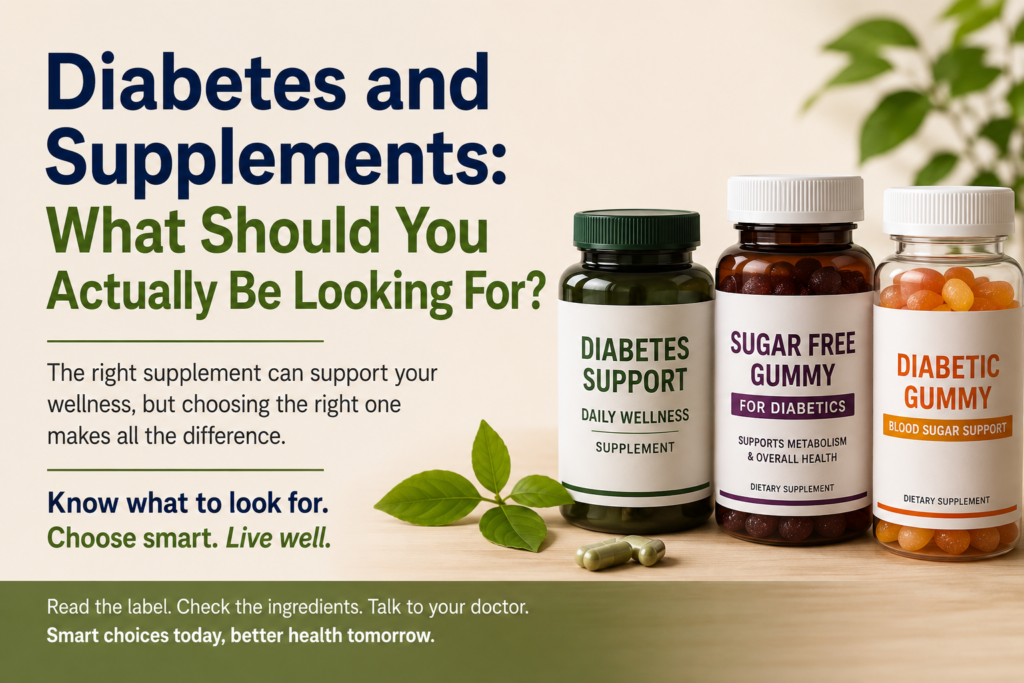

Walk into any pharmacy or browse online for five minutes, and you’ll find plenty of supplements aimed at people with diabetes.
Some promise daily support.
Others talk about metabolism, blood sugar or general wellness.
The packaging can make everything sound straightforward. Pick the right bottle, take a gummy or capsule every day, and you’re doing something good for yourself.
But supplements aren’t that simple.
If you have diabetes, the first thing to remember is that a supplement is not a replacement for your prescribed treatment, regular monitoring or the advice you’ve been given by your healthcare team.
So before adding another bottle to your routine, here’s what is actually worth looking at.
Start With Why You Want to Take It
This sounds obvious, but it’s easy to skip.
Are you looking for a vitamin because you know you’re not getting enough of something?
Do you want a more convenient way to take a nutrient?
Or did a product simply catch your attention because the label mentioned diabetes?
Knowing your reason makes it easier to decide whether a supplement is actually useful.
A diabetic gummy may be convenient, but convenience alone doesn’t tell you whether the ingredients are right for you.
Turn the bottle around and look beyond the marketing.
Sugar-Free Doesn’t Mean You Can Ignore the Label
The words “sugar-free” can sound reassuring, especially when you’re trying to manage your carbohydrate intake.
But don’t stop reading there.
A sugar free gummy for diabetics can still contain carbohydrates or sweeteners that you may want to know about. Check the nutrition information, serving size and full ingredient list.
Also pay attention to how many gummies count as one serving.
One gummy may look like a small amount, but the recommended serving could be two or more.
Those details matter.
Watch Out for Big Promises
“Balances blood sugar.”
“Controls diabetes.”
“Reverses diabetes.”
When you’re looking for support, these claims can sound tempting.
But a supplement shouldn’t be treated as a cure or replacement for diabetes treatment.
Be especially cautious about products that make dramatic promises without explaining exactly what they contain or how they are supposed to work.
If something sounds too good to be true, take a step back before adding it to your daily routine.
Check for Ingredients You’re Already Taking
This is something people often forget.
Maybe you already take a multivitamin.
Then you add a separate vitamin D supplement.
Later, you start taking a gummy with some of the same nutrients.
Before long, you’re taking several products without realising they overlap.
If you’re considering diabetes gummies, compare the label with everything else you already take.
Write down your supplements if that makes it easier.
It only takes a few minutes and can help you spot unnecessary duplication.
Supplements and Medication Need a Second Look
Just because something is sold as a supplement doesn’t mean it can’t interact with medication.
That’s particularly important if you take prescription medication regularly.
Before starting a new product, ask your doctor or pharmacist whether the ingredients are appropriate for you.
Bring the bottle or a photo of the label if needed.
That is usually much more helpful than trying to work it out from online reviews.
Don’t Confuse Daily Supplements With Low Blood Sugar Treatment
Not every gummy serves the same purpose.
A daily vitamin gummy is different from a product designed to provide fast-acting carbohydrates during an episode of low blood sugar.
If you’ve been advised to keep glucose products available, follow the plan provided by your healthcare professional.
And if low blood sugar happens regularly, it is important to discuss the pattern with your healthcare team rather than simply treating each episode and moving on.
Keep Your Expectations Realistic
Supplements can be useful in certain situations, but they don’t do everything.
They can’t replace balanced meals.
They can’t replace prescribed medication.
And they can’t make diabetes management completely effortless.
That doesn’t mean you have to make your routine complicated, either.
Sometimes the best approach is simply knowing what you’re taking and why.
Read the Back of the Bottle
The front of a supplement package is designed to get your attention.
The back is where you should spend a little more time.
Check:
- The serving size
- The amount of carbohydrates and sugar
- The active ingredients
- Other ingredients and sweeteners
- Possible overlap with your current supplements
- Whether the product makes unrealistic claims
If you’re unsure about something on the label, ask a pharmacist, doctor or qualified healthcare professional.
The Bottom Line
Choosing a supplement doesn’t have to become another stressful part of managing diabetes.
Just slow down before buying.
Know what the product contains. Check the serving size. Think about what you’re already taking. And don’t let a bold claim on the front of a bottle make the decision for you.
The best supplement choice is not necessarily the one with the biggest promise. It’s the one you understand and can discuss confidently with your healthcare team.