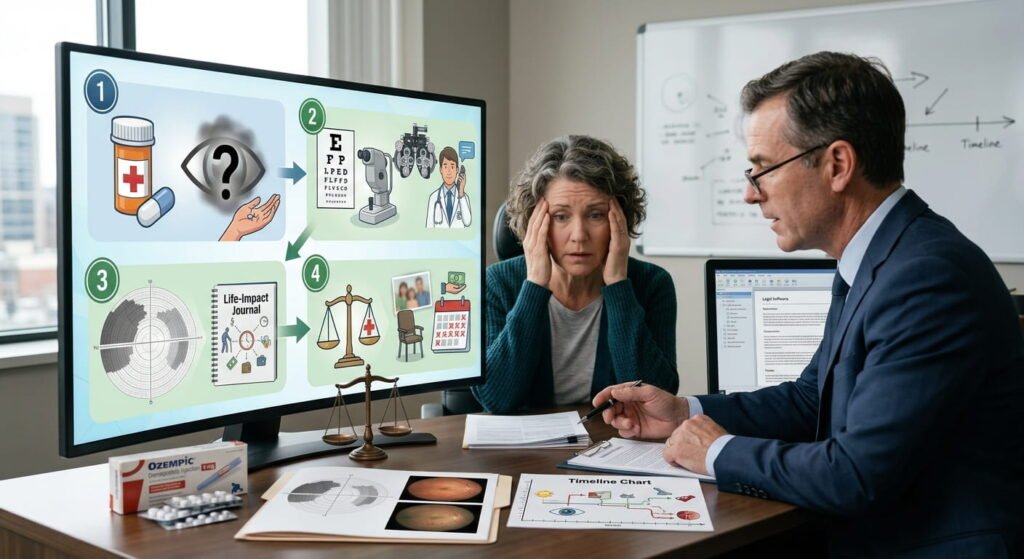

If you or a loved one developed serious vision problems after taking a prescription medication, you may wonder how vision loss pharmaceutical injury claims work and whether you may be entitled to compensation. A potential claim generally involves investigating the medication, the medical injury, the connection between the two, and the losses caused by the injury. For information about Pharmaceutical Vision Loss Legal Claims, you can explore resources from Vision Loss Lawyer.
What Is a Vision Loss Pharmaceutical Injury Claim?
A pharmaceutical injury claim is a legal claim brought by someone who alleges that a medication caused or contributed to an injury.
In the context of vision loss, the alleged injury may involve conditions such as:
- Nonarteritic anterior ischemic optic neuropathy (NAION)
- Sudden vision loss
- Optic nerve damage
- Permanent visual impairment
- Other serious eye-related complications
The website Vision Loss Lawyer focuses specifically on people who experience sudden vision loss or serious eye problems after using medications prescribed for diabetes or weight loss. Its site discusses NAION and potential pharmaceutical litigation involving these injuries.
A potential claim is not automatically successful simply because someone developed vision loss after taking a medication. Medical and legal evidence must be evaluated to determine whether the medication may have caused or contributed to the injury.
What Medications May Be Involved?
Vision loss pharmaceutical injury claims can involve different medications depending on the alleged injury and available evidence.
The current focus of Vision Loss Lawyer includes weight-loss and type 2 diabetes medications, particularly semaglutide-related concerns. The site discusses medications associated with diabetes management and weight loss and potential NAION-related vision injuries.
The FDA has also identified NAION as a potential serious-risk signal associated with several GLP-1 receptor agonists, including Ozempic (semaglutide), Rybelsus, and Wegovy, and stated that it was evaluating whether regulatory action was needed.
Importantly, a regulatory safety signal does not by itself establish that a medication caused an individual person’s vision loss.
How Does a Pharmaceutical Injury Claim Begin?
A potential claim generally starts with an evaluation of the person’s medical and medication history.
An attorney may want to know:
- What medication were you taking?
- Why was it prescribed?
- When did you begin taking it?
- What dosage were you taking?
- When did your vision symptoms begin?
- Was the vision loss in one eye or both?
- What diagnosis did your doctor provide?
- What other medical conditions do you have?
- What other medications were you taking?
- How has the injury affected your life?
Vision Loss Lawyer’s case evaluation form specifically asks about the medication used, whether it was prescribed for diabetes or weight loss, whether the vision problem involved one eye or both, and the dates medication use and vision loss began.
These details can help establish an initial timeline.
What Evidence Is Needed?
Evidence can be one of the most important parts of a pharmaceutical injury claim.
Medical Records
Medical records may show:
- The diagnosis
- Vision testing
- Ophthalmology examinations
- Treatment recommendations
- Progress over time
- Other potential causes of vision loss
Prescription Records
Prescription and pharmacy records can help establish that you received and used the medication.
Medication Timeline
A clear timeline can be particularly important:
Medication started → medication continued → symptoms developed → medical evaluation → diagnosis → treatment → resulting losses
The timing alone does not prove causation, but it can provide an important starting point for investigation.
Diagnostic Testing
Depending on the condition, evidence may include:
- Visual acuity testing
- Visual field testing
- OCT imaging
- Retinal examinations
- Optic nerve examinations
- Other ophthalmological testing
For someone diagnosed with NAION, these records may help establish the nature and severity of the optic nerve injury.
How Is Causation Evaluated?
One of the most important questions in a pharmaceutical injury case is causation.
Simply taking a medication before developing vision loss does not automatically prove that the medication caused the injury.
An attorney and medical experts may consider:
- The timing of medication exposure
- Known or suspected medication risks
- Scientific research
- The person’s medical history
- Existing risk factors
- Alternative explanations
- The nature of the diagnosed injury
- Whether similar injuries have been reported
This distinction is especially important with NAION.
For example, NAION can occur in people with certain vascular and anatomical risk factors. Therefore, a medical review may need to consider the person’s overall health rather than looking only at medication use.
What Happens During a Case Evaluation?
During an initial evaluation, an attorney may review the basic facts and determine whether the circumstances warrant further investigation.
The process may involve:
Step 1: Reviewing Your Story
You explain what happened, including medication use and when your vision problems began.
Step 2: Collecting Medical Information
Relevant medical and ophthalmology records may be requested.
Step 3: Reviewing Medication History
The legal team may examine prescription information, dosage, duration, and other medications.
Step 4: Investigating the Scientific Evidence
Attorneys handling pharmaceutical cases may investigate scientific literature, regulatory information, clinical evidence, and allegations involving the medication.
Step 5: Evaluating Damages
The legal team may also examine the financial and personal consequences of the injury.
What Compensation May Be Available?
Vision loss can affect nearly every part of daily life. Depending on the facts of a case and applicable law, potential damages may include:
- Medical expenses
- Future medical or treatment costs
- Lost wages
- Diminished earning capacity
- Pain and suffering
- Loss of quality of life
Vision Loss Lawyer specifically identifies medical expenses, ongoing treatment costs, loss of income, diminished earning capacity, pain and suffering, and loss of quality of life as potential categories of compensation.
The availability and amount of damages depend on the individual circumstances and applicable law.
What If You Developed NAION?
NAION, or nonarteritic anterior ischemic optic neuropathy, can cause sudden, usually painless vision loss.
If you developed NAION after taking a medication, it is important to first obtain appropriate medical care and establish the diagnosis.
You should also preserve:
- Your medication information
- Prescription records
- Pharmacy records
- Ophthalmology reports
- Visual field results
- OCT scans
- Hospital records
- Medical bills
- Employment records
- Documentation of how your vision loss affects daily activities
These records can help establish both the injury and its consequences.
What If You Took Ozempic or Another Semaglutide Medication?
Semaglutide medications have received regulatory attention concerning a potential association with NAION.
The FDA’s adverse-event monitoring page lists Ozempic, Rybelsus, and Wegovy among products associated with a potential NAION safety signal and states that the agency was evaluating the need for regulatory action.
This does not mean that every person who develops NAION while taking semaglutide has a valid lawsuit. A potential case requires an individualized assessment of medical evidence, medication history, causation, damages, and applicable legal requirements.
If you experienced sudden vision loss while taking a semaglutide medication, tell your healthcare provider about the medication and seek appropriate medical evaluation.
Are There Deadlines for Filing a Claim?
Yes. Statutes of limitations may apply to pharmaceutical injury claims.
The deadline can vary depending on factors such as:
- The jurisdiction
- The type of legal claim
- When the injury occurred
- When the injury was discovered
- When the potential connection to a medication became known
- Other circumstances recognized under applicable law
Vision Loss Lawyer specifically warns that statutes of limitations may apply and encourages people with potential medication-related vision injuries to act promptly.
Because missing a filing deadline can have serious consequences, it is important not to wait until the last minute to investigate a potential claim.
What Happens After a Claim Is Accepted?
If an attorney determines that a potential case warrants further action, the legal process may involve gathering additional evidence and communicating with the responsible parties or their insurers.
Depending on the circumstances, the case could involve:
- Medical record collection
- Expert review
- Investigation of the medication
- Calculation of damages
- Settlement negotiations
- Filing a lawsuit
- Discovery
- Possible trial
Not every pharmaceutical injury case goes to trial. Some cases may resolve through settlement, while others may require litigation.
Vision Loss Lawyer states that its team can assist clients from gathering medical evidence through negotiations and, when necessary, trial.
Why Should You Act Quickly?
Vision loss can have long-term consequences. It may affect your ability to work, drive, read, perform household tasks, or participate in activities you previously enjoyed.
Acting promptly can also make it easier to preserve important evidence.
Consider keeping a written record of:
- When medication use began
- When vision symptoms first appeared
- Medical appointments
- Diagnoses
- Treatments
- Expenses
- Work limitations
- Changes to daily activities
The sooner the circumstances are reviewed, the sooner you can understand what legal options may be available.
Final Thoughts
So, how do vision loss pharmaceutical injury claims work? The process generally involves establishing that a person suffered a significant vision injury, determining whether a medication may have contributed to that injury, documenting the resulting losses, and evaluating whether the legal requirements for a claim are satisfied.
For people who develop NAION or serious vision loss after taking diabetes or weight-loss medication, medical documentation and a detailed medication timeline can be particularly important.
The FDA has identified NAION as a potential safety signal involving several GLP-1 medications, including Ozempic, Rybelsus, and Wegovy, but a safety signal is not the same as proof that a drug caused a specific person’s injury.
If you believe a medication contributed to your vision loss, seek appropriate medical care, preserve your records, and consider discussing your circumstances with a qualified pharmaceutical injury attorney. Early legal evaluation can also help identify potential filing deadlines and evidence that may be important to your case.
FAQs
1. What is a vision loss pharmaceutical injury claim?
It is a potential legal claim brought by someone who believes a medication caused or contributed to serious vision loss or another eye-related injury. The specific requirements depend on the facts and applicable law.
2. What evidence is needed for a vision loss drug lawsuit?
Evidence may include medical records, ophthalmology reports, diagnostic testing, prescription and pharmacy records, medication timelines, medical expenses, lost-income documentation, and records showing how the injury affected your quality of life.
3. Can I file a claim if I developed NAION after taking Ozempic?
Potentially, but developing NAION while taking Ozempic does not automatically establish that Ozempic caused the injury. Your medical history, medication timeline, scientific evidence, and other potential causes would need to be evaluated.
4. What compensation can a vision loss pharmaceutical claim provide?
Depending on the circumstances and applicable law, potential damages may include medical expenses, future treatment costs, lost income, diminished earning capacity, pain and suffering, and loss of quality of life.
5. How long do I have to file a pharmaceutical vision loss claim?
There is no single deadline for every case. Statutes of limitations vary depending on the jurisdiction, type of claim, and individual circumstances. Because deadlines can affect your legal rights, it is important to seek legal advice promptly if you believe you have a potential claim.