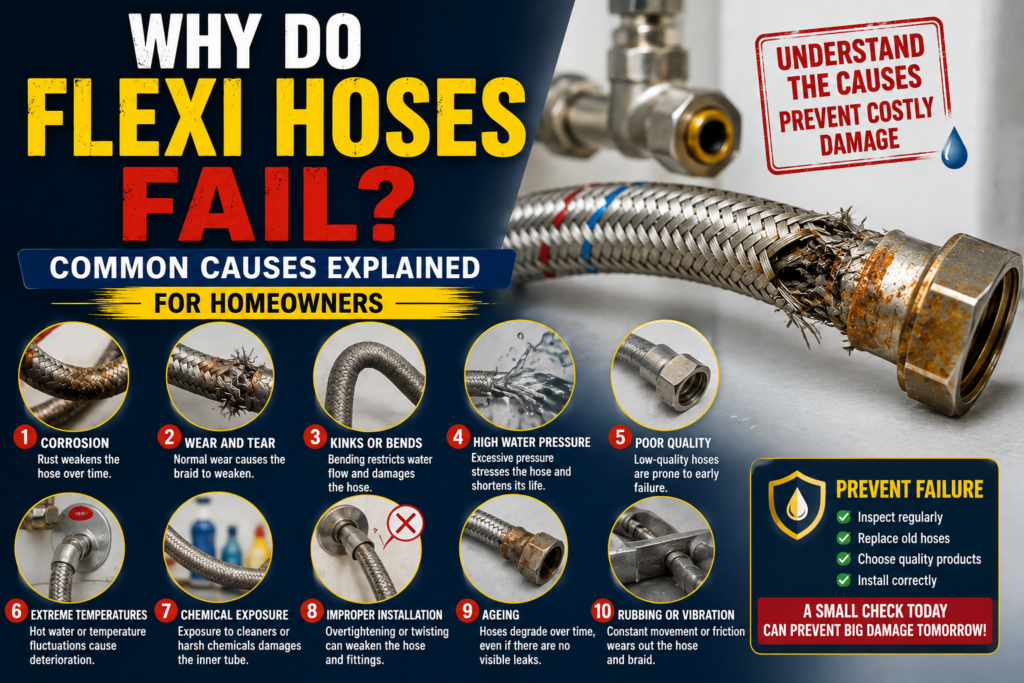

Flexi hoses rarely fail without a reason. While a sudden burst behind a washing machine or under a sink can feel random, it’s almost always the result of a specific, identifiable cause that’s been building for months or even years. Understanding why flexi hoses fail helps homeowners not just spot a warning sign, but actually prevent the failure from happening in the first place. Below is a breakdown of the most common causes behind flexi hose failure, why each one happens, and what actually protects against it.
1. Material Degradation Over Time
Every flexi hose has an inner liner, usually made of rubber or reinforced PVC, surrounded by a braided outer layer of stainless steel or nylon mesh. That inner liner is the part that actually holds back water pressure — the braid is reinforcement, not the primary barrier. Over years of constant exposure to pressurized water, that inner material naturally breaks down, becoming thinner, softer, or brittle depending on the material type. This is why age is one of the single biggest predictors of flexible water hose problems. A hose can look completely normal from the outside while the inner liner has already lost much of its structural integrity. Most manufacturers recommend replacement every 8 to 10 years for exactly this reason.
2. Water Pressure That’s Too High
Municipal water pressure varies significantly by location, and homes on higher-pressure systems put more ongoing stress on every hose and fitting in the plumbing system. Flexi hoses are rated for a maximum pressure, and consistently operating near or above that threshold accelerates wear on the inner liner and puts extra strain on the crimped fittings at each end. If your home doesn’t have a pressure-reducing valve and water pressure feels unusually strong, that’s a contributing factor worth having checked, since it affects every hose in the house, not just one.
3. Poor Quality or Incorrect Installation
Not all flexi hoses are built to the same standard. Cheaper hoses often use thinner liners, lower-grade braiding, or fittings that don’t seal as reliably under repeated pressure cycles. Incorrect installation compounds this risk — over-tightened fittings can crack, under-tightened ones can work loose, and a hose that’s been bent too sharply behind an appliance can develop stress points that weaken the liner from day one. This is one of the most preventable causes of flexi hose failure, since it comes down to choosing a quality, correctly rated hose and having it installed the first time properly.
4. Heat Exposure
Hoses connected to water heaters or located near heat sources face an additional layer of stress. Consistent exposure to hot water, or ambient heat from a nearby appliance, causes rubber and PVC components to degrade faster than they would in a cool, dry location. This is why hoses feeding a water heater often need closer, more frequent inspection than those feeding a cold-water-only fixture.
5. Corrosion at the Fittings
The metal nuts and connectors on a flexi hose are typically plated to resist corrosion, but that plating wears away over time, especially in humid environments like under a kitchen sink or behind a washing machine in a poorly ventilated laundry room. Once corrosion reaches the base metal, the fitting weakens and becomes more prone to cracking or losing its seal, even if the hose itself is otherwise fine.
6. Constant Vibration and Movement
Appliances like washing machines vibrate significantly during operation, and that vibration is transmitted directly into the hose and its fittings every time the machine runs. Over hundreds of cycles, this repeated movement can loosen fittings, cause metal fatigue in the braided layer, and gradually weaken the connection points. This is a major reason washing machine hoses fail more often than many other flexi hoses in the home.
7. Water Hammer
Water hammer — the loud banging or shuddering sound that happens when a valve closes suddenly, like when a washing machine’s solenoid valve shuts off mid-cycle — creates a pressure spike far higher than normal operating pressure. Repeated water hammer events place sudden, sharp stress on hoses and fittings, accelerating wear well beyond what steady water pressure alone would cause.
8. Chemical Exposure
Under-sink hoses are sometimes exposed to cleaning chemicals, spilled detergents, or pest-control treatments stored nearby. Certain chemicals can degrade rubber and PVC over time, especially with repeated contact. It’s a less commonly discussed cause of flexible water hose problems, but worth considering if a hose is deteriorating faster than its age would suggest.
9. Manufacturing Defects
Less common, but still a real factor, is a defect introduced during manufacturing — an improperly crimped fitting, a liner with an inconsistent wall thickness, or braiding with weak points. These defects are hard to spot visually and can cause a relatively new hose to fail unexpectedly. Buying from reputable manufacturers and keeping receipts in case of a warranty claim helps manage this risk.
10. Simple Neglect
Perhaps the most common cause of all isn’t a material or mechanical issue — it’s the fact that flexi hoses are often installed once and never inspected again. Tucked behind cabinets or appliances, they’re easy to forget. Left unchecked, even a minor early-stage issue has years to develop into a full failure with no one noticing until water is already on the floor.
What This Means for Homeowners
Understanding common flexi hose failures makes it clear that most of these causes share one thing in common: they develop gradually and give warning signs before an actual burst. Rust, bulging, dampness, and unusual noise are all symptoms of the underlying causes described above. For a closer look at how to recognize those early warning signs before a full failure occurs, this in-depth guide on flexi hose failure warning signs is a useful next step.
Final Thoughts
Flexi hoses fail for identifiable, largely preventable reasons — age, pressure, poor installation, heat, corrosion, vibration, water hammer, chemical exposure, defects, and simple neglect. Knowing why do flexi hoses fail puts homeowners in a much stronger position than just reacting to a leak after the fact. Regular inspection, sensible pressure management, and timely replacement remain the most effective defenses against one of the most common — and most preventable — sources of household water damage.