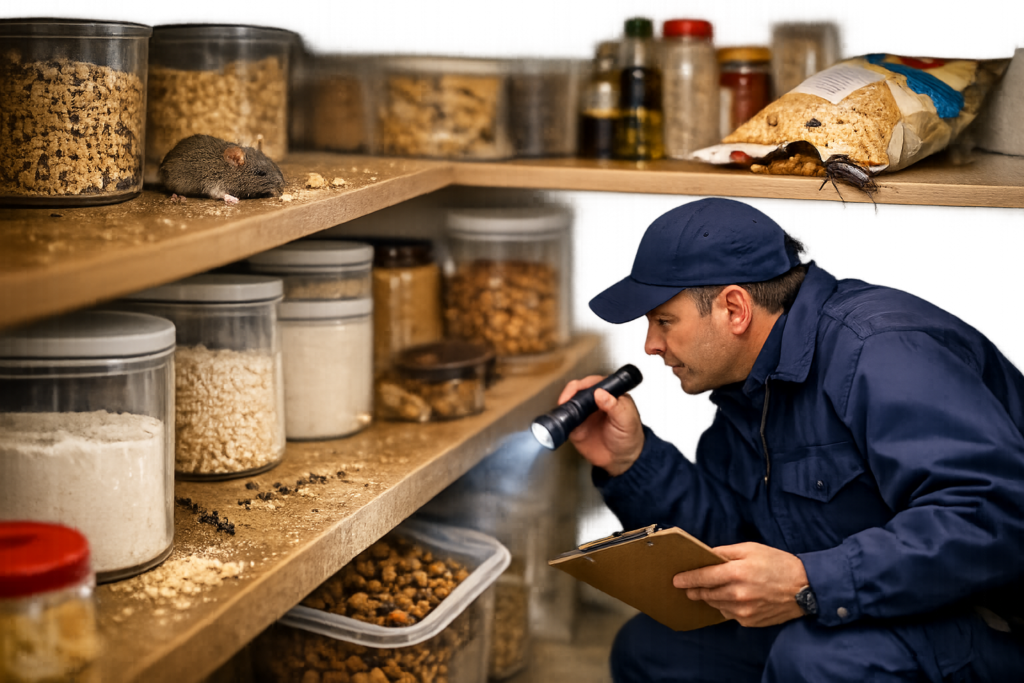

Keeping food storage areas safe from pests is important for every homeowner. Whether you store food in a kitchen pantry, basement, garage, or utility room, pests are always looking for easy access to food and water. Once insects or rodents find a reliable food source, they can quickly become a bigger problem.
At North Dakota Pest Pros we help homeowners throughout Fargo, North Dakota protect their homes from common pest infestations. By using proper food storage practices and preventive measures, you can reduce the risk of contamination and keep your family safe.
Why Food Storage Areas Attract Pests
Food storage areas naturally attract pests because they provide easy access to nutrition. Crumbs, open packages, pet food, and even small food spills can attract insects and rodents. Pests are constantly searching for places where food is available and easy to reach.
Common pests found near food storage areas include ants, mice, rats, cockroaches, pantry moths, and beetles. These pests can contaminate food supplies and create sanitation concerns if they are not addressed quickly.
Store Food in Airtight Containers
One of the best ways to protect food from pests is to use airtight containers. Many insects can chew through cardboard packaging or enter small openings in food bags. Rodents can also damage packaging while searching for food.
Transfer dry goods such as flour, rice, cereal, sugar, pasta, and pet food into sealed plastic or glass containers. Airtight storage helps preserve freshness while preventing pests from gaining access to your food supplies.
Keep Pantry Shelves Clean
Clean pantry shelves help reduce the chance of attracting pests. Food crumbs, spilled ingredients, and sticky residue can provide a food source for insects and rodents.
Wipe down shelves regularly and vacuum corners where food particles may collect. Make cleaning a routine part of your home maintenance schedule. A clean pantry creates a less inviting environment for pests.
Organize Food Storage Properly
Organization is an important part of pest prevention. When food products are stacked randomly or forgotten in the back of shelves, pests can go unnoticed for long periods.
Store older food items toward the front and place newer items behind them. Check expiration dates regularly and remove products that are damaged or expired. Organized storage makes it easier to spot signs of pest activity before an infestation grows.
Control Moisture Near Storage Areas
Many pests need moisture to survive. Damp storage spaces can attract cockroaches, silverfish, and other insects that thrive in humid environments.
Inspect nearby pipes, sinks, and appliances for leaks. Use dehumidifiers in damp basements or storage rooms if necessary. Maintaining a dry environment helps discourage pest activity and protects stored food products.
Inspect Groceries Before Storing Them
Sometimes pests enter a home through food packaging purchased at a store. Pantry moths, beetles, and other insects may already be present inside certain food products.
Inspect packages before bringing them into your pantry. Look for damaged packaging, small holes, unusual debris, or signs of insect activity. Taking a few extra moments to inspect groceries can help prevent future infestations.
Seal Entry Points Around the Home
Even the cleanest food storage area can become vulnerable if pests can easily enter the home. Small cracks and gaps around doors, windows, foundations, and utility openings often serve as entry points.
Use caulk, weather stripping, and door sweeps to seal gaps. Repair damaged screens and inspect exterior walls regularly. Limiting access points makes it much harder for pests to reach your food storage areas.
Manage Trash Properly
Garbage containers often contain food residue that attracts pests. Overflowing trash cans and poorly maintained waste areas can become major pest attractants.
Use trash bins with tight-fitting lids and empty them frequently. Clean both indoor and outdoor containers to remove food buildup and odors. Proper waste management supports a cleaner and more pest-resistant home.
Monitor for Signs of Pest Activity
Regular inspections help identify problems before they become serious infestations. Early detection is one of the most effective pest prevention strategies available.
Watch for droppings, chew marks, damaged packaging, insect sightings, webbing, or unusual odors. If you notice any of these warning signs, take action immediately to prevent further contamination.
Protect Pet Food and Bird Seed
Pet food and bird seed are often overlooked when discussing food storage. However, these products can attract rodents and insects just as easily as human food.
Store pet food and bird seed in sealed containers and avoid leaving food out overnight. Keeping these items protected helps reduce the likelihood of attracting pests into your home or garage.
Schedule Professional Pest Inspections
Even homeowners who follow good prevention practices can benefit from professional inspections. Pest control experts can identify hidden issues that may not be visible during routine cleaning.
At North Dakota Pest Pros, we provide comprehensive inspections and customized pest management solutions for homeowners throughout Fargo, ND. Our team understands local pest pressures and can recommend strategies that provide long-term protection.
Why Professional Pest Prevention Saves Money
Preventive pest control is often less expensive than dealing with a major infestation. Once pests contaminate food products or damage storage areas, replacement and cleanup costs can add up quickly.
Routine inspections and preventative treatments help catch problems early. Investing in professional pest prevention can save money while protecting your food, property, and peace of mind.
Frequently Asked Questions
What pests are most commonly found in food storage areas?
Common pests include ants, cockroaches, mice, rats, pantry moths, grain beetles, and other insects that feed on stored food products.
Are airtight containers really effective?
Yes. Airtight containers are one of the most effective ways to protect food from insects and rodents while maintaining freshness.
How often should I clean my pantry?
A quick cleaning should be done regularly, while a more thorough inspection and organization should be completed every few months.
Can pantry pests spread to other areas of the home?
Yes. If left untreated, pantry pests can spread throughout kitchens, storage rooms, and other parts of the home.
When should I contact a pest control professional?
You should contact a professional if you notice recurring pest activity, damaged food packaging, droppings, or signs of a growing infestation.
Conclusion
Protecting food storage areas from pests requires a combination of cleanliness, proper storage, moisture control, and regular inspections. Simple steps such as using airtight containers, organizing pantry shelves, sealing entry points, and monitoring for signs of pest activity can make a significant difference.
North Dakota Pest Pros proudly helps homeowners throughout Fargo, North Dakota keep their homes protected from insects and rodents. If you need professional pest prevention services or suspect a pest problem in your food storage areas, contact North Dakota Pest Pros today. Our experienced team is ready to help you maintain a safer, cleaner, and pest-free home year-round.