

In the modern construction, industrial engineering, and facility management landscapes, operating Mobile Elevating Work Platforms (MEWPs) at height demands absolute precision and strict safety compliance. Whether executing commercial structural installations, heavy MEP ductwork, or high-rise building maintenance, using powered access equipment like scissor lifts and boom lifts is the industry standard. However, the performance and safety of these advanced platforms depend directly on the competence of the personnel operating them.
Working at height carries inherent operational risks. To mitigate site liabilities, pass municipal safety audits, and foster a zero-accident site culture, enrolling your workforce in certified ipaf training is a vital strategic requirement for contractors and project managers.
1. Why Certified IPAF MEWP Training is Essential
Operating heavy access machinery in crowded or unpredictable environments requires specialized skills. Uncertified handlers are more susceptible to critical site hazards, including platform tip-overs, overhead structural pinch points, ground collapse, and accidental power line contact.
Comprehensive ipaf mewp training equips machine operators with the knowledge and practical skills required to handle high-reach machinery safely. Regulated by the International Powered Access Federation (IPAF), these standardized programs cover essential operational protocols:
-
Pre-Use Safety Audits: Performing routine mechanical, electrical, and hydraulic inspections prior to elevating the platform deck.
-
Ground & Environment Assessments: Evaluating soil stability, slope limits, uncompact backfill, and overhead high-voltage risks.
-
Payload Management: Calculating total platform load limits—including technicians, tools, and materials—to prevent structural overloading.
-
Emergency Descent Procedures: Executing manual emergency lowering systems in the event of unexpected machine power failure.
Upon clearing both theoretical and practical assessments, successful candidates are awarded a 5-year valid Powered Access License (PAL) Card, which grants verified access to high-security industrial, aviation, and infrastructure job sites globally.
2. Understanding Machine Categories: 1b, 3a, and 3b Certification
Not all aerial work platforms operate the same way, which is why IPAF structures its certification modules into specific machine categories. Ensuring your crew receives training tailored to the exact equipment deployed on your site is critical for operational safety:
-
IPAF 1b Training (Static Boom / Spider Lifts): Covers static vertical platforms and trailer-mounted or vehicle-mounted booms equipped with outriggers that must be deployed before lifting.
-
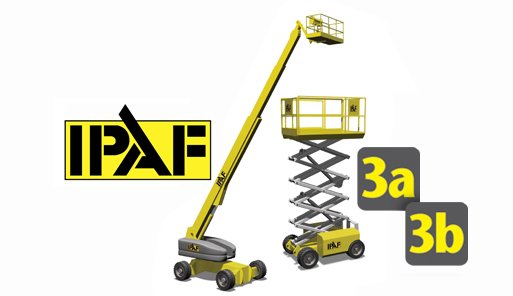
IPAF 3a and 3b Training (Mobile Verticals & Mobile Booms): The most widely requested dual certification for general construction and industrial worksites:
-
Category 3a: Covers Mobile Verticals, primarily electric slab and rough-terrain scissor lifts.
-
Category 3b: Covers Mobile Booms, including self-propelled articulating knuckle booms and straight telescopic stick booms.
-
By enrolling operators in combined ipaf 3a 3b training modules, employers ensure their technicians are fully qualified to operate both scissor platforms and boom lifts, maximizing site workforce flexibility.
3. Evaluating Training Costs & Selecting Certified Centres
For procurement officers and safety managers managing site overheads, evaluating the overall ipaf training cost against potential liabilities highlights the clear return on investment. The financial impact of a single site accident, machine damage, or regulatory work stoppage far outweighs the cost of professional operator qualification.
When searching for accredited ipaf training centres or looking for certified ipaf training near me, project teams should prioritize facilities that provide:
-
Approved Testing Grounds: Purpose-built indoor and outdoor practical grounds fitted with modern, fully-serviced machine fleets.
-
Certified Instructors: Experienced safety trainers capable of delivering coursework in multiple languages to suit multi-national workforces.
-
Flexible Scheduling: Hybrid learning options that allow operators to complete digital theoretical studies online before completing practical evaluations on-site.
4. Regional Compliance and Training Facilities
Meeting local health, safety, and environmental (HSE) directives requires partnering with an established access training provider. Conducting certified operator sessions at Access Rental Gulf’s state-of-the-art 50,000 sq. ft. facility in Al Layyan, Dubai Industrial City (DIC), ensures your operations comply fully with regional safety mandates.
Through our centralized logistics hub and digital Customer Web Portal, corporate clients can easily register teams for practical training, track operator certification statuses, and access compliance documentation 24/7.
Conclusion: Protect Your Crew and Elevate Operational Standards
Achieving zero-accident milestones on high-altitude projects requires combining high-specification access machinery with thoroughly trained, certified personnel. Investing in accredited IPAF training protects your crew from avoidable workplace hazards, eliminates corporate legal liability, and guarantees seamless compliance during strict safety audits.