

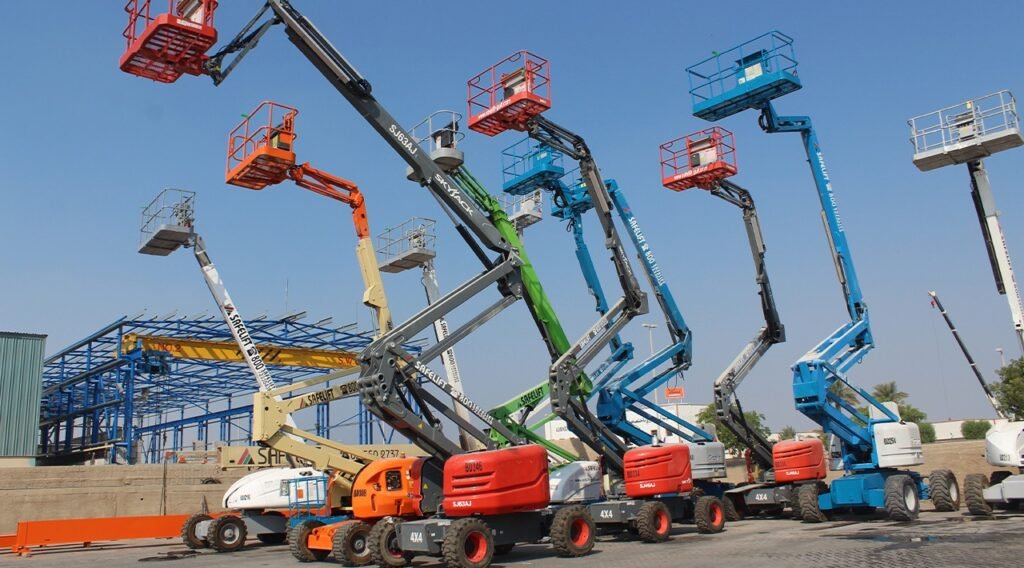

Modern architectural trends and aggressive infrastructure expansions across the globe have fundamentally shifted how construction, engineering, and maintenance tasks are executed. With structural designs scaling new vertical heights and complex industrial frameworks weaving intricate webs of overhead piping, standard scaffolding setups are no longer operationally viable or safe. Today, project managers, mechanical contractors, and site engineers rely heavily on a versatile, high-powered class of Mobile Elevating Work Platforms (MEWPs) collectively known as the boom lift.
A boom lift is not merely a piece of utility equipment; it is a critical production asset that directly influences job site safety, operational efficiency, and project timelines. Whether tackling a massive stadium roof installation or executing precise maintenance within a crowded petrochemical plant, selecting, operating, and sourcing these machines demands deep technical expertise. This comprehensive guide breaks down the core engineering variations of boom lifts, explores industry-leading manufacturer configurations, and details the strategic advantages of leveraging localized rental networks.
Articulated vs. Telescopic: Choosing Your Engineering Profile
The primary challenge when operating at height is navigating the physical obstacles between the ground surface and the target workspace. To address these geometric constraints, manufacturers have engineered two distinct structural configurations: articulating booms and telescopic booms.
The Versatility of the Articulating Boom Lift
Commonly referred to as a “knuckle boom,” an articulating boom lift is designed with multiple hinged boom segments that fold and unfold independently. This mechanical design gives operators the unique ability to navigate up, over, and behind static obstructions. If your work zone is positioned above delicate factory machinery, active production lines, or intricate HVAC ductwork, an articulating model is essential. It allows the machine base to remain stationary while the platform bends smoothly around structural elements to access tight spaces that standard straight lifts simply cannot reach.
The Raw Power of the Telescopic Boom Lift
Alternatively, when your primary operational objective is maximizing straight-line vertical elevation and securing the longest possible horizontal outreach, a telescopic boom lift (or “stick boom”) becomes the ideal tool. These machines feature a straight boom arm that extends linearly via internal hydraulic cylinders. Engineered for open, unobstructed high-reach environments such as shipyards, major civil bridge construction, and high-rise commercial glazing, telescopic models offer exceptional structural rigidity. This design minimizes platform sway at extreme altitudes, providing operators with maximum confidence and stability when handling heavy tools and raw materials at heights that often exceed 40 meters.
Brand Focus: Leveraging Genie Engineering Excellence
Within the powered access sector, specific brands have established themselves as gold standards due to their precise control systems and robust structural engineering tolerances. A prime example is the genie articulating boom lift, a machine widely favored by MEP (Mechanical, Electrical, and Plumbing) contractors worldwide.
Genie’s articulating models are celebrated for their highly intuitive joystick controls, zero tail-swing capabilities in confined configurations, and advanced load-sensing technology that automatically monitors platform weight to ensure operations stay safely within the machine’s structural tipping curve. Furthermore, their hybrid and electric clean-room options allow teams to transition seamlessly from rugged outdoor rough-terrain driving to indoor industrial warehousing tasks without emitting hazardous carbon fumes or leaving scuff marks on finished concrete floors.
Strategic Logistics: Sourcing Your Boom Lift Rental
Because buying specialized high-reach access machinery outright involves massive upfront capital expenditure (CAPEX), routine third-party safety certifications, transport trailers, and dedicated mechanical storage yards, the vast majority of tier-1 contractors utilize a flexible boom lift rental workflow.
Renting access machinery transforms a major fixed corporate liability into a variable project expense that can be accurately forecasted against specific construction phases. When a project moves from initial structural framing to internal electrical fit-outs, a contractor can easily swap out a massive diesel rough-terrain stick boom for a compact electric knuckle boom, ensuring the machine on-site perfectly matches the current operational demands.
For contractors managing commercial developments within the northern emirates, securing equipment from a dedicated provider offering specialized boom lift rental in sharjah is highly advantageous. Localized sourcing minimizes transit delays across heavily congested transport corridors, reduces logistics overhead costs, and ensures that if a field issue occurs, a certified technician can be dispatched to your site immediately, protecting your project from costly timeline delays.
Frequently Asked Questions (FAQs)
1. What is the main difference between an articulating and a telescopic boom lift?
An articulating boom lift features multiple hinged joints that allow the arm to bend around overhead obstacles, providing “up-and-over” clearance. A telescopic boom lift features a straight, extending stick arm designed for maximum horizontal outreach and straight-line vertical height in open, unobstructed spaces.
2. Why should a construction company choose a boom lift rental over purchasing?
Renting eliminates massive upfront purchase costs, asset depreciation, maintenance overheads, storage expenses, and transport logistics. It also gives project managers the flexibility to select the exact height and machine profile required for each specific phase of construction.
3. What are the key features of a Genie articulating boom lift?
Genie articulating lifts are known for their precise proportional control systems, zero tail-swing designs for tight spaces, rough-terrain capabilities, and advanced load-sensing safety systems that keep operators secure at extreme elevations.
4. How does a local boom lift rental in sharjah optimize project costs?
Sourcing machinery locally in Sharjah significantly reduces equipment transport fees, ensures rapid on-site delivery, and guarantees quick access to localized mechanical support, which minimizes machine downtime on-site.
5. Can diesel boom lifts be used inside indoor commercial buildings?
Generally, no. Diesel boom lifts emit carbon emissions and are typically loud, making them suitable only for outdoor or well-ventilated construction zones. For indoor applications, operators should deploy electric or hybrid boom lifts equipped with non-marking tires.
6. What safety checks must be performed before operating a boom lift?
Operators must conduct a thorough pre-use inspection, including checking hydraulic fluid levels, inspecting tire integrity, verifying all emergency lowering controls function correctly, checking the platform gate lock, and ensuring a certified full-body harness is securely anchored.
7. What determines the total weight capacity of a boom lift platform?
Platform capacity is set by the manufacturer and typically ranges between 227 kg and 454 kg. This limit must accommodate the combined weight of all operators, their hand tools, and any construction materials loaded onto the platform. Exceeding this limit triggers automatic overload safety cut-outs.
8. Is a specific license required to operate a boom lift on a commercial job site?
Yes. Most international and regional regulatory bodies require operators to hold a valid certification, such as an IPAF PAL Card (Powered Access Licence), to legally operate boom lifts on industrial and construction sites.